Table of Contents
- 1. Iztapalapa Passion Play gains UNESCO recognition
- 2. Historical Significance of the Iztapalapa Passion Play
- 3. UNESCO Recognition and Its Impact
- 4. The Passion Play’s Narrative and Structure
- 5. Attendance and Community Involvement
- 6. Role of Local Authorities and Security Measures
- 7. The Role of Actors in the Passion Play
- 7.1 Selection Process for Key Roles
- 7.2 Profiles of Main Actors
- 8. Cultural and Economic Impact on Iztapalapa
- 9. Environmental Considerations and Sustainability Efforts
- 10. Future Challenges and Preservation Strategies
- 11. The Significance of the Iztapalapa Passion Play
- 11.1 Cultural Heritage and Community Identity
Iztapalapa Passion Play gains UNESCO recognition
- Mexico City’s Iztapalapa staged its famed Holy Week Passion Play for the first time since UNESCO added it to the Representative List of the Intangible Cultural Heritage of Humanity in December 2025.
- The 183-year-old tradition began as a community vow during the 1833 cholera epidemic and has grown into one of the world’s largest Passion reenactments.
- Local officials say crowds can surpass 2 million over Good Friday, as the borough becomes a vast open-air stage.
- The centerpiece procession spans more than 10 kilometers through eight historic neighborhoods and culminates atop Cerro de la Estrella, transformed into a symbolic Calvary.
Iztapalapa Passion: Scale and Operations
– UNESCO listing: “Representation of the Passion, Death and Resurrection of Christ in Iztapalapa,” added to UNESCO’s Representative List of the Intangible Cultural Heritage of Humanity (December 2025).
– Scale (reported/estimated): local officials and news coverage commonly cite up to ~2 million attendees over Good Friday; figures vary by year and are best read as crowd estimates rather than a precise count.
– Route and setting: a Via Crucis procession of 10+ km through Iztapalapa’s eight historic neighborhoods, ending at Cerro de la Estrella for the crucifixion scene.
– On-the-ground operations: Mexico City authorities have reported deployments of 9,000+ police, plus paramedics, patrol vehicles, helicopters, and major road closures to manage bottlenecks.
Historical Significance of the Iztapalapa Passion Play
The Iztapalapa Passion Play traces its roots to crisis and collective faith. In 1833, as cholera swept the Valley of Mexico, residents of Iztapalapa made a promise to the Señor de la Cuevita—an image of Christ venerated locally—that they would hold an annual act of devotion if the epidemic relented. The tradition endured, and by the mid-19th century it evolved into a staged representation of the Passion.
Over nearly two centuries, what began as a vow of gratitude became a defining ritual of Mexico City’s largest borough: a public, community-run reenactment that blends religious devotion, neighborhood identity, and large-scale civic organization.
Iztapalapa Passion Tradition Timeline
– 1833: During a cholera outbreak, Iztapalapa residents make a collective vow tied to devotion to the Señor de la Cuevita.
– Mid-1800s: The vow develops into a staged public representation of the Passion, moving from procession-only devotion to dramatized scenes.
– 1900s–today: The event scales into a borough-wide production, with streets and plazas functioning as sets and the Cerro de la Estrella serving as the symbolic Calvary.
– 2025: UNESCO inscribes the tradition as Intangible Cultural Heritage, formally recognizing it as a living, community-sustained practice.
UNESCO Recognition and Its Impact
UNESCO inscribed the “Representation of the Passion, Death and Resurrection of Christ in Iztapalapa” on its Intangible Cultural Heritage list in December 2025, recognizing it as a living tradition sustained by community participation and intergenerational transmission. The inscription was approved during the 20th session of UNESCO’s Intergovernmental Committee for the Safeguarding of the Intangible Cultural Heritage, held in New Delhi.
In Iztapalapa, the new designation has brought global visibility—and, residents say, more visitors from outside the borough. The recognition also raises expectations: safeguarding the event’s community-led character while managing the pressures that come with international prestige, including crowd growth and commercialization.
| What changes with UNESCO recognition? | Before the inscription | After the inscription (typical effects) |
|---|---|---|
| Visibility | Known nationally and widely across Mexico City | Higher international awareness; more out-of-borough visitors reported |
| Visitor pressure | Massive crowds already, but largely driven by domestic travel | Greater likelihood of crowd growth and “bucket-list” tourism |
| Support and coordination | Primarily local organizing with city support for operations | Stronger case for multi-level support (city/federal) and safeguarding planning |
| Expectations of authenticity | Community norms and tradition guided decisions | More scrutiny on keeping the tradition community-led and not “staged for outsiders” |
| Risks to manage | Congestion, safety, disruption to daily life | Added commercialization pressure; higher environmental strain; reputational risk if mismanaged |
The Passion Play’s Narrative and Structure
The performance unfolds across Holy Week, typically beginning on Palm Sunday with Jesus’ entry into Jerusalem and building through key episodes staged on different days, including scenes associated with Holy Thursday.
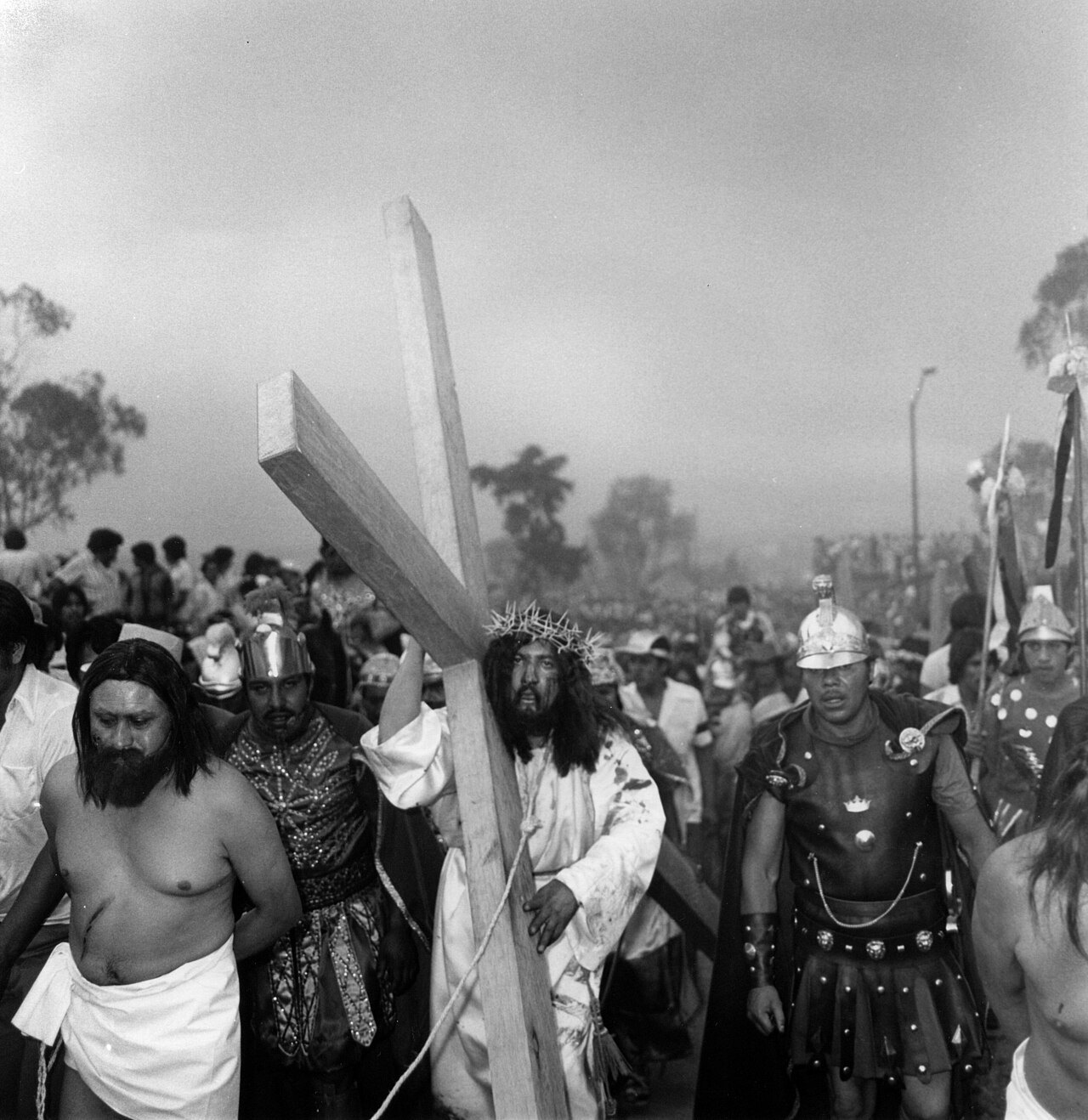
The dramatic peak arrives on Good Friday with the Via Crucis: a long procession of Nazarenes in purple robes, barefoot penitents, and Roman soldiers moving through the streets. The route culminates at Cerro de la Estrella, where the crucifixion scene is staged.
The narrative generally concludes on Holy Saturday with the resurrection and a final curtain call, one day before Easter Sunday.
Holy Week Narrative Arc
Holy Week arc (how the story typically unfolds on the ground)
– Palm Sunday: Entry into Jerusalem (opening public scenes; sets the tone for the week).
– Midweek / Holy Thursday: Key teaching and trial-adjacent episodes staged across neighborhood spaces.
– Good Friday: Via Crucis procession (the longest, most crowded segment) → crucifixion staged at Cerro de la Estrella.
– Holy Saturday: Resurrection and final curtain call (closing sequence before Easter Sunday).
Attendance and Community Involvement
Iztapalapa—densely populated and largely working-class—hosts one of the world’s largest reenactments of Christ’s trial, crucifixion, and resurrection. Local officials say total Holy Week crowds reach into the millions.
The scale is possible because the event is built around neighborhood participation. Cast and organizers are drawn from local families, and the performance is embedded in the borough’s street life: homes, plazas, and avenues become sets; residents become stewards, volunteers, and hosts; and the neighborhoods serve as both route and backbone.
Much of that continuity is coordinated by the Holy Week Organizing Committee in Iztapalapa A.C. (COSSIAC), rooted in the eight historic neighborhoods: San Lucas, San Pedro, San Miguel, San Pablo, San Ignacio, San José, La Asunción, and Santa Bárbara.
Building a Borough-Scale Passion Play
How a borough-sized Passion Play gets built (and where it can strain)
1) Neighborhood base: the eight historic neighborhoods supply organizers, performers, and on-street coordination.
2) Organizing core (COSSIAC): continuity is maintained through long-term collaboration, so roles and responsibilities don’t reset each year.
3) Casting and training: key roles are selected early enough to handle endurance demands; rehearsals scale up as Holy Week approaches.
4) Route logistics: the Via Crucis path is coordinated with closures, crowd corridors, and access points—small changes can create major bottlenecks.
5) Volunteer operations: hydration, basic guidance, and resident “stewarding” help keep movement flowing.
6) Peak-day stress test (Good Friday): the combination of heat, long walking distances, and dense crowds is where delays and safety issues are most likely.
Role of Local Authorities and Security Measures
The influx requires a major public-safety operation. Mexico City authorities have deployed more than 9,000 police officers, supported by paramedics, patrol vehicles, and helicopters, and have closed key avenues around the borough to manage movement and reduce bottlenecks.
The security footprint reflects the event’s dual reality: it is a religious and cultural tradition, but also a mass gathering that transforms a large section of the city into a pedestrian corridor for hours at a time.
This perspective is shaped by Martin Weidemann’s work in digital transformation and a focus on trustworthy, practical travel and mobility insights for visitors navigating Mexico City.
Peak Day Planning Essentials
What to expect on peak days (practical scan points)
– Road closures: expect key avenues to be shut and detours to change throughout the day.
– Crowd corridors: movement is often one-directional in the densest stretches; plan for slow walking.
– Medical presence: paramedics are deployed; still, bring water and pace yourself for long exposure.
– Aerial monitoring: helicopters may be used for situational awareness and response coordination.
– Meeting points: choose a fixed landmark in advance—cell service can be unreliable in dense crowds.
– Cerro de la Estrella climb: the final ascent concentrates people; allow extra time and expect tighter security control.
The Role of Actors in the Passion Play
Selection Process for Key Roles
Key roles—especially Jesus—are awarded through a demanding selection process that tests physical endurance, discipline, and conduct. The requirements reflect the production’s intensity: the Via Crucis is long, the crowds are dense, and the climactic scenes are physically taxing.
In the crucifixion sequence, the actor portraying Jesus is bound to the cross for about 20 minutes, timed to around 3 p.m., traditionally associated with the hour of the crucifixion.
Profiles of Main Actors
This year’s Jesus is portrayed by Arnulfo Morales Galicia, 25, described by Infobae as a medical surgeon and a graduate of the National Autonomous University of Mexico (UNAM). His casting underscores how the production draws from ordinary local lives—people with day jobs and family ties to the borough—who step into roles watched by millions.
Erika Morales Hernández plays the Virgin Mary after portraying a different character last year, the “adulterous woman,” highlighting how performers often return in new roles as part of a continuing community commitment.
| Role | How it’s typically chosen | What the role demands on the day | Example mentioned in this year’s coverage |
|---|---|---|---|
| Jesus | Competitive selection emphasizing endurance, discipline, and conduct | Long Via Crucis walk; physically taxing staging; bound to the cross ~20 minutes | Arnulfo Morales Galicia (25), described as a medical surgeon and UNAM graduate |
| Virgin Mary | Cast from local participants; performers may return in new roles year to year | Sustained performance through high-emotion scenes amid dense crowds | Erika Morales Hernández (played the “adulterous woman” last year) |
Cultural and Economic Impact on Iztapalapa
For Iztapalapa, the Passion Play is both identity and economy. The event supports local commerce—from food vendors and transport to artisans and costume-making—while projecting an image of the borough that contrasts with the stereotypes often attached to Mexico City’s periphery.
UNESCO recognition amplifies that effect, turning a neighborhood tradition into an international reference point and potentially extending the economic benefits of Holy Week beyond the immediate days of performance.
Benefits and Community Pressures
What the Passion Play brings—and what it can cost
– Upside for residents: short-term income for vendors and makers; visibility for local crafts and services; civic pride and a stronger public narrative for the borough.
– Upside for the tradition: more attention can translate into better safeguarding support and infrastructure planning.
– Pressure points: crowding can disrupt daily life; rising demand can push commercialization; higher visitor volumes can strain public space and raise cleanup and maintenance needs.
– The balancing goal: keep decision-making anchored in neighborhood organizers while still handling the realities of a mass event.
Environmental Considerations and Sustainability Efforts
The production’s geography includes Cerro de la Estrella, a prominent hill and green space that becomes the symbolic Mount Calvary. With millions of visitors, environmental strain—waste, erosion, and pressure on protected areas—becomes a central concern.
Safeguarding efforts tied to the UNESCO inscription emphasize education and conservation initiatives, alongside practical measures aimed at reducing the footprint of mass attendance while keeping the event accessible. Reported safeguarding actions include environmental education projects, maintenance of key public spaces, and measures intended to mitigate the impacts of mass tourism.
From Impact to Action
From impact → action (what “sustainability” looks like at this scale)
1) Waste surge: add more collection points and faster post-event cleanup so trash doesn’t migrate into green areas.
2) Erosion and trampling: protect the most sensitive slopes/paths on Cerro de la Estrella and steer foot traffic to more durable routes.
3) Protected-area pressure: coordinate access and timing so the hilltop scenes don’t become uncontrolled crowd crush points.
4) Education: use the UNESCO-linked safeguarding push to reinforce “leave no trace” behavior and respect for local spaces.
5) Maintenance year-round: keep key public spaces functional beyond Holy Week so the neighborhood isn’t left with deferred repairs.
Future Challenges and Preservation Strategies
UNESCO status is a milestone, but it also intensifies the balancing act: preserving authenticity while accommodating growth. The core challenge is ensuring the Passion Play remains community-led—rooted in the eight neighborhoods and their organizing traditions—rather than reshaped primarily for tourism or external audiences.
Long-term preservation strategies focus on continuity of local governance, intergenerational training, and crowd-management planning that protects both residents’ daily life and the physical spaces that make the performance possible.
Safeguarding Growth With Integrity
A practical preservation framework (what to protect as the event grows)
– Authenticity: keep scripts, symbols, and staging decisions grounded in local tradition bearers.
– Governance: maintain clear community leadership and transparent role handoffs within the organizing structure.
– Training pipeline: ensure younger residents can learn production, logistics, and performance responsibilities.
– Crowd management: design routes, access points, and timing around real capacity limits—not just demand.
– Place stewardship: treat Cerro de la Estrella and neighborhood streets as heritage spaces that need recovery time and maintenance.
The Significance of the Iztapalapa Passion Play
Cultural Heritage and Community Identity
The Passion Play is a living archive of Iztapalapa’s collective memory: a tradition born from an epidemic-era vow and sustained through neighborhood organization for 183 years. UNESCO’s inscription recognizes not just the spectacle, but the social fabric behind it—community assemblies, volunteer labor, and shared ownership of a public ritual.
The Role of Faith in the Passion Play
At its heart, the event remains an act of devotion. The scenes of trial, procession, crucifixion, and resurrection are performed as public catechesis and communal prayer as much as theater. Even as global recognition draws new attention, the Passion Play’s meaning in Iztapalapa continues to rest on faith expressed in the streets—year after year, generation after generation.
UNESCO recognition mentioned here refers to an Intangible Cultural Heritage inscription, not a physical World Heritage Site designation. Attendance figures for events of this scale are typically estimates from officials and media and may vary by year and counting method. Operational details such as closures and deployments can change annually based on conditions, so specifics may be updated over time.

Martin Weidemann is a digital transformation expert and entrepreneur with over 20 years of experience leading fintech and innovation projects. As a LinkedIn Top Voice in Digital Transformation and contributor to outlets like Forbes, he now brings that same expertise to travel and mobility in Mexico City through Mexico-City-Private-Driver.com. His focus: trustworthy service, local insights, and peace of mind for travelers.