Personalized walking tours reveal Mexico City’s charm
- Small group walking tours (1–6 people) offer a more intimate, flexible way to understand Mexico City’s scale and complexity.
- Writer and longtime Mexico City observer David Lida builds tours around your interests, not a fixed checklist.
- Typical days focus on one or two neighborhoods, blending famous landmarks with overlooked details most visitors miss.
- Tours usually run five to six hours, with rideshare transfers (Uber/Didi) used to reach the walking area.
Overview of Small Group Walking Tours in Mexico City
Mexico City can feel like several cities stitched together: seven centuries of history layered into a modern capital with its own street-level energy. That richness is exactly what draws visitors—and what can overwhelm them. The city is “impossibly huge and challenging to navigate,” as many travelers quickly discover once they try to connect neighborhoods, museums, markets, and historic sites on a limited schedule.
Small group walking tours are designed to solve that problem without flattening the experience into a rushed highlights reel. Instead of being herded through a standardized route, visitors get a guided day that is intentionally narrow in geography but deep in texture. The format described here is purposely small—between one and six people—so the guide can adjust pace, answer questions, and follow curiosity when something unexpected appears around the corner.
The core idea is simple: walking is the best way to read Mexico City at human scale, but walking alone doesn’t always reveal what you’re seeing. A knowledgeable guide can connect the visible city—architecture, street life, monuments, markets—to the invisible city of history, cultural shifts, and local habits. That’s especially valuable in a place where pre-Hispanic foundations, colonial power, and contemporary reinvention coexist within a few blocks.
These tours also recognize a practical truth: visitors face a bewildering choice of options. Mexico City offers world-renowned sites and entire categories of experiences—muralism, cantinas, markets, modern architecture, floating gardens—each of which could fill a day. A small group tour helps travelers make decisions, prioritize, and avoid spending half their time figuring out logistics.
What distinguishes this approach from common public tours is the combination of intimacy and customization. Public tours can be efficient, but they tend to be fixed in schedule and scope. A small group day, built around your interests, aims for something else: exceptional insights and glimpses into the city that would be difficult to find on your own.
David Lida: Your Guide to Mexico City
David Lida is presented not simply as a guide, but as a long-time interpreter of Mexico City—someone who can take visitors “inside in ways it would be impossible to find on your own.” His credibility is anchored in his writing: his book First Stop in the New World is described as being considered by many the definitive text on Mexico City. That matters in a city where a guide’s value often comes down to context—why a neighborhood feels the way it does, how a street corner reflects a larger story, what details most people walk past without noticing.
Lida’s tours are intentionally small, capped at six people. That limit is not a marketing flourish; it shapes the experience. With a group that size, the day can feel more like a conversation than a performance. It also allows the guide to tailor the tour to the interests and energy of the people in front of him—whether they’re drawn to architecture, markets, art history, or the social life of cantinas.
The tours are built around a “personal approach” and a consultation process. Visitors aren’t just selecting a route; they’re describing what they want from Mexico City and how they like to travel. For many travelers, that’s the difference between seeing a place and understanding it. Mexico City’s attractions can be spectacular, but without a framework they can blur together: another plaza, another museum label, another photogenic façade. A guide who knows the capital intimately can supply the connective tissue.
Lida’s range of offerings also suggests a guide who thinks in themes, not just neighborhoods. One day might be about the cycles of fashion and gentrification in La Condesa and La Roma. Another might be about the layered symbolism of Mexican muralism, or the social rituals of cantinas at lunchtime, where botanas arrive “at no extra charge” as long as drinks keep coming.
He has also been hired for highly specific expertise. When Anthony Bourdain visited Mexico City, his team hired Lida to find the best street food stalls, holes-in-the-wall, and cantinas for the television show—and even put him on camera. That anecdote signals a kind of local knowledge that goes beyond the obvious: not just where to eat, but which stalls are reliable, which places are worth the detour, and how to navigate the city’s food culture with confidence.
Customized Tours Based on Visitor Interests
Mexico City rewards specialization. A traveler with a passion for architecture can spend days tracing modernist lines and colonial courtyards; a food-focused visitor can treat markets and street stalls as a living atlas of regional Mexico; an art lover can follow muralism across walls that still shape the country’s public imagination. The challenge is that most visitors arrive with limited time and too many options.
That’s where customization becomes more than a luxury—it becomes a strategy. Lida’s tours are described as being “formed around your interests,” with the goal of helping you get the most from your visit without cramming. The emphasis is on designing a day that you can actually absorb. Rather than trying to “do” Mexico City in a single sweep, the tours typically focus on one or two neighborhoods or areas of interest per day. This structure acknowledges both the city’s scale and the reality of traffic, distances, and decision fatigue.
Customization also means you can choose from a menu of themes and areas, then combine them. The tours “described below can be arranged on their own, or can be combined.” If you want something fully customized, you can request it and share details about your interests. That flexibility matters because Mexico City is not a one-size-fits-all destination. Some travelers want the canonical landmarks; others want the overlooked corners that reveal how the city actually lives.
The range of possible focuses is broad:
- Neighborhood contrasts in La Condesa and La Roma, where gentrification is reshaping street life and languages heard on the sidewalks.
- The Centro Histórico, where famous sights sit alongside strange, easily missed details.
- Colonial enclaves like Coyoacán and San Ángel, where cobblestoned streets and markets offer a shift away from the capital’s sprawl.
- Markets and street food, approached with an eye for both atmosphere and reliability.
- Xochimilco’s floating gardens, a surviving fragment of the valley’s ancient lake system.
- A tribute to architect Luis Barragán, built around light, shadow, and color.
- Mexican muralism, explored through stories, rivalries, contradictions, and technique.
- Cantinas, treated as cultural institutions with their own rituals and personalities.
- Off-the-beaten-path neighborhoods near the center, where tourists seldom set foot.
The key is that these aren’t presented as rigid itineraries. They’re building blocks. The consultation process is meant to translate a traveler’s curiosity into a day that fits their pace, party size, and time available—so the city feels less intimidating and more legible.
Tour Duration and Structure
The tours typically last between five and six hours—long enough to go beyond a quick orientation, but not so long that the day becomes a blur. That duration also reflects the reality of Mexico City touring: even a single neighborhood can take hours if you’re moving on foot, stopping to look closely, and letting the guide provide context rather than rushing to the next photo stop.
A typical day is structured around one or two neighborhoods or areas of interest. This is a deliberate choice. Mexico City’s sprawl makes it tempting to zigzag across the map, but that often results in spending more time in transit than in discovery. By concentrating the walking portion in a defined area, the tour can deliver an “intimate glimpse” into both the capital’s history and its contemporary character.
The structure begins before the first step. The tour price includes a personal consultation with David to create a carefully crafted walking tour designed around your party’s interests, party size, and available time. In practice, that consultation is where the day’s shape is decided: whether you want a landmark-heavy route, a theme like muralism or cantinas, or a balance of famous and lesser-known stops.
The meeting logistics are also part of the structure. David will meet you at your accommodations—or another agreed starting point—and you travel together to the start of the walking tour. Unless you want to end elsewhere, he will also accompany you back to where you’re staying five to six hours later. That “bookended” design matters in a city that can feel daunting to navigate, especially for first-time visitors. It reduces friction at the start and end of the day, when travelers are most likely to get turned around or lose time.
Within the walking portion, the structure is flexible by design. A small group can pause for questions, linger at a detail that sparks interest, or adjust the pace for comfort. The point is not to tick off sites, but to experience and absorb what each place has to offer—whether that’s a market’s atmosphere, a neighborhood’s architectural rhythm, or the layered meanings behind a mural.
Key Neighborhoods Explored During Tours
Mexico City is often described through its neighborhoods, because each one carries a distinct mood and history. In these tours, neighborhoods aren’t just backdrops; they are the subject. The guiding principle is depth over breadth: spending enough time in a place to understand its character, contradictions, and daily life.
The tours highlighted here focus on three areas that many visitors want to see—but for different reasons. La Condesa and La Roma are framed as “trendy” and rapidly changing, with visible signs of gentrification and international influence. The Centro Histórico is presented as energetic and iconic, but also full of overlooked oddities that reveal the city’s humor and strangeness. Coyoacán and San Ángel offer a shift in tempo: colonial enclaves with cobblestoned streets, markets, and cultural landmarks tied to major historical figures.
Because the tours typically focus on one or two neighborhoods per day, these areas can be visited individually or combined depending on interests and time. The value of a guided walk is not just knowing where to go, but understanding what you’re seeing: how a neighborhood became what it is, what forces are reshaping it, and where the telling details are hiding in plain sight.
La Condesa and La Roma
La Condesa and La Roma are described as Mexico City’s “hippest neighborhoods,” and the tours here are built around contrast. They have been gentrifying quickly, to the point where “sometimes you hear more English (or French) spoken on the streets than Spanish.” That detail captures a visible shift in who is moving through these streets and what kind of city life is being marketed and consumed.
Yet the tour premise is not simply to celebrate trendiness. It is to look for “echoes of the traditional atmosphere” that remain if you know where to look. In other words, the neighborhoods are treated as living places moving through cycles influenced by time and fashion. A guided walk can help visitors see those cycles rather than just the surface: the way a street can hold both a polished, international-facing identity and traces of older local rhythms.
Because these neighborhoods are often associated with design, cafés, and a certain cosmopolitan vibe, they can be easy to experience superficially. The tour aims to reveal the deeper story: how the capital’s neighborhoods change, what is gained and lost in the process, and how the “trendy” and the “traditional” coexist block by block.
In a small group format, this kind of neighborhood reading becomes more interactive. Visitors can ask why a street feels different from the next one, or what signals gentrification beyond language. The guide can respond in real time, shaping the walk around what the group notices and wants to understand.
Centro Histórico
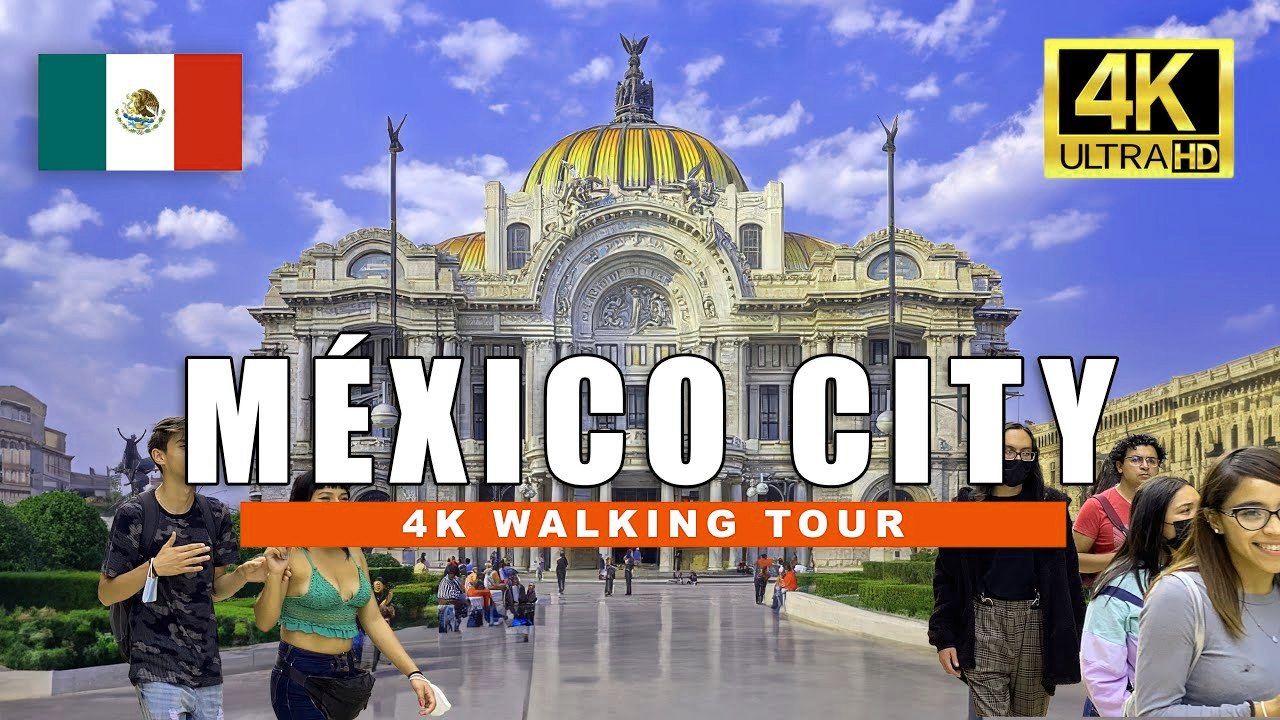
The Centro Histórico is Mexico City’s historic downtown and one of its most intense environments: famous sights, dense street life, and constant motion. The walking tour here includes the best-known landmarks—Zócalo, Bellas Artes, and Plaza Santo Domingo—sites that many visitors would try to see on their own. But the promise of the tour is that it also takes you to “fascinating places often overlooked by most visitors.”
Those overlooked details are specific and memorable: a “sexually ambiguous monument to bullfighters,” a stained-glass ceiling you’d swear was Parisian, and “the biggest bag of cheese doodles you will ever see in your life.” These examples signal a guiding style that values surprise and specificity, not just textbook history. They also reflect what makes the Centro Histórico so rewarding: it’s not only monumental, it’s eccentric.
A guided walk in this area can also help visitors manage the sensory overload. The Centro is energetic, and without a plan it’s easy to drift from one famous façade to another without understanding the layers beneath. The tour’s approach—mixing iconic sites with odd, easily missed moments—creates a narrative rhythm that keeps the neighborhood from becoming a checklist.
Because the Centro Histórico is also a place where Mexico City’s long history is physically visible, a guide can help connect the dots between what you see and what it means in the broader story of the capital. The result is a downtown that feels less like a maze and more like a readable text.
Coyoacán and San Ángel
Coyoacán and San Ángel are presented as “quaint colonial enclaves,” offering a distinctive shift away from the capital’s sprawl. San Ángel is described as once being an enchanting village on the outskirts, but today it is one of the city’s most prestigious neighborhoods. It is known for colonial architecture, outdoor art markets, and dining inside 17th-century mansions converted into fine restaurants. That combination—historic built environment and contemporary prestige—makes it a compelling place to explore with context.
Nearby Coyoacán is framed as the de facto bohemian quarter of the capital, anchored by major historical residences: Frida and Diego’s former home and Trotsky’s residence in exile. These references point to Coyoacán’s long-standing role as a magnet for artists, intellectuals, and political history.
The appeal of these neighborhoods is also sensory and social. The tour description highlights quiet cobblestoned streets, “unspoiled colonial architecture,” vibrant traditional markets, and an ample selection of places to enjoy a delicious meal. In other words, this is a part of Mexico City where the pace invites lingering—exactly the kind of experience that benefits from a five-to-six-hour structure rather than a rushed pass-through.
A small group walk here can be shaped around what visitors want most: architecture, art markets, historical figures, or simply the pleasure of moving through a neighborhood that feels like a different era. The guide’s role is to make that shift legible—so it’s not just “pretty,” but meaningful.
Transportation During the Tour
Transportation is treated as a practical tool, not the centerpiece. The tours are walking tours, but Mexico City’s scale makes it unrealistic to rely on walking alone—especially when the goal is to focus on one or two neighborhoods per day without wasting time getting there.
The logistics are straightforward. David will meet you at your accommodations (or another mutually agreed starting point), and you will travel together using Uber or Didi cabs to arrive at the start of the walking tour. This approach has two advantages implied in the tour design: it reduces the stress of figuring out how to reach the starting point, and it helps ensure the day begins smoothly, on time, and with the group together.
At the end of the tour, the same logic applies. Unless you want to end the tour elsewhere, David will accompany you back to where you’re staying. In a city that can feel intimidating to navigate, especially for newcomers, that “escort back” element is part of the service: it closes the loop and reduces the chance that visitors end the day tired, disoriented, and trying to solve transportation on their own.
It’s also important to note what is and isn’t included. Local transport and transfers (Uber/Didi) are excluded from the tour price. That means travelers should expect to pay those rideshare costs separately. The tour description does not specify typical transport costs, but it does make clear that rideshare is the default method used to connect the meeting point with the walking area.
This rideshare-based model also supports customization. Because the tour can be built around different neighborhoods and themes, the starting point can change depending on the day’s plan. Using Uber or Didi makes it easier to adapt: a day in the Centro Histórico will begin in a different place than a day focused on Coyoacán, San Ángel, or Xochimilco.
In short, transportation here is part of the tour’s promise of ease. The city may be huge and challenging, but the day is designed so visitors can focus on walking, observing, and learning—while the guide helps manage the transitions.
Famous and Lesser-Known Attractions Included
One of the clearest promises of these tours is range: the ability to combine Mexico City’s headline attractions with details that most visitors never encounter. That balance matters because Mexico City is not short on famous sites. The problem is not finding landmarks; it’s deciding which ones matter to you—and how to experience them in a way that feels personal rather than generic.
In the Centro Histórico, the tour includes major sights in the capital’s most energetic neighborhood: the Zócalo, Bellas Artes, and Plaza Santo Domingo. These are the places many travelers arrive expecting to see, and they provide a foundation for understanding the city’s civic and cultural center. But the tour also promises overlooked moments: a sexually ambiguous monument to bullfighters, a stained-glass ceiling that looks Parisian, and an absurdly large bag of cheese doodles. These examples show how the guide uses specificity and surprise to make the city memorable.
Beyond downtown, the menu of tour themes expands what “attractions” can mean. In Coyoacán and San Ángel, the draw includes colonial architecture, outdoor art markets, and dining in 17th-century mansions converted into fine restaurants. Coyoacán is also tied to major historical residences: Frida and Diego’s former home and Trotsky’s residence in exile. The point is not simply to stand outside these places, but to understand why they matter in Mexico City’s cultural story.
Food and markets become attractions in their own right. Mexico City’s markets are described as diverse and atmospheric, reflecting the city’s long history as a hotbed of trade and commerce. Street food stalls are framed as among the most alluring and varied you’ll find anywhere. Lida’s role here is partly curatorial: introducing visitors to “the most reliable and delicious street food in the capital,” a crucial distinction in a city where choice is endless.
Some tours push further outward or deeper into specialized interests. Xochimilco offers an experience of the valley’s ancient lake system: floating along canals in a barge through a tranquil setting that can make you wonder if you’re still within one of the world’s largest cities. A tribute tour to Luis Barragán can include his former residence, a chapel designed for Capuchin nuns, and various houses—spaces known for dramatic use of light, shadow, and color. A muralism tour focuses on Rivera, Orozco, and Siqueiros (and lesser-known artists), emphasizing stories, rivalries, contradictions, and technique.
Even cantinas are treated as cultural landmarks: places with as much personality as London pubs, Paris cafés, or New York bars, where lunchtime botanas create a ritual economy of food and drink. The “off the beaten path” option, meanwhile, is explicitly about neighborhoods where tourists seldom set foot—three hand-picked areas near the center that are gentrifying slowly and imperfectly.
Pricing and Inclusions of the Tours
Pricing is presented as variable because the tours are hand-crafted. Custom tour prices typically range between US$165 and US$375 per person, based on a party of two to six people touring together. The party size cannot exceed six people in these purposely small, highly customized tours. Single traveler tours can be arranged by request, though the brief does not specify a standard single-traveler rate.
In addition to the tour price, travelers should budget for typical day-of expenses. Typical expenses for food, drinks, and sundries are about US$30 per person, varying depending on the type of food establishment you choose and how much you drink. This estimate is useful because many of the tour themes—markets, street food, cantinas—naturally involve eating and drinking along the way.
What the day tour price includes is clearly defined:
- A personal consultation with David to create a carefully crafted walking tour designed around your party’s interests, party size, and available time.
- Being met personally by David at your accommodations (or another mutually agreed meeting point).
- A fully escorted, highly customized tour designed around your party’s interests, with David accompanying you back to where you are staying five to six hours later (unless you want to end elsewhere).
Equally important is what the price excludes. Travelers pay separately for:
- Local transport and transfers (Uber/Didi).
- Entry fees to sites, museums, archaeology centers, etc.
- Food purchased at street stalls, markets, fondas, restaurants, etc.
- Drinks, including alcoholic drinks consumed on the tour.
- Tips for waiting staff, drivers, and the guide.
This inclusion/exclusion structure signals that the fee is primarily for expertise, planning, and guided time—rather than bundling in tickets and meals. For travelers, that can be an advantage: it keeps the tour flexible and allows the group to choose where to eat, what to enter, and how much to spend beyond the guide’s services.
The process for getting a final price is also part of the model. Visitors are invited to complete a tour info request form, after which David contacts them to discuss custom requirements and create a custom quote based on interests, party size, and time available.
Exploring Mexico City: A Journey Through Personalized Walking Tours
The Unique Charm of Mexico City
Mexico City’s appeal is not a single monument or museum; it’s the accumulation of centuries. The city is described as one of the most extraordinary in the world, with seven centuries of history, culture, art, and architecture—plus a dynamic street energy that is uniquely its own. That combination is hard to replicate elsewhere: ancient foundations and modern reinvention sharing the same urban stage.
The charm is also in contrast. In one part of the city you can feel the weight of history; in another, the pulse of contemporary life. Trendy neighborhoods like La Condesa and La Roma are changing quickly, shaped by global attention and cycles of fashion. Colonial enclaves like San Ángel and Coyoacán offer cobblestoned streets and older architectural rhythms that feel like a different era. Downtown, the Centro Histórico compresses iconic landmarks and overlooked oddities into a dense, energetic core.
Mexico City’s markets and street food add another layer. The city has been a hotbed of trade and commerce since ancient times, and that history continues in diverse, atmospheric markets and the profusion of food stalls along the streetscape. For many visitors, these everyday spaces become the most vivid memories—precisely because they are alive, not curated.
And then there are experiences that challenge the idea of what a megacity contains. Xochimilco’s canals preserve a fragment of the valley’s former system of lakes, canals, and islands. Floating there in a barge can feel pastoral and strangely tranquil, even though you remain within the limits of one of the world’s largest cities.
The city’s charm, in other words, is not just in what it has—it’s in how much it contains at once. That abundance is thrilling, but it can also be intimidating. Which is why the way you explore matters as much as what you see.
Why Choose Small Group Walking Tours?
Small group walking tours are built for a city that can overwhelm. Mexico City is huge, and navigating it—geographically and culturally—can intimidate even confident travelers. A small group format addresses that challenge by making the experience more manageable, more conversational, and more responsive.
The tours described here are purposely limited to one to six people. That size changes the dynamic. Instead of following a guide through a crowd, you can ask questions as they arise, pause when something catches your attention, and move at a pace that fits your party. The guide can also tailor the day in real time—spending longer in a place that resonates, or shifting emphasis depending on what the group wants to understand.
Walking is central because it reveals the city at street level. It’s one thing to pass through neighborhoods in a vehicle; it’s another to notice the textures of daily life: the way a plaza functions, how a market is organized, what languages you hear on a gentrifying street, or how a historic building sits beside something unexpected. Walking makes those details visible.
At the same time, the tours acknowledge that walking alone isn’t enough in Mexico City. The city’s scale and complexity mean that even a walking tour needs smart logistics. That’s why the structure includes meeting at your accommodations and using rideshare (Uber/Didi) to reach the walking area—so the day is focused on exploration rather than transit puzzles.
Finally, small group tours can offer value that “commonly offered public tours cannot touch,” precisely because they are personal. In a city of layered history and endless options, the ability to shape a day around your interests is not a minor upgrade—it can define whether Mexico City feels like a maze or a story you can follow.
Tailored Experiences for Every Traveler
Mexico City is not a destination with a single “right” itinerary. Some visitors arrive wanting the famous landmarks; others want to understand the city through food, art, architecture, or neighborhood life. The tours described here are designed to meet that variety by starting with a consultation and building a day around the traveler’s interests, party size, and time available.
The menu of possible experiences is wide enough to match very different travel styles. A visitor drawn to urban change can explore La Condesa and La Roma, neighborhoods described as the city’s hippest and rapidly gentrifying—places where you might hear more English or French than Spanish, yet still find echoes of traditional atmosphere if you know where to look. A traveler focused on history can spend time in the Centro Histórico, seeing major sights like the Zócalo and Bellas Artes while also being led to overlooked details that most visitors miss.
For those who want a shift in pace, Coyoacán and San Ángel offer colonial enclaves with cobblestoned streets, markets, and cultural landmarks tied to figures like Frida Kahlo, Diego Rivera, and Leon Trotsky. For food lovers, markets and street stalls become the main event, guided by someone who has been trusted to find the best and most reliable places—even for a major television production.
Specialized interests are also accommodated. Architecture enthusiasts can focus on Luis Barragán, Mexico’s most important architect of the 20th century and the country’s only Pritzker prizewinner, exploring spaces known for their use of light, shadow, and color. Art lovers can follow Mexican muralism through the works and stories of Rivera, Orozco, and Siqueiros, including rivalries and contradictions that shaped the movement. Travelers who want social culture can explore cantinas, described as having as much personality as iconic drinking institutions in London, Paris, or New York.
The key is that these themes can be arranged on their own or combined. If you’re unsure what to prioritize, a custom-designed tour is offered to help you decide what to visit first, last, or together—without cramming, so you can truly experience and absorb what each place offers.
Discovering Hidden Gems in the City
Mexico City’s famous attractions are easy to list. What’s harder—and often more rewarding—is finding the details that make the city feel personal and surprising. The tours described here explicitly build in that element of discovery, especially in areas that visitors think they already understand.
In the Centro Histórico, for example, the tour includes the headline sights: the Zócalo, Bellas Artes, Plaza Santo Domingo. But it also promises places “often overlooked by most visitors,” including a sexually ambiguous monument to bullfighters and a stained-glass ceiling that looks Parisian. Even the mention of an enormous bag of cheese doodles signals a guiding sensibility that pays attention to the city’s oddities and humor, not just its grandeur.
Hidden gems also appear in the way neighborhoods are framed. La Condesa and La Roma are widely visited, but the tour focus is on contrasts—finding traditional echoes amid rapid gentrification, and understanding how neighborhoods move through cycles influenced by time and fashion. The “hidden” element here is not a secret doorway; it’s a way of seeing.
The “off the beaten path” option makes the promise more literal. For travelers who want to step away from world-renowned sites, the guide offers to take you to three lovely neighborhoods near the center where tourists seldom set foot. These areas are described as gentrifying slowly and imperfectly—an important qualifier that suggests a more complex, less polished view of the city.
Even markets and street food can be treated as hidden-gem territory, not because they are unknown, but because the best experiences often depend on local knowledge: which stalls are reliable, which holes-in-the-wall are worth your appetite, and how to navigate the profusion of choices without guesswork.
In a city as vast as Mexico City, “hidden gems” are not always hidden behind distance. Often they are hidden behind familiarity—details you would walk past without someone pointing them out and explaining why they matter.
Cultural Immersion Through Local Insights
Cultural immersion in Mexico City is not just about visiting museums or photographing landmarks. It’s about understanding how the city’s past and present coexist—and how that coexistence shows up in daily life. The tours described here aim to deliver that immersion through local insight and storytelling.
Consider the markets. Mexico City’s role as a hotbed of trade and commerce “since ancient times” is not just a historical note; it’s visible in the diverse, atmospheric markets that continue to thrive. A guide can help visitors read these spaces: what makes them function, what foods and objects signal regional diversity, and how street stalls fit into the city’s everyday rhythms.
Or consider muralism. Mexico’s muralist movement is described as one of the country’s most important contributions to twentieth-century art, led by Rivera, Orozco, and Siqueiros, alongside lesser-known artists. A muralism tour is not simply about looking at paintings on walls; it’s about learning the stories, rivalries, contradictions, and techniques that shaped the movement into a public art form with lasting influence.
Cantinas offer another form of immersion. They are described as having as much personality as famous social spaces in other global cities, and their lunchtime tradition of botanas—food served at no extra charge for those who keep ordering drinks—reveals a particular social economy. A guided cantina tour, visiting two, three, or more hand-picked places, becomes a way to understand Mexico City’s social rituals, not just its flavors.
Even Xochimilco can be framed as cultural immersion. Floating along ancient canals in a barge is not only scenic; it connects visitors to a bygone era when the valley was a vast system of lakes, canals, and islands. The experience is described as tranquil and pastoral—an immersion into a different Mexico City than the one most people imagine.
Local insight is what turns these experiences from activities into understanding. In a small group, that insight can be delivered through conversation—questions answered in the moment, stories tailored to what the group is seeing, and context that makes the city’s complexity feel coherent.
Navigating Mexico City with Ease
Mexico City’s size is part of its mystique, but it’s also the source of many visitors’ stress. The city is described as “impossibly huge and challenging to navigate,” and that challenge can shape a trip: time lost in transit, uncertainty about where to start, and the feeling that you’re always missing something.
The tours described here are designed to reduce that friction through structure and guidance. The day begins with a personal meeting at your accommodations (or another agreed point), eliminating the need to find a meeting plaza or decode unfamiliar directions. From there, you travel together using Uber or Didi to reach the start of the walking tour. That choice reflects a practical understanding of Mexico City: neighborhoods are walkable internally, but distances between them often require a vehicle.
The tours also manage navigation by limiting scope. Rather than trying to cover the entire city, a typical day focuses on one or two neighborhoods or areas of interest. This approach makes the city feel smaller—not by simplifying it, but by giving you a defined piece of it to understand deeply.
Customization further improves ease. Visitors often face a bewildering choice of options, and deciding what to do can be as exhausting as doing it. A consultation with the guide helps translate interests into a plan, ensuring you get the most from limited time without cramming.
Finally, the tour’s end is handled with the same attention as the beginning. Unless you want to end elsewhere, the guide accompanies you back to where you’re staying five to six hours later. That detail may sound minor, but in a large city it can be the difference between ending the day relaxed or ending it in logistical scramble.
Ease, in this context, doesn’t mean insulation from the city. It means removing avoidable obstacles so you can focus on what you came for: the streets, the stories, and the lived texture of Mexico City.
Safety Considerations for Tourists
The brief emphasizes that Mexico City can be intimidating to navigate, which often overlaps with visitors’ broader concerns about comfort and confidence in a vast unfamiliar city. While no specific safety statistics or advisories are provided, the tour structure itself suggests a response to common traveler anxieties: guided movement, clear logistics, and local knowledge.
Meeting at your accommodations (or another agreed starting point) reduces the uncertainty of finding a meeting location alone. Traveling together by Uber or Didi to the walking area provides a controlled transition through the city’s scale and traffic complexity. Staying with a guide for five to six hours—rather than navigating independently—can help visitors feel more grounded, especially in dense areas like the Centro Histórico.
Small group size also plays a role. With only one to six people, it’s easier to keep the group together, communicate clearly, and adjust pace if someone feels uncomfortable or needs a break. A guide who knows the city intimately can also steer the experience toward places that fit the group’s comfort level and interests.
The exclusions list is also relevant in a practical way. Because entry fees, food, drinks, and tips are not bundled, travelers can make choices on the day based on what feels right—whether that means selecting a sit-down restaurant instead of street stalls, or choosing which sites to enter.
For many tourists, “safety” is not only about avoiding risk; it’s about reducing uncertainty. A guided, customized tour—planned through consultation, executed with door-to-door meeting and return—can provide that sense of structure in a city that otherwise feels sprawling and complex.
Conclusion: Your Adventure Awaits
Mexico City offers an extraordinary density of history, culture, art, architecture, and street energy—but its scale can make it hard to access on your own terms. Personalized small group walking tours are one way to turn that challenge into an advantage: narrowing the map, deepening the experience, and letting curiosity guide the day.
With David Lida’s approach—tours for one to six people, built around a consultation and focused on one or two neighborhoods per day—visitors can move beyond generic sightseeing. The experience can include iconic landmarks like the Zócalo and Bellas Artes, but also the overlooked details that make Mexico City feel alive and surprising. It can center on markets and street food vetted for reliability, on cantinas with their lunchtime rituals, on colonial enclaves tied to major historical figures, or on specialized themes like Barragán’s architecture and Mexico’s muralist movement.
The structure is designed for ease: meet at your accommodations, use Uber or Didi to reach the walking area, and return together unless you choose to end elsewhere. Pricing reflects customization, ranging from US$165 to US$375 per person for parties of two to six, with typical additional food-and-drink expenses around US$30 per person and key costs—transport, entry fees, meals, drinks, tips—paid separately.
In a city that can feel impossibly huge, the promise of a small group, tailored walking tour is simple: Mexico City becomes not just a place you visit, but a place you can begin to understand—one neighborhood, one story, one unexpected detail at a time.

Martin Weidemann is a digital transformation expert and entrepreneur with over 20 years of experience leading fintech and innovation projects. As a LinkedIn Top Voice in Digital Transformation and contributor to outlets like Forbes, he now brings that same expertise to travel and mobility in Mexico City through Mexico-City-Private-Driver.com. His focus: trustworthy service, local insights, and peace of mind for travelers.