
Editorial context: This guide is written from the perspective of a digital transformation practitioner focused on travel and mobility in Mexico City, with an emphasis on clear logistics, transparent inclusions/exclusions, and traveler peace of mind; details referenced here are drawn from the Mexperience feature cited above.
Custom tours offer personalized experiences in Copper Canyon
Source note: The tour features, inclusions, and price points summarized below are based on a Copper Canyon custom-tour offering featured by Mexperience (Mexico Travel News).
- Build an itinerary around the iconic Copper Canyon train ride, or add hikes, horseback riding, and day tours.
- Start in Los Mochis, Mazatlán (with transfer to El Fuerte), or Chihuahua City—then finish where it’s most convenient.
- Choose independent travel with a tailored information packet, or upgrade to a fully escorted tour with an English-speaking guide.
- Stay in carefully selected colonial-style hotels with private baths, designed for comfort in remote, scenic settings.
- Pay a core package price, then add optional activities, train-class upgrades, and custom side trips as your budget allows.
Overview of Copper Canyon
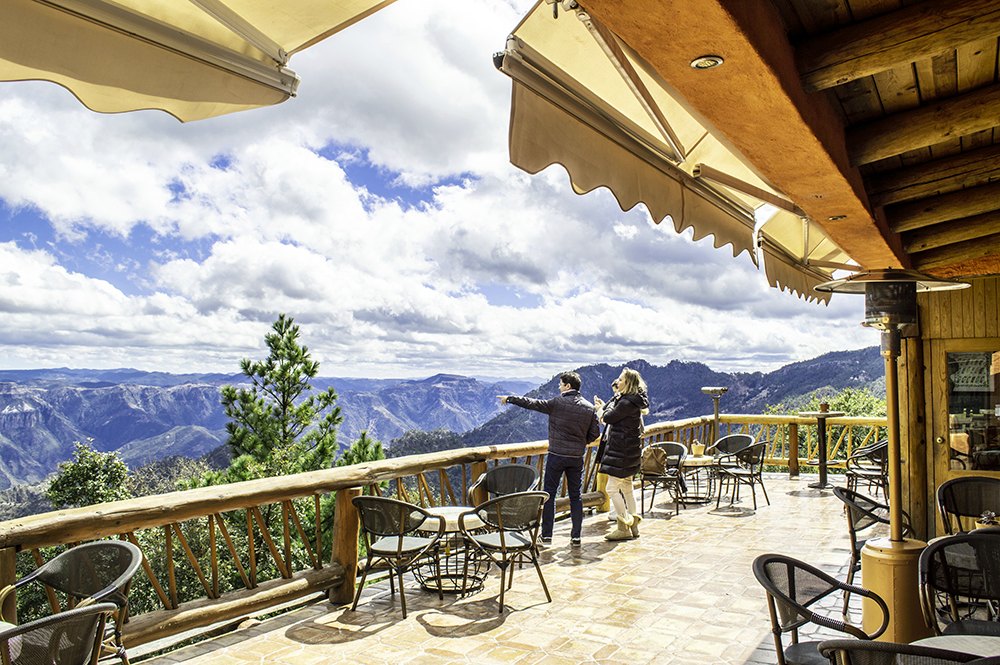
Copper Canyon—known in Spanish as Barranca del Cobre—is not a single gorge but a vast region in northwest Mexico defined by scale and variety. The territory is composed of a series of twenty canyons, carved over time by six rivers, creating a landscape of ridgelines, deep ravines, and shifting climates that can change dramatically as you descend.
For travelers, that geography translates into two things: spectacular scenery and complex logistics. Distances are long, terrain is rugged, and the most memorable viewpoints and communities are often far from major cities. That’s why custom tours have become a practical way to experience the region—especially for families or small groups who want the freedom to set the pace without having to solve every transfer, ticket, and hotel booking on their own.
A long-running travel partner featured by Mexperience has been taking visitors into the canyons for over 20 years, specializing in custom-made tours that “take care of all the details.” The promise is straightforward: spend your time absorbing the landscape—rather than worrying about how to connect airports, hotels, train departures, and remote day trips.
While Copper Canyon can be explored by hiking, biking, trekking, horseback, or four-wheeling, the region’s signature experience—and the backbone of many itineraries—is the railway journey that threads through the Sierra’s most dramatic terrain.
The Copper Canyon Railway Experience
The Copper Canyon train line—often referred to as El Chepe—is the most popular way to traverse the region, and for good reason: it delivers access to remote canyon scenery that would otherwise require long, demanding road travel. For many visitors, the train is not just transportation; it’s the main event.
The route runs between Los Mochis and Chihuahua City, crossing some of Mexico’s most rugged natural terrain. The line is celebrated as a major engineering achievement, and it’s also the connective tissue that makes multi-stop itineraries possible: you can build a trip around a few key towns and viewpoints, then add day tours and hikes based on interest and ability.
Custom tours typically include train tickets booked in a class of service that matches your preferences and budget. The train offers three classes of service: First class, Executive class, and Standard class. Standard is included in the core pricing described later; upgrades are available for a surcharge.
Route Details
At its simplest, the Copper Canyon railway experience is a point-to-point journey: Los Mochis ↔ Chihuahua City. But in practice, travelers rarely treat it as a single ride. The most rewarding itineraries break the route into segments, pairing train travel with overnight stays and local excursions.
A common custom-tour structure begins on the Pacific side—arriving into Los Mochis (airport code LMM)—then transferring to El Fuerte for an overnight in a colonial-style hotel before boarding the train early the next morning. From there, the journey continues into the canyon region, where tours often include overnight stays on the canyon rim near Divisadero, and time in gateway towns such as Creel.
Alternatively, travelers can start on the inland side by flying into Chihuahua City (airport code CUU) and boarding the train there—an approach that can be paired with optional side tours around Chihuahua before or after the canyon portion.
Custom tours can also be designed as a loop (ending where you began) or as a one-way journey that finishes at a different airport than the start. The key advantage is control: you can prioritize the train ride itself, or use it as the spine of a broader itinerary that includes hikes, cultural visits, and deeper canyon descents.
Engineering Marvels
The Copper Canyon railway is widely described as a stunning engineering achievement, and the numbers help explain why. The line is over 390 miles long and crosses 39 bridges and 86 tunnels. Among them: the longest bridge is over 1,500 feet, and the longest tunnel is over a mile.
Those statistics matter because they reflect the terrain the railway traverses—mountainsides, deep ravines, and rugged wilderness. The train hugs the edge of mountains and crosses yawning gaps on bridges, offering a moving panorama of cliffs, valleys, and river-cut canyons. It’s a route built to negotiate extreme topography, and the result is a journey where the scenery is constant and often breathtaking.
For travelers who want the drama of Copper Canyon without committing to strenuous trekking or long off-road drives, the railway is the most accessible way to see the region’s scale. And for those who do want to hike or ride into the canyons, the train provides the essential access points—linking towns and trailheads that would otherwise be difficult to connect efficiently.
Starting Points for Custom Tours
Custom tours of Copper Canyon are designed around three practical gateways—each with its own rhythm, travel time, and pre-canyon experience. Tours can begin in Los Mochis, Mazatlán, or Chihuahua City, with airport pickups and transfers arranged as part of the package. From there, you can either return to your starting point (a loop) or finish at one of the other gateways, depending on flight availability, schedule, and preference.
The advantage of choosing a start point isn’t just convenience; it shapes the first impression of the trip. Starting on the Pacific side typically means easing into the canyon journey via El Fuerte and an early-morning train departure. Starting in Chihuahua City puts you on the train sooner, with the option to add city-based touring before or after the canyon segment.
Los Mochis
Los Mochis is a recommended starting point for many travelers because it offers a clean, efficient entry into the rail journey. You fly into Los Mochis (LMM), where you are transferred to accommodations arranged for you.
From Los Mochis, the tour typically includes comfortable ground transportation to El Fuerte, a 90-minute road trip. El Fuerte is described as a “beautifully picturesque” town, and it plays a strategic role in the itinerary: you stay overnight in a charming colonial-style hotel, then board the train early in the morning to begin the canyon crossing.
This structure is popular because it reduces stress on day one. Instead of rushing to match a train schedule immediately after landing, you settle in, sleep well, and start the rail journey rested. It also creates space for optional side tours in and around El Fuerte—useful for travelers who want a cultural warm-up before the big scenery days.
For families or small groups, Los Mochis also simplifies logistics: one airport arrival, one transfer, one overnight, then the train. In a region where distances can be deceptive, that kind of sequencing can make the entire trip feel smoother.
Mazatlán
Mazatlán offers a different entry: a coastal city start with a longer overland transfer into the rail corridor. You fly into Mazatlán (MZT) and are provided with ground transportation to El Fuerte, where you’ll board the train.
The road journey from Mazatlán to El Fuerte is described as a six-hour road trip that includes travel along a scenic oceanside highway. For travelers who want to combine a Pacific-coast stay with Copper Canyon, this start point can make sense—especially if you’re already in Mazatlán or prefer its flight options.
Like the Los Mochis start, the Mazatlán route typically includes an overnight in El Fuerte before the early train departure. That overnight stop is not just a convenience; it’s a buffer that helps protect the itinerary from the fatigue of a long transfer day.
Because Mazatlán-based core tours are priced differently (with an 8-day package highlighted in the pricing section), this gateway is often paired with a slightly longer itinerary. The logic is simple: if you’re investing a full day in the transfer, you may want more time in the canyons to balance the trip.
Chihuahua City
Chihuahua City is the inland gateway and the other end of the railway line. You fly into Chihuahua City (CUU) and board the train from there, beginning the canyon journey from the opposite direction.
This start point can be especially appealing for travelers who want to add time in the city itself. Custom tours can include side tours around Chihuahua before or after the canyon portion, allowing you to bookend the wilderness with urban history and guided visits in the historic quarters.
Starting in Chihuahua City can also be a practical choice for travelers who prefer to finish on the Pacific side, or who want to structure the trip as a one-way journey that ends in Los Mochis or Mazatlán. As with other start points, airport transfers are included: you are met personally and transported to your accommodations, and at the end of the tour you’re transferred back to the airport of your choice.
The key is flexibility. Copper Canyon is not a destination where one direction is inherently “right”—but the start point you choose will shape the pacing, the first overnight, and the add-on options that fit most naturally.
Tailored Tour Packages
Custom tours in Copper Canyon are built around a core idea: remove logistical friction so travelers can focus on the experience. The operator highlighted by Mexperience emphasizes that tours are “expertly crafted,” backed by over two decades of experience, and designed for your party alone—guides and transportation exclusively assigned to you, rather than shared with a larger group.
Customization doesn’t mean starting from scratch; it means selecting the right building blocks—start point, duration, train class, hotels, and day tours—then adjusting the pace and support level. Tours can be independent (self-guided) with a tailored information packet, or fully guided with an English-speaking guide for an extra fee.
Across both styles, the package approach is consistent: airport meet-and-greet, transfers, train tickets, hotels, and key assistance services are arranged in advance. The goal is to make a remote region feel navigable without stripping away the sense of discovery.
Transportation and Accommodations
Transportation is the backbone of any Copper Canyon trip, and custom tours typically bundle the pieces that are hardest to coordinate independently. That starts with airport transfers: you are met at the airport and transported to your accommodations at the beginning of the trip, then transferred back to the airport at the end—either the same one or a different gateway, depending on your itinerary.
Overland transfers are also built in where needed. For example, travelers starting in Los Mochis or Mazatlán are driven to El Fuerte to board the train, with the Los Mochis–El Fuerte segment taking about 90 minutes, and the Mazatlán–El Fuerte transfer taking about six hours along a scenic coastal highway.
Accommodations are described as attractive colonial-style hotels. The emphasis is on comfort in scenic, sometimes remote locations—particularly in the canyon areas where lodging options can be limited. The operator notes that water and food are safe, and that travelers can expect excellent service with friendly, attentive staff.
Many itineraries also include overnight stays near Divisadero, on the canyon rim, placing travelers close to viewpoints and activities without requiring long daily commutes.
Food and Assistance Services
Meals and on-the-ground support can make or break a trip in a region where distances are long and options vary by town. In these custom tours, food and assistance services are part of the package design, with specifics depending on where you are staying.
The tour inclusions list highlights that breakfast, lunch, and dinner are included at Cerocahui and Divisadero only. Elsewhere, travelers should expect to pay for additional meals, snacks, and drinks separately—especially alcoholic beverages, which are explicitly excluded from package pricing.
Assistance services also extend beyond meals. Independent travelers receive a detailed information packet tailored to the itinerary, designed to guide day-by-day activities and reduce uncertainty around timing, transfers, and local logistics. For those who want maximum support, a fully escorted tour with an English-speaking guide can be added for an extra fee—an option that can be particularly valuable for travelers who want deeper context, smoother coordination of day tours, or help navigating changes.
The overall model is pragmatic: core support where it matters most, with optional upgrades for travelers who want a more guided, interpretive experience.
Accommodation Options in the Canyons
In Copper Canyon, where the landscape is dramatic and the distances are real, accommodation is more than a place to sleep—it’s part of the travel strategy. The custom tours described by Mexperience rely on carefully chosen hotels that balance comfort with location, often placing travelers close to the canyon rim or near key rail stops.
The hotels used in these itineraries are described as attractive colonial-style properties, and importantly for many travelers, all rooms have private baths. That detail matters in remote regions where lodging standards can vary widely. The operator also emphasizes that guests can expect excellent service with friendly, attentive staff—another practical consideration when you’re far from major urban centers.
Safety and comfort are recurring themes. The tour description notes that water and food are safe, a reassurance that can influence how confidently travelers eat and drink during multi-day stays. In a region where some travelers may be cautious about hydration and meals, that clarity can reduce stress and help people focus on the experience.
Location is the other key variable. Many itineraries include overnight stays near Divisadero, on the ridge of the canyon, which can reduce daily travel time to activities like cable cars, zip lines, and hikes. Other itineraries include an overnight in El Fuerte before the train ride begins—an approach that creates a gentle transition into the canyon journey and avoids same-day rush after arrival.
For travelers adding deeper customizations—such as a visit to Batopilas—accommodations can become a highlight in their own right, including an overnight at a restored 15-room hacienda hotel. In that sense, lodging isn’t just functional; it can be a curated part of the story of the trip.
Flexible Itineraries for Tour Duration
Copper Canyon rewards time—but not everyone has the same schedule, budget, or appetite for long travel days. Custom tours address that reality with flexible durations, typically ranging from five to eight days, with the possibility of going longer depending on your plans and budget.
The operator’s approach is to match the itinerary to your priorities. If the train ride is the main goal, shorter itineraries concentrate on the rail journey and a small number of key stops. If you want cultural interaction, more hikes, and additional day tours, longer itineraries create the breathing room needed to do that without rushing.
This flexibility also helps travelers manage the region’s geography. The canyons are vast, and moving between towns can take time. A well-designed itinerary isn’t just about adding more activities; it’s about sequencing them so that travel days, overnight locations, and energy levels make sense.
Shorter Trips
Shorter itineraries are designed for travelers who want the essence of Copper Canyon—especially the railway—without committing to a full week. The tour description highlights four-night stays that focus “primarily on the extraordinary train ride through the canyons.”
In practice, that usually means structuring the trip around the Los Mochis–Chihuahua City rail line (in one direction or as part of a loop), with limited but carefully chosen overnights. A common pattern is to begin in Los Mochis, transfer to El Fuerte for an overnight, then board the train early the next morning—maximizing the scenic rail time while keeping the overall schedule tight.
Short trips can still feel complete if expectations are clear: you’re prioritizing the moving panorama of bridges, tunnels, ravines, and mountain edges, with perhaps one or two add-on experiences near major stops. For travelers with limited vacation days, this approach can deliver a high “scenery-to-planning” ratio—especially when airport transfers, train tickets, and hotels are handled as a package.
The trade-off is depth. With fewer nights, there’s less time for longer hikes, remote canyon descents, or extended cultural touring. But for many travelers, the train itself is the headline—and a shorter itinerary is built to honor that.
Longer Experiences
Longer itineraries—typically six nights or more—are where Copper Canyon begins to open up beyond the classic viewpoints. The tour description notes that longer tours enable travelers to “experience more of this outstanding region,” including opportunities to interact with tribes and communities who live locally, and to add additional day tours.
With extra time, itineraries can incorporate activities around Creel, cultural and spiritual touring near San Ignacio de Arareko and Lake Ararek, and more ambitious hikes—such as the 10-hour day hike to Basaseachi Falls, described as the highest waterfall in Mexico. Longer tours also make it easier to add destinations like Cerocahui, situated in Urique Canyon (the deepest canyon in the region), and to visit viewpoints such as Cerro del Gallego, which offers dramatic views down to the town of Urique and the river along the valley floor.
For travelers seeking something beyond the usual tourist circuit, longer custom itineraries can also include a visit to Batopilas, a rural town reached via an 85-mile journey that takes most of the day and passes through three climate zones—from the upper Sierra at over 7,000 feet down toward near sea level. That kind of add-on is difficult to fit into a short trip, but it can become a defining chapter of a longer one.
Activities and Experiences in Copper Canyon
Copper Canyon is often introduced through the train ride, but it’s experienced on foot, on horseback, and through encounters with the region’s communities and landscapes. Custom tours allow travelers to choose from a menu of activities, typically priced as modest additional fees per person, per activity, and designed to match different fitness levels and interests.
The activity list spans adrenaline and contemplation: cable cars and zip lines across ravines, guided hikes on established trails, visits to remote canyons and caves, and cultural touring around towns like Creel. For travelers with extra days, the options expand further—into rafting, fishing (seasonal), eco-adventure outings near Los Mochis, and longer hikes to waterfalls and hot springs.
The key advantage of a custom format is pacing. You can build a trip that is physically demanding, gently active, or mostly scenic—without being locked into a one-size-fits-all schedule.
Adventure Activities
For travelers who want to feel the canyon’s scale viscerally, the region offers a set of signature adventure experiences—many of them designed to showcase the landscape from above or deep within.
Among the headline activities is the third longest cable car in the world, a ride that emphasizes height, distance, and sweeping views. For a more adrenaline-forward option, there are zip lines across ravines, turning the canyon’s verticality into a direct thrill. An aerial forest view experience adds another perspective—less about speed, more about seeing the terrain from a vantage point that’s hard to reach on foot.
Hiking options are tiered by difficulty. An easy/moderate one-hour hike along the Tarahumara trail offers a manageable way to step into the landscape without committing to a full-day trek. For stronger hikers, a three-hour moderate/difficult hike visits the community of Wakajipare and a Tarahumara museum designed by the Rarámuri community, combining physical effort with cultural context.
Horseback riding is also part of the adventure menu: a 3.5-hour ride into the canyon is designed to reach what’s described as the best view of the Urique River—a classic Copper Canyon image of water threading through steep walls.
For travelers who can add days, the adventure list grows: eco/adventure tours around Los Mochis (including fishing, snorkeling, boat rides, bat caves, and sunset on Farallon island), and longer hikes around Creel, including hot springs and Basaseachi Falls.
Cultural Immersion
Copper Canyon is not only a landscape; it’s a lived-in region where indigenous communities and small towns shape the experience. Longer itineraries are explicitly positioned as a way to interact with tribes and communities who live locally, and several activities are designed to make that interaction respectful and meaningful.
One of the most direct cultural components is the hike to Wakajipare and the visit to the Tarahumara museum designed by the Rarámuri community. The fact that the museum is designed by the community itself signals an experience intended to be rooted in local perspective, not just outside interpretation.
Around Creel and Cusarare, travelers can join a cultural and spiritual tour that includes the village of San Ignacio de Arareko, Lake Ararek, and several valleys—among them the Valley of the Monks. These stops are framed as scenic and cultural, offering a sense of place that goes beyond viewpoints.
El Fuerte can also be a cultural anchor, especially for travelers who add extra days. Optional experiences include visiting Mayo indigenous villages and dances, as well as a gentle raft cruise down the El Fuerte river. Seasonal activities like black bass fishing are also mentioned, alongside wellness options such as massage and hydro whirlpool therapies.
For travelers who extend the itinerary to Chihuahua City, the cultural dimension becomes more urban: a guided tour of the historic quarters and a visit to local limestone caves can round out the trip with history and geology—an effective contrast to the canyon wilderness.
Pricing Structure for Custom Tours
Custom Copper Canyon tours are priced as a core offering with optional add-ons. The core packages cover the essential structure—transfers, train tickets, hotels, and certain meals—while travelers can choose to pay extra for upgraded train classes, optional activities, single occupancy, and deeper customizations.
The operator’s published prices are per person and based on two people sharing a room, with discounted rates for children ages 3–11 when accompanied by an adult. As with most travel products, prices are subject to change, and personalized quotes are recommended for specific dates and preferences.
What’s included is clearly defined—and so are the exclusions. Flights to and from the region are not included, nor are additional meals outside the specified locations, drinks and snacks, tips, optional activities, or trip insurance.
Core Tour Packages
Pricing scope note: The figures below are published examples and are subject to change; a personalized quote is recommended for your dates, party size, and preferred train class.
The core packages highlighted by Mexperience are structured by duration and starting point:
- 5-day core tour packages starting in Los Mochis or Chihuahua: from US$820 per person (double occupancy).
- 7-day core tour packages starting in Los Mochis or Chihuahua: from US$955 per person (double occupancy).
- 8-day core tour packages starting in Mazatlán: from US$1,060 per person (double occupancy).
These prices include a standard class train ticket, with the operator arranging the booking in the class you choose. The package also includes being met personally with airport transfers, lodging at carefully chosen hotels, and either a detailed information packet for independent travel or a fully escorted tour (with the guide option described as an add-on elsewhere in the tour description).
Meals are included in a limited but important way: breakfast, lunch, and dinner at Cerocahui and Divisadero only. That means travelers should budget for meals in other locations, depending on the itinerary.
For families, the child discount (ages 3–11) can materially change the overall cost, especially on longer itineraries where per-person pricing adds up quickly.
Additional Costs and Customizations
The core price is only the starting point. Travelers should expect additional costs in several common categories.
Train class upgrades are one of the most straightforward. While standard class is included, Executive and First-class tickets carry a surcharge of between US$20 and US$250 each, depending on travel choices. For travelers who value extra comfort on long scenic segments, this is often the first upgrade considered.
Activities and local day tours are priced separately. The tour description notes that activity costs typically range from US$15 to US$75 per person, per activity. That applies to experiences like the cable car, zip lines, hikes, and other add-ons offered in the canyon region.
There are also surcharges for single-occupancy rooms and solo travelers, reflecting the underlying hotel pricing model. And beyond the canyon itself, optional customizations around Los Mochis, Creel, and Chihuahua can be quoted and arranged by request—useful for travelers who want to add eco-adventure days, longer hikes, or city touring.
Finally, the exclusions list is a practical checklist for budgeting: flights, additional meals, drinks and snacks (including alcohol), tips (for guide, driver, hotel and restaurant staff), and trip insurance are not included in package pricing. In a remote region where plans can be disrupted by weather or schedule changes, insurance is often considered a separate but important line item.
Explore the Wonders of Copper Canyon with Custom Tours
Unforgettable Experiences Await
Copper Canyon’s appeal is a blend of extremes: vast canyon systems shaped by six rivers, a railway that crosses dozens of bridges and tunnels through rugged terrain, and a menu of experiences that can be as gentle as a scenic cable car or as demanding as a full-day hike. Custom tours are built to make that complexity manageable—by bundling transfers, hotels, train tickets, and support—while still leaving room for personal choices.
For some travelers, the unforgettable moment is simply watching the landscape unfold from the train as it clings to mountainsides and crosses deep ravines. For others, it’s stepping off the rail line to hike the Tarahumara trail, ride horseback toward the Urique River, or spend extra days reaching places like Cerocahui, Batopilas, or Basaseachi Falls. The advantage of a tailored itinerary is that it can hold all of those possibilities—without forcing you into a fixed group schedule.
Plan Your Adventure Today
Planning Copper Canyon well comes down to a few decisions: where to start (Los Mochis, Mazatlán, or Chihuahua City), how long to stay (from train-focused short trips to longer, deeper itineraries), and how guided you want the experience to be (independent with a detailed packet, or escorted with an English-speaking guide for an extra fee).
From there, the trip becomes modular: choose your train class, select the activities that fit your interests and fitness level, and add side tours where they make sense—El Fuerte’s cultural options, Creel’s surrounding valleys, Chihuahua City’s historic quarters, or deeper canyon descents like Batopilas.
Copper Canyon is one of Mexico’s most remarkable regions. A well-built custom tour doesn’t just get you there—it helps ensure your time is spent on the scenery, the communities, and the journey itself, not on the logistics in between.

Martin Weidemann is a digital transformation expert and entrepreneur with over 20 years of experience leading fintech and innovation projects. As a LinkedIn Top Voice in Digital Transformation and contributor to outlets like Forbes, he now brings that same expertise to travel and mobility in Mexico City through Mexico-City-Private-Driver.com. His focus: trustworthy service, local insights, and peace of mind for travelers.