Scope note: This guide is written from the perspective of a digital transformation practitioner now focused on travel and mobility in Mexico City—prioritizing clear standards, reliable planning signals, and practical context for travelers exploring Mexico beyond the main hubs.
Discover the charm of Mexico’s magical towns
- Mexico’s Pueblos Mágicos are government-recognized towns celebrated for culture, history, nature, and living traditions.
- The program began in 2001 with three towns and has grown to 177 today.
- Designation comes with strict criteria, a formal application, and ongoing evaluation—it’s not a label handed out lightly.
- Recent reforms emphasize sustainability, infrastructure quality, and digital readiness, with towns expected to meet updated standards by 2026.
Source note: Program background, counts, and examples referenced here align with reporting from Journey Mexico and travel-industry summaries of SECTUR’s Pueblo Mágico framework.
Understanding Pueblo Mágicos
Mexico’s Pueblos Mágicos—literally “Magic Towns”—are communities recognized by the federal government for qualities that feel exceptional and deeply rooted: a distinctive cultural history, remarkable natural surroundings, or traditions that remain visible in everyday life. The designation is overseen by Mexico’s tourism authorities (SECTUR), and it functions as both a badge of honor and a framework: towns are expected to protect what makes them special while welcoming visitors in a managed, authentic way.
The idea is not to crown a place “pretty,” but to recognize a living destination where heritage is tangible. In some towns, that “magic” is architectural—colonial streetscapes, historic churches, mining-era buildings. In others, it’s environmental—canyons, forests, lagoons, cenotes, coastlines. And in many, it’s cultural continuity: Indigenous heritage, local markets, crafts, festivals, and regional foodways that are not staged for tourists but embedded in community life.
For travelers, the appeal is straightforward: Pueblo Mágicos often deliver a version of Mexico that feels more intimate than the country’s major cities and resort corridors. Many are lesser-known “gems,” as the program was designed to spotlight places beyond the usual tourism map. That doesn’t mean they are untouched or museum-like; it means the visitor experience is meant to be anchored in what already exists—local identity, landscape, and tradition—rather than imported attractions.
At its best, the Pueblo Mágico label signals a certain standard: a town that has made a deliberate commitment to preservation and visitor readiness, and that is willing to be evaluated over time. The promise to travelers is authenticity; the responsibility for towns is stewardship.
The Growth of Pueblo Mágicos
The Pueblo Mágicos program has expanded dramatically since its launch. It began with just three towns: Huasca de Ocampo (Hidalgo), Real de Catorce (San Luis Potosí), and Tepoztlán (Morelos). From that small starting point, the network has grown steadily as more communities have been recognized for championing Mexico’s cultural and natural heritage.
Today, 177 towns hold the designation. That number reflects not only the breadth of Mexico’s regional diversity, but also the program’s role as a national tourism strategy—one aimed at distributing visitor interest beyond the biggest magnets. The expansion has been significant enough to reshape how many travelers plan itineraries: instead of choosing only major cities or beach resorts, visitors increasingly build trips around smaller hubs that offer a concentrated sense of place.
The growth has also brought scrutiny. As the list expanded, concerns emerged about uneven quality and whether some towns were admitted without sufficient technical preparation, leading to inconsistent experiences. That critique has become part of the program’s current chapter: rather than continuing to expand at any cost, authorities have moved toward tightening standards and emphasizing long-term sustainability.
A major shift arrived with a modernization push announced in 2025. Towns are now evaluated not only for what they represent culturally, but also for how well they can host visitors responsibly—without eroding the very qualities that earned them recognition.
In practical terms, the program’s growth now comes with a new question: not just how many Pueblo Mágicos Mexico can name, but how well each one can preserve its identity while managing tourism. The next phase is about quality assurance—ensuring that the “magic” remains more than a marketing phrase.
Criteria for Becoming a Pueblo Mágico
The Pueblo Mágico title is earned through a set of stringent criteria designed to protect the integrity of the program and ensure towns meet high standards. While the “magic” may sound poetic, the requirements are concrete: a community must demonstrate significance, readiness, and an ongoing commitment to preservation and tourism management.
Among the baseline criteria cited for designation are:
- A minimum population of 5,000, ensuring the town has a stable community base.
- Reasonable proximity to a major city or tourist hub, which supports access and viability for visitors.
- Clear historical, cultural, or natural significance, the core justification for recognition.
- The creation of a Pueblo Mágico committee to oversee the application and ensure ongoing compliance.
- A demonstrated commitment to tourism development and heritage preservation, balancing visitor experience with protection of local identity.
What matters is not only what a town has—architecture, landscapes, traditions—but what it is willing to do to safeguard those assets. The designation is paired with ongoing evaluation, meaning towns are expected to maintain standards over time rather than treating the title as a one-time prize.
Recent reforms have further tightened expectations. The modernization push in 2025–2026 emphasized:
- Sustainability requirements, aligning tourism development with broader goals such as the UN 2030 Goals.
- Urban image regulations, including color palettes and architectural guidelines endorsed by INAH (Mexico’s National Institute of Anthropology and History).
- Digitalization, encouraging stronger online presence and improved access to services such as ATMs and digital tools.
- Infrastructure evaluation, with towns classified as A, AA, or AAA based on infrastructure, service quality, and tourism offerings.
The message behind these criteria is clear: Pueblo Mágico status is meant to signal reliability. For travelers, it should mean a destination that is culturally meaningful and visitor-ready. For towns, it is both an opportunity and an obligation—one that requires governance, planning, and the discipline to protect what makes the place distinctive.
Top Pueblo Mágicos to Explore
Mexico’s 177 Pueblo Mágicos span deserts, mountains, coasts, and highland valleys. Some are famous—Tequila, for example, is widely known as the home of the world-renowned spirit—while many others remain quieter, rewarding travelers who want to move beyond the obvious routes.
Travel guides and local experts often highlight a mix of destinations that represent the program’s range: highland colonial towns with Indigenous heritage, beach communities built around nature, and inland hubs that serve as gateways to archaeological sites or dramatic landscapes. Among frequently recommended names are San Cristóbal de las Casas, Tepoztlán, Mazunte, Sayulita, Tequila, Bacalar, Real de Catorce, Pátzcuaro, Izamal, Cuetzalan, and Valladolid—each known for a distinct blend of culture, setting, and atmosphere.
Below are two standout examples that show how different the “magic” can feel depending on geography and history: one a rugged mountain gateway to one of the world’s great canyon systems, the other a misty colonial town shaped by mining heritage and mountain calm.
Creel, Chihuahua
Creel is one of northern Mexico’s most visually striking Pueblo Mágicos, defined by epic canyon scenery, pine forests, and a strong Indigenous heritage, specifically Tarahumara and Rarámuri communities. Built into a rugged, high-altitude landscape, the town sits at the threshold of the Copper Canyon—described as one of the largest canyon systems in the world—and carries the personality of a place shaped by mountains and distance.
For many travelers, Creel is best understood as both a destination and a gateway. It’s a base for outdoor exploration—hiking, viewpoints, and excursions into surrounding rock formations and traditional villages—while also offering cultural texture through markets, museums, and daily life that reflects the region’s Indigenous presence.
One of Creel’s defining features is how dramatically the environment changes across the year. The town experiences warm, sunny summers, crisp winters, and even occasional snowfall that can transform the pine-covered landscape. That seasonality adds to the sense that Creel is not a static “tourist town,” but a living highland community.
Creel is also tied to one of Mexico’s iconic rail journeys: it is a highlight along the route of El Chepe, the long-distance passenger train associated with Copper Canyon travel. For adventure seekers, nearby Copper Canyon Adventure Park adds adrenaline to the scenery, with ziplines, a canyon funicular, and sweeping viewpoints designed to showcase the scale of the landscape.
“Creel is so unique. It’s the gateway to the Copper Canyon, so it’s surrounded by towering cliffs, striking rock formations and traditional Tarahumara villages… The changing seasons are also captivating… It’s a dream for hikers, and one of the highlights of the famous El Chepe train route.”
Ismael Pedraza, Destination Development Manager
For lodging, one recommended option is Hotel Mirador, described as surrounded by pine trees and built into the cliff edge, with award-winning canyon views—an example of how the town’s appeal is inseparable from its geography.
San Sebastián del Oeste, Jalisco
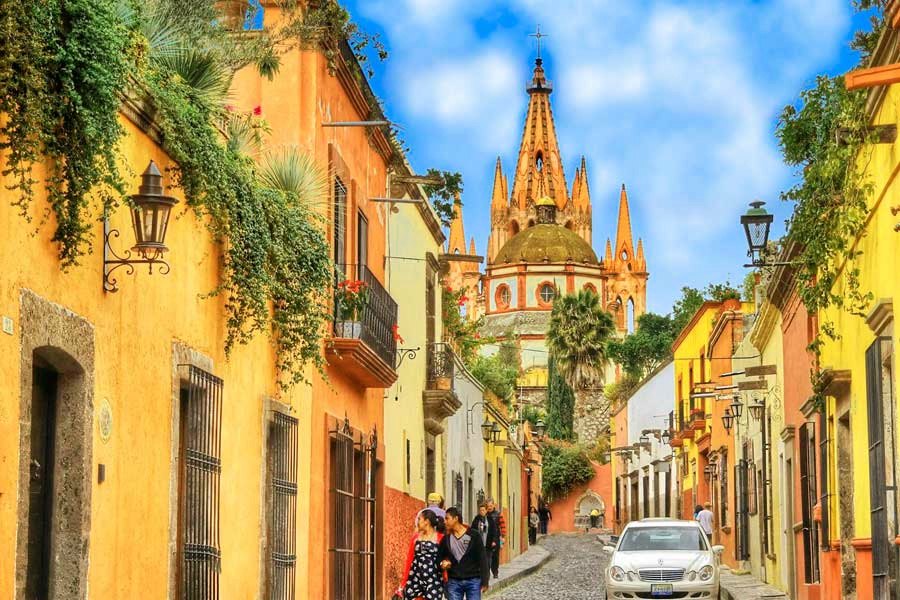
San Sebastián del Oeste offers a very different kind of enchantment: a quaint colonial mining town of whitewashed houses, cobblestone streets, and 17th-century architecture, tucked high in the Sierra Madre mountains. The setting shapes the experience immediately. As you climb into the mountains, the air turns noticeably cooler, and the landscape shifts—pine forests replacing the palms of lower elevations.
The town’s charm is often described as atmospheric. Views open over lush green mountains, and when mist rolls through, it lends a quiet, almost suspended feeling—part of why visitors talk about it as a place to slow down. The mining past is visible in the built environment: old architecture and streets that carry “clues” of the town’s earlier economic life.
San Sebastián is also associated with coffee culture and mountain scenery, making it a natural weekend escape—particularly for those looking to trade coastal heat for highland calm. Activities can be as simple as wandering the streets and town square, or more adventurous: one suggested outing is taking an ATV up to La Bufa for panoramic views of the Sierra Madre, sometimes peeking out from rolling mist.
The social heart of the town is its square, where evenings can revolve around simple pleasures—warm drinks and local spirits in the cold air, and the easy rhythm of a small mountain community.
“As you drive up into the mountains, pine forests replace palm trees, and the air turns fresh and cool… In the day, you can wander the cobblestone streets… or take an ATV up to La Bufa for panoramas of the Sierra Madre… The town square is my favorite… sipping atole or raicilla in the cold evening air.”
Sally Wells, Senior Content Editor
San Sebastián del Oeste illustrates a key point about Pueblo Mágicos: not all are built around big-ticket attractions. Some are compelling because they preserve a mood—an architectural coherence, a climate shift, a sense of time slowing—while still offering enough cultural and historical depth to reward a longer stay.
Cultural and Natural Significance of Pueblo Mágicos
The Pueblo Mágicos program exists because Mexico’s cultural and natural diversity is not concentrated in a handful of famous places—it is distributed across regions, landscapes, and communities with distinct identities. What the designation aims to do is elevate towns where that identity is unusually visible, whether through architecture, Indigenous heritage, cuisine, festivals, or the surrounding environment.
Culturally, many Pueblo Mágicos are defined by continuity. In towns like Creel, the presence of Rarámuri and Tarahumara communities is not a museum exhibit; it shapes markets, daily life, and local heritage. In other towns, cultural significance is expressed through colonial-era streetscapes and buildings—such as the 17th-century architecture of San Sebastián del Oeste—or through the way a town’s history remains legible in its layout and structures, as with mining towns whose past is written into their facades and plazas.
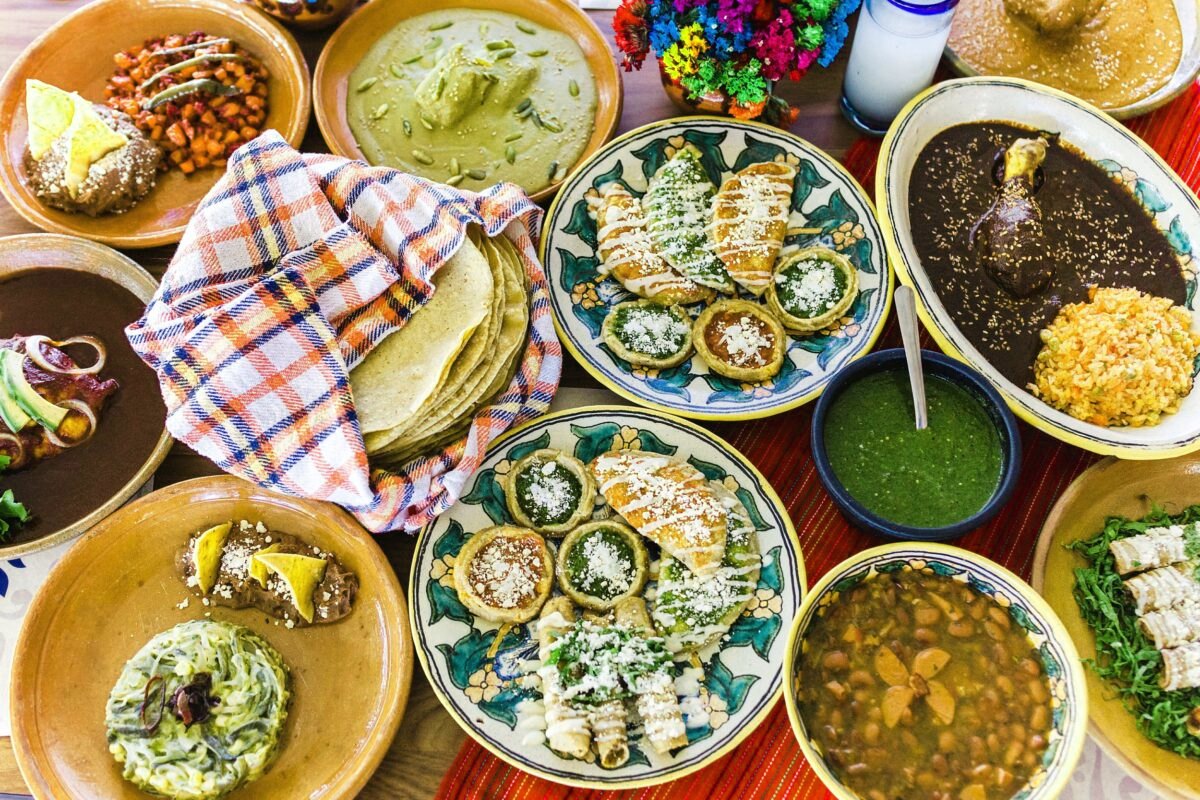
Food is another thread of significance, often serving as a regional signature rather than a generic tourist offering. Atlixco, for example, is remembered for its mole, while Valladolid is associated with Yucatecan flavors like cochinita pibil, and even specific local treats such as traditional coconut ice cream. These details matter because they show how “magic” is often experienced: not as a single monument, but as a series of sensory encounters—markets, meals, street life—that connect visitors to place.
Natural significance is equally central. Some Pueblo Mágicos are gateways to dramatic terrain: Creel sits at the edge of Copper Canyon, while others are defined by water and geology—Valladolid is known for cenotes within the city, and Bacalar is celebrated for its “Lagoon of Seven Colors.” Coastal towns like Mazunte are tied to marine life and conservation, with the Mexican National Turtle Center and seasonal opportunities to spot humpback whales offshore.
The program’s deeper value lies in how it links preservation with visibility. By recognizing towns for what they already carry—heritage, landscapes, traditions—it creates incentives to maintain them. But it also raises the stakes: once a place is promoted, it must manage the attention without turning culture into performance or nature into a consumable backdrop.
Mexico’s “magic” is often less about spectacle than about continuity—places where history, landscape, and daily life still fit together.
The Application Process for Pueblo Mágicos
Becoming a Pueblo Mágico is not a matter of branding; it is a formal application process.
A key step in the process is governance: towns are expected to establish a Pueblo Mágico committee. This body is not just symbolic; it is meant to oversee the application and ensure compliance over time. The committee structure signals that the program is designed around continuity—maintaining standards year after year—rather than a one-off promotional campaign.
The application itself requires towns to show that they meet baseline criteria, including:
- Population threshold (minimum 5,000).
- Proximity to a major city or tourist hub, supporting access and feasibility.
- Evidence of historical, cultural, or natural significance.
- A commitment to tourism development and heritage preservation.
Once designated, towns face continued scrutiny, and recent reforms have sharpened what that evaluation looks like. Under the 2025 modernization push, expectations expanded beyond heritage to include:
- Sustainability requirements, aligning tourism development with broader goals such as the UN 2030 Goals.
- Urban image regulations, including architectural and color guidelines endorsed by INAH.
- Digitalization, encouraging improved online presence and access to services like ATMs and digital tools.
- Infrastructure evaluation, including a classification system of A, AA, or AAA based on infrastructure, service quality, and tourism offerings.
That threat of removal is part of what gives the label meaning: it is intended to remain a marker of quality, not simply a growing list.
For travelers, the process matters even if it’s invisible. A town that has gone through formal review and is subject to ongoing evaluation is more likely to offer a coherent visitor experience—signage, preservation efforts, and a sense that tourism is being managed rather than improvised.
Economic Impact of Pueblo Mágicos
The Pueblo Mágicos program is widely seen as one of Mexico’s most ambitious tourism initiatives because it links recognition with economic development. By promoting smaller communities—often outside the main circuits of Mexico City and major beach resorts—the program aims to diversify tourism flows and spread opportunity more broadly.
The economic logic is straightforward: increased visitation can support local businesses, create jobs, and encourage infrastructure investment. When travelers choose a Pueblo Mágico as a base—whether for canyon exploration in Chihuahua, a mountain weekend in Jalisco, or cenote and archaeological excursions in Yucatán—they spend on lodging, food, guides, crafts, and transport. Over time, that demand can help sustain restaurants, markets, boutique hotels, and local tour services that might otherwise struggle in smaller economies.
The program also encourages towns to invest in the “public face” of place: preservation of historic centers, maintenance of plazas, and improvements that make destinations more navigable. Recent reforms explicitly connect economic impact to readiness and quality. The 2025 modernization push included a significant funding commitment: 8 billion pesos (approximately US $407 million) allocated for renovations and improvements (as reported in coverage of the modernization push by Mexico Business News and Mexico News Daily). That investment underscores how the program is not only about marketing; it is also about upgrading the conditions that allow tourism to function.
At the same time, economic impact is tied to credibility. If the label is diluted—if towns are designated without adequate preparation—visitor satisfaction can drop, weakening the very economic benefits the program is meant to generate. That is one reason the new A/AA/AAA classification matters: it is designed to evaluate infrastructure and service quality, guiding visitors toward better-prepared destinations while incentivizing towns to improve.
Another economic argument is strategic: by promoting lesser-known destinations, the program can help relieve pressure on overcrowded hotspots. Diversion is not just a comfort issue; it can be an economic balancing act, distributing tourism revenue across regions rather than concentrating it in a few places.
In the best cases, the economic impact and cultural preservation reinforce each other: tourism revenue supports restoration, crafts, and festivals, while preserved heritage keeps the destination distinctive and attractive. The challenge is ensuring that growth remains compatible with the town’s identity—so that economic success doesn’t come at the cost of the “magic” that drew visitors in the first place.
Challenges Facing Pueblo Mágicos
The Pueblo Mágicos program’s success has also produced its most persistent challenges. As the network expanded from three towns in 2001 to 177 today, questions emerged about consistency: can every designated town deliver a high-quality, authentic experience, and can the program maintain a clear meaning as the list grows?
One widely cited issue is quality variance. Critics have argued that some towns were admitted without adequate technical studies, which can translate into uneven visitor experiences. When expectations are set by a national label, inconsistency becomes more visible: travelers may arrive anticipating a well-preserved historic center or a well-managed nature experience and find gaps in infrastructure, services, or preservation.
A related concern is overexpansion—the idea that rapid growth can dilute the concept of “magic.” If too many places carry the badge without meeting comparable standards, the designation risks becoming a marketing term rather than a reliable signal. That risk has driven the recent shift toward stricter oversight.
Sustainability is another central challenge. Increased tourism can strain local environments and cultural life, particularly in places where the natural setting is the main draw—coastal ecosystems, cenotes, canyon viewpoints—or where cultural traditions are sensitive to commercialization. The program’s stated intent is to ensure tourism is “well-managed” and authentic, but achieving that balance requires planning, enforcement, and community buy-in.
The 2025–2026 modernization reforms can be read as a response to these pressures. New requirements emphasize sustainability aligned with the UN 2030 Goals, urban image regulations endorsed by INAH, stronger digitalization, and an A/AA/AAA infrastructure classification. Importantly, towns that fail to meet updated standards are expected to improve by 2026 or risk losing their designation—an accountability mechanism meant to protect the program’s credibility.
For travelers, challenges can show up in practical ways. Not all towns have modern amenities; guidance for visitors includes bringing cash, checking for ATMs, and expecting spotty Wi‑Fi in remote areas. Those realities are not necessarily negatives—sometimes they are part of the appeal—but they do shape the experience and underscore why infrastructure evaluation has become more prominent.
Ultimately, the program’s challenge is the same as its promise: to promote tourism while preserving what makes each place distinct. The more successful the promotion becomes, the harder preservation can be—unless standards, governance, and sustainability keep pace.
Exploring the Enchantment of Pueblos Mágicos
Pueblo Mágicos are often described as “authentic pockets of Mexico,” and that authenticity is what draws many travelers away from the predictable. But the most rewarding visits tend to be those that treat these towns not as checklists, but as communities—places where the best moments can come from slowing down, lingering in a plaza, or taking a day trip that reveals how landscape and culture connect.
The program’s evolution suggests a future where the label is less about rapid expansion and more about maintaining trust: ensuring that a Pueblo Mágico remains a meaningful signal of heritage, stewardship, and visitor readiness. For travelers, that shift is good news. It points toward destinations that are not only beautiful or interesting, but also committed to protecting what makes them worth visiting.
Connecting with Local Culture and Heritage
The clearest way to experience a Pueblo Mágico is to engage with what the designation is meant to protect: local culture, history, and tradition as they appear in daily life. In Creel, that might mean spending time in markets or museums that reflect Rarámuri presence, and recognizing that the town’s cultural richness is inseparable from its surrounding villages and highland rhythms. In San Sebastián del Oeste, it can be as simple as walking cobblestone streets, reading the mining past in the architecture, and letting the town’s slower pace shape your day.
Across the network, many towns are defined by regional food and small rituals: a favorite dish, a market snack, a drink in the evening air. Valladolid visitors often remember Yucatecan flavors like cochinita pibil and the experience of seeing tortillas made by hand. Atlixco is associated with a tradition of flowers and a reputation for mole that travelers single out as worth the trip.
Connecting with heritage also means choosing experiences that keep value local: eating in locally rooted restaurants, buying artisan products in markets, and taking tours that interpret the place rather than rushing through it. The goal is not to “consume” culture, but to encounter it respectfully—on its own terms.
Sustainable Travel Practices in Magic Towns
Sustainability is no longer a side note in the Pueblo Mágicos story; it is now embedded in the program’s direction. The 2025 modernization push emphasized sustainability requirements aligned with the UN 2030 Goals, alongside stronger standards for infrastructure and urban image. That policy shift reflects a practical reality: if tourism degrades landscapes or erodes cultural life, the program undermines itself.
For travelers, sustainable practice can be simple and concrete:
- Respect local customs and community spaces—especially in towns where traditions are living, not staged.
- Minimize environmental impact in nature-focused destinations, whether that’s a canyon viewpoint near Creel or coastal ecosystems near Mazunte.
- Support local businesses so tourism revenue strengthens the community that sustains the “magic.”
- Plan for practical realities in remote areas—cash needs, limited connectivity—without demanding that every town feel like a major city.
Sustainable travel is also about expectations. Some Pueblo Mágicos are polished; others are quieter and less “serviced.” The program’s new A/AA/AAA classifications are designed to reflect differences in infrastructure and readiness. For visitors, that can be a useful reminder: the best trip is often the one that matches a town’s character—adventure where landscapes dominate, calm where atmosphere is the point, and cultural immersion where traditions are strongest.

Martin Weidemann is a digital transformation expert and entrepreneur with over 20 years of experience leading fintech and innovation projects. As a LinkedIn Top Voice in Digital Transformation and contributor to outlets like Forbes, he now brings that same expertise to travel and mobility in Mexico City through Mexico-City-Private-Driver.com. His focus: trustworthy service, local insights, and peace of mind for travelers.