Table of Contents
- 1. Plan ahead for Day of the Dead festivities
- 2. Understanding the Day of the Dead Celebration
- 3. Key Locations for Day of the Dead Festivities
- 3.1 Pátzcuaro: A Cultural Hub
- 3.2 Oaxaca City: Celebratory Traditions
- 4. Planning Accommodations for Day of the Dead
- 4.1 Hotel Booking in Pátzcuaro
- 4.2 Availability in Oaxaca
- 5. Transportation Options to Pátzcuaro and Oaxaca City
- 5.1 Traveling by Air
- 5.2 Luxury Bus Services
- 5.3 Driving from Mexico City
- 6. Cultural Significance of Day of the Dead
- 7. Building an Ofrenda: The Heart of the Celebration
Plan ahead for Day of the Dead festivities
- Day of the Dead is celebrated across Mexico on November 1 and 2, and it’s among the country’s most attended religious festivals.
- The best-known destinations for the dates are Pátzcuaro (near Morelia) and Oaxaca City—both get busy.
- Book lodging early: Pátzcuaro hotels can fill by summer (some a year ahead); Oaxaca is easier overall but central rooms go first.
- Plan transport in advance: flights and roads to Oaxaca and Morelia, plus bus stations, become crowded around the holiday.
Travel Planning Timeline
- 6–12+ months out: Choose Pátzcuaro vs Oaxaca and reserve lodging (especially if you want to stay central).
- 2–4 months out: Lock in transportation (flight seats or bus tickets) and note your Mexico City bus terminal if you’re going overland.
- 2–4 weeks out: Confirm airport/station transfers and your “last mile” plan (walkability, taxis/app cabs, parking).
- 48 hours out: Re-check arrival times, hotel check-in rules, and any local event timing changes; build buffer time for crowds.
Understanding the Day of the Dead Celebration
Day of the Dead (Día de los Muertos) is observed each year on November 1 and 2. It is widely celebrated across Mexico and is also increasingly recognized beyond Mexico, but its strongest expressions remain rooted in Mexican communities and family traditions. In Mexico, it stands out as one of the most important—and most attended—religious festivals on the calendar.
Despite the imagery that often circulates internationally—skulls, candles, cemeteries—Day of the Dead is not framed as a morbid event. The central idea is remembrance: honoring people who have died while celebrating the continuity of life. Families prepare to welcome the return of loved ones’ spirits through offerings, food, light, and shared stories. The mood can be reflective, but it is also communal and life-affirming.
The dates carry meaning. November 1 is commonly associated with remembering deceased children (often referred to as Día de los Angelitos), while November 2 focuses on deceased adults (Día de los Difuntos). In practice, how families observe each day varies by region and household, but the two-day structure helps explain why travel demand spikes not just on a single night, but across a multi-day window.
For travelers, the most important planning insight is that Day of the Dead is both intimate and public. Many of the most moving moments happen in homes and cemeteries, while towns and cities also host visible traditions—altars in public spaces, craft markets, music, and gatherings. That mix is part of the appeal, but it also means visitors should plan carefully: the holiday is not a “show,” and the places most associated with it can become crowded.
It also helps to be clear about what the celebration is—and isn’t. Day of the Dead is distinct from Halloween in origin and meaning, and approaching it as a remembrance tradition (not a horror-themed event) leads to a more respectful, more meaningful experience.
Honoring Loved Ones in Remembrance
What it is
- A remembrance tradition centered on welcoming and honoring loved ones who have died through offerings, food, light, and stories.
What it isn’t
- A horror-themed holiday or a “spooky” costume event; skull imagery is typically playful and symbolic, not meant to frighten.
Key dates (common structure)
- Nov 1: Often associated with remembering deceased children (Día de los Angelitos).
- Nov 2: Often associated with remembering deceased adults (Día de los Difuntos).
Key Locations for Day of the Dead Festivities
Day of the Dead is celebrated throughout Mexico, and many smaller provincial towns and cities observe it with particular passion. Still, two destinations are consistently singled out as “places to be” for the holiday: the colonial town of Pátzcuaro (near Morelia) and Oaxaca City. Both offer strong traditions, and both require planning because demand rises sharply around the holiday.
Choosing between them often comes down to what kind of experience you want and how you prefer to travel. Pátzcuaro sits in the mountains west of Mexico City, in the state of Michoacán, and is closely associated with cemetery vigils and regional customs. Oaxaca City, the capital of Oaxaca state in southern Mexico, has a larger tourism infrastructure and a dense historic center that becomes a focal point for visitors.
In either place, the holiday’s core elements are consistent: remembrance, offerings, food, and community. But the way those elements appear—where altars are built, how public events are organized, and how easy it is to find lodging—differs enough that it’s worth thinking through your priorities early.
| Choose based on… | Pátzcuaro (near Morelia) | Oaxaca City |
|---|---|---|
| Overall vibe | Smaller-town feel; traditions can feel very place-rooted | Larger city energy with a strong visitor scene in the center |
| Logistics | Fewer rooms; “last mile” planning matters more | More rooms and transport options; still busy in the center |
| Crowds & booking difficulty | High pressure on lodging; some hotels book far ahead | Easier in aggregate, but central hotels book early |
| Best for | Travelers prioritizing a provincial setting and regional customs | Travelers wanting accessibility plus a broader tourism ecosystem |
Pátzcuaro: A Cultural Hub
Pátzcuaro is frequently described as a prime destination for Day of the Dead, and its reputation is tied to the intensity of local observance. The town is in Michoacán’s highlands, west of Mexico City, and it draws visitors who want to witness traditions that feel deeply embedded in place.
Regional variation is a defining feature of Day of the Dead, and Michoacán is often cited for distinctive practices. Sources note that in Pátzcuaro there are special rituals honoring children who have died, alongside other community traditions that unfold across the two days. For travelers, that means the experience can be structured around the calendar: November 1 and November 2 may feel different in tone and focus.
Because Pátzcuaro is smaller than major urban centers, the practical impact of the holiday is immediate: hotel rooms become scarce, transport links get busy, and the town center can feel full. That doesn’t diminish the experience, but it does change how you should plan. Visitors who arrive without reservations may still find options—sometimes through late availability or alternative rentals—but they should be prepared for higher prices and the possibility of staying outside the center.
The draw of Pátzcuaro is not a single event; it’s the sense of a town moving through a shared ritual of remembrance. For travelers, the best approach is to treat it as a cultural visit first and a sightseeing trip second—arrive with time, patience, and a willingness to observe respectfully.
Oaxaca City: Celebratory Traditions
Oaxaca City is another standout destination for Day of the Dead, and it offers a different kind of scale. As a state capital with an international airport and a larger supply of hotel rooms, it can be more logistically forgiving than smaller towns—though the holiday still puts pressure on the most desirable locations, especially in and around the historic center.
The city’s appeal is partly its accessibility: it is served by flights from Mexico City and various U.S. cities, and it can also be reached by luxury bus from Mexico City. That connectivity makes it attractive for travelers who want to experience Day of the Dead without navigating multiple transfers.
Oaxaca also tends to offer more accommodation choice overall. But “easier” does not mean “easy.” Centrally located hotels typically book up early, and late-bookers often end up farther from the historic center or in nearby towns. That can still work well—especially if you plan how you’ll get into the center for key moments—but it’s a reminder that Oaxaca’s popularity is not theoretical; it shows up in availability.
For visitors, Oaxaca City can be a good fit if you want a strong Day of the Dead atmosphere paired with a broader tourism ecosystem: more rooms, more transport options, and a city layout that supports walking and short rides—provided you secure a base early enough.
Planning Accommodations for Day of the Dead
Accommodation planning is one of the biggest determinants of whether your Day of the Dead trip feels smooth or stressful. The holiday is celebrated nationwide, but the best-known destinations—Pátzcuaro and Oaxaca City—see a surge in demand that can reshape the market months in advance.
In Pátzcuaro, hotels tend to book up during the summer for the November dates, and some charismatic properties are reserved a year or more ahead. That timeline surprises many first-time visitors, especially those used to booking Mexico travel closer to departure. Late availability can sometimes be found, but it’s not something to rely on if you have fixed travel dates.
Oaxaca City generally offers more hotel rooms, which makes availability easier in aggregate. However, the most sought-after rooms—especially those in the historic center—still book early. Late-bookers often face a tradeoff: stay farther out, or stay in a nearby town and commute in for events.
Across both destinations, shared rentals in people’s homes have expanded the supply and choice of places to stay. This can be particularly useful for popular dates like Day of the Dead, but travelers should expect higher rates during the period and should be prepared for the possibility that the best-located options are taken.
The practical takeaway is simple: decide your destination early, then lock in lodging before you start fine-tuning the rest of your itinerary. Transportation can be adjusted; a good place to sleep in the right area is harder to improvise.
Smart Booking Steps for Stay
1) Set your non-negotiables
- Dates (arrive before Nov 1 if you can) and how close you want to be to the center.
2) Prioritize location before “perfect hotel”
- If you’ll be out late, a walkable base (or a short, predictable ride) often matters more than amenities.
3) Book a primary option early, then create a backup
- If your first choice isn’t available, book a solid Plan B you’d actually use (even if it’s slightly farther out).
4) Pressure-test the last mile
- Check how you’ll get from airport/bus station to lodging, and from lodging to the center at night.
5) Confirm flexibility and timing
- Re-check cancellation rules and check-in times; peak dates can make “late arrival” plans harder.
Hotel Booking in Pátzcuaro
Pátzcuaro’s hotel market is shaped by the town’s size and by the holiday’s pull. For Day of the Dead, hotels tend to book up during the summer, and some of the most charismatic properties can be reserved a year or more in advance. If you have a specific hotel in mind—or you want to be within easy reach of the town center—early booking is less a “tip” than a necessity.
That said, late availability can sometimes be sought. Travelers who are flexible on exact dates, room type, or location may still find openings, particularly if they check frequently or broaden their search beyond the most obvious options. But flexibility has limits during a peak period: even when a room appears, it may come at a premium.
Alternative accommodations—shared rentals in people’s homes—have added supply in Pátzcuaro. For some travelers, this can be the difference between staying in town and having to base elsewhere. The tradeoffs are predictable: higher rates during the holiday, and sometimes a location that requires travel into the center for the main events.
If you do end up outside the center, plan the “last mile” in advance. Even short distances can feel longer when streets are busy and demand for local transport rises. The goal is to avoid turning a meaningful cultural visit into a nightly logistics puzzle.
Availability in Oaxaca
Oaxaca City is generally easier for accommodation than Pátzcuaro, largely because there are more hotel rooms. That broader supply gives travelers more options across price points and neighborhoods, and it can make last-minute planning less punishing than in smaller towns.
But the holiday still creates a clear pattern: centrally located hotels—especially those in or near the historic center—tend to book up early. When those fill, late-bookers are left with remaining rooms farther outside the center or in nearby towns. That doesn’t automatically mean a worse trip, but it changes how you’ll experience the city: you may need to budget more time for getting in and out, and you’ll want to think about transport at night when events and gatherings wind down.
Shared rentals in people’s homes also expand the accommodation pool in Oaxaca, and they can be particularly useful during high-demand dates. As in Pátzcuaro, expect higher rates around Day of the Dead. Also expect that the most attractive locations—walkable, central, close to where visitors want to be—are the first to go.
A practical approach is to decide what “central” means for you. If being able to return to your room easily matters, book early and prioritize location. If you’re comfortable commuting, you can widen your search—but do it intentionally, with a plan for how you’ll move around during the busiest days.
Transportation Options to Pátzcuaro and Oaxaca City
Transportation is the second major pressure point for Day of the Dead planning. Flights to Oaxaca and Morelia (the gateway city for Pátzcuaro) get busy, and roads—along with buses and bus stations serving both destinations—also see heavier traffic in the days leading up to and just after November 1 and 2.
Planning note: This guide is written from the perspective of Martin Weidemann, a digital transformation expert focused on building trustworthy travel and mobility experiences in Mexico City—prioritizing clear planning, reliable logistics, and local context so travelers can engage with traditions like Day of the Dead with more peace of mind.
The best strategy is to treat transport like accommodation: decide early, book what you can, and build in time buffers. Even if you’re comfortable with spontaneous travel, the holiday period is not the easiest moment to rely on last-minute seats or ideal departure times.
Both Pátzcuaro and Oaxaca City can be reached by air, by luxury bus from Mexico City, or by driving on tolled highways. Each option has its own rhythm. Flying can save time but depends on seat availability and airport transfers. Buses offer a predictable route but can sell out and require choosing the correct terminal in Mexico City. Driving offers flexibility but exposes you to holiday traffic and longer travel days.
Below are the core options, grounded in the most commonly used routes and travel times.
| Option | Time & transfers (typical) | Booking risk around Nov 1–2 | Best for | Watch-outs |
|---|---|---|---|---|
| Fly | Fastest in-air; still requires airport-to-city transfer | Higher (seats fill; limited ideal departure times) | Tight schedules; travelers coming from outside Mexico City | Transfer time can erase gains; plan ground transport on arrival |
| Luxury bus | Direct city-to-city, but longer travel day | Medium–high (popular departures can sell out) | Budget-minded travelers; those who prefer not to drive | Choose the correct Mexico City terminal; plan arrival-to-hotel transfer |
| Drive (tolled highways) | Flexible timing; full travel day | Low booking risk, higher traffic risk | Groups; travelers staying outside the center | Traffic, parking, and fatigue—especially on peak arrival/return days |
Confirm Flight Routes and Times
Flight routes and schedules can change seasonally. If you’re flying into Oaxaca or Morelia, double-check current routes and arrival times when you book—and re-check again a few days before departure.
Traveling by Air
Flying is often the fastest way to reach either destination, especially if you’re coming from outside Mexico City or you want to reduce overland travel time during a busy period.
For Pátzcuaro, the relevant airport is in Morelia, which has an international airport with flights from Mexico City and various cities in the United States. From Morelia’s airport, Pátzcuaro is about a 1.5-hour drive by road. That final leg matters: even after you land, you still need ground transport, and during Day of the Dead the roads and services can be busier than usual.
Oaxaca City is served by an international airport with flights from Mexico City and various U.S. cities. The airport is about a 30-minute drive by road to and from the center of Oaxaca City, making it relatively straightforward once you arrive. The key is to plan ahead: flights can fill, and the days around the holiday can be crowded.
If you’re choosing between flying and overland travel, consider not only the flight time but also the transfer time and the availability of seats at the times you need. During Day of the Dead, the “best” itinerary on paper can become less appealing if it depends on scarce seats or tight connections.
Luxury Bus Services
Luxury buses are a common and practical way to travel from Mexico City to both Morelia/Pátzcuaro and Oaxaca City, especially for travelers who prefer not to drive. The key is to plan ahead because buses and bus stations become busy around Day of the Dead.
To reach Pátzcuaro by bus, you can travel from Mexico City to Morelia in about four hours on a luxury bus, then continue about another hour from Morelia to Pátzcuaro. Buses to Morelia depart from Mexico City’s eastern and northern bus terminals. From Morelia, local buses run regularly to Pátzcuaro, and travelers can also use a local cab or app-based cab from the bus station.
To reach Oaxaca City by bus, the luxury bus journey from Mexico City typically takes six to seven hours. Buses to Oaxaca City depart from Mexico City’s western and southern bus terminals. That terminal detail is not minor: Mexico City’s bus system is distributed, and choosing the wrong terminal can add time and stress.
For Day of the Dead, the bus option works best when you book early and choose departure times that give you breathing room. Arriving late at night can be fine, but it’s easier when you already know where you’re staying and how you’ll get there from the station.
Driving from Mexico City
Driving gives you maximum flexibility, but it also means you’re sharing the road with many other travelers during one of the busiest travel periods of the year in these corridors. If you choose to drive, the most reliable approach is to use the tolled highways and to build in extra time for traffic.
From Mexico City to Pátzcuaro, tolled highways 15D and 14D typically take about 4.5 to 5 hours, depending on traffic. That “depending on traffic” caveat matters around Day of the Dead, when outbound and return flows can be heavy.
From Mexico City to Oaxaca City, tolled highways 150D and 135D take about six hours, depending on traffic. Oaxaca is roughly 285 miles south of Mexico City, and while the drive is straightforward in route terms, it’s still a full travel day once you factor in breaks and congestion.
Driving can be a good fit if you want to stay in a nearby town or village and commute into the center for events—an arrangement that sometimes becomes necessary when accommodation in the core areas is scarce. But if you’re driving, plan parking and timing carefully, and remember that the holiday’s busiest moments can coincide with the times you’d otherwise choose to move around.
Cultural Significance of Day of the Dead
Day of the Dead is often misunderstood outside Mexico because its symbols—skulls, candles, cemeteries—can be misread through the lens of horror or fear. In Mexico, the holiday’s emphasis is different: it is about remembrance, family, and the continuity of life. Rather than focusing on death as an end, it frames death as part of a cycle, and it creates a structured time for families and communities to reconnect with those who have passed.
The celebration takes place on November 1 and 2, aligning with Catholic observances of All Saints’ Day and All Souls’ Day. Over centuries, the holiday evolved as a blend of Indigenous Mesoamerican rituals and Spanish Catholic traditions. That layered history helps explain why Day of the Dead can include religious imagery alongside distinctly local practices and family-specific customs.
The holiday’s importance is also recognized internationally: it is listed by UNESCO as part of the Intangible Cultural Heritage of Humanity. That designation doesn’t “freeze” the tradition in time—Day of the Dead continues to vary by region and family—but it underscores that the celebration is not a costume theme or a seasonal aesthetic. It is a living cultural practice with deep meaning.
For travelers, cultural significance shows up in small choices. It’s in the way people speak about the dead—not as distant figures, but as continuing members of the family story. It’s in the care taken with offerings and altars. It’s in the way public spaces can become sites of shared memory, not just entertainment.
Understanding this context changes how you plan. You’re not simply scheduling activities; you’re entering a period when many families are doing something intimate in public view. The best trips are built around observation, learning, and respect—allowing the holiday to be what it is, rather than forcing it into a familiar festival template.
UNESCO Recognition and Cultural Roots
- International recognition: Day of the Dead is listed by UNESCO as part of the Intangible Cultural Heritage of Humanity.
- Historical roots: The modern celebration is widely described as a blend of Indigenous Mesoamerican traditions and Catholic observances (All Saints’/All Souls’), which helps explain why you may see both religious imagery and local, family-specific customs.
Building an Ofrenda: The Heart of the Celebration
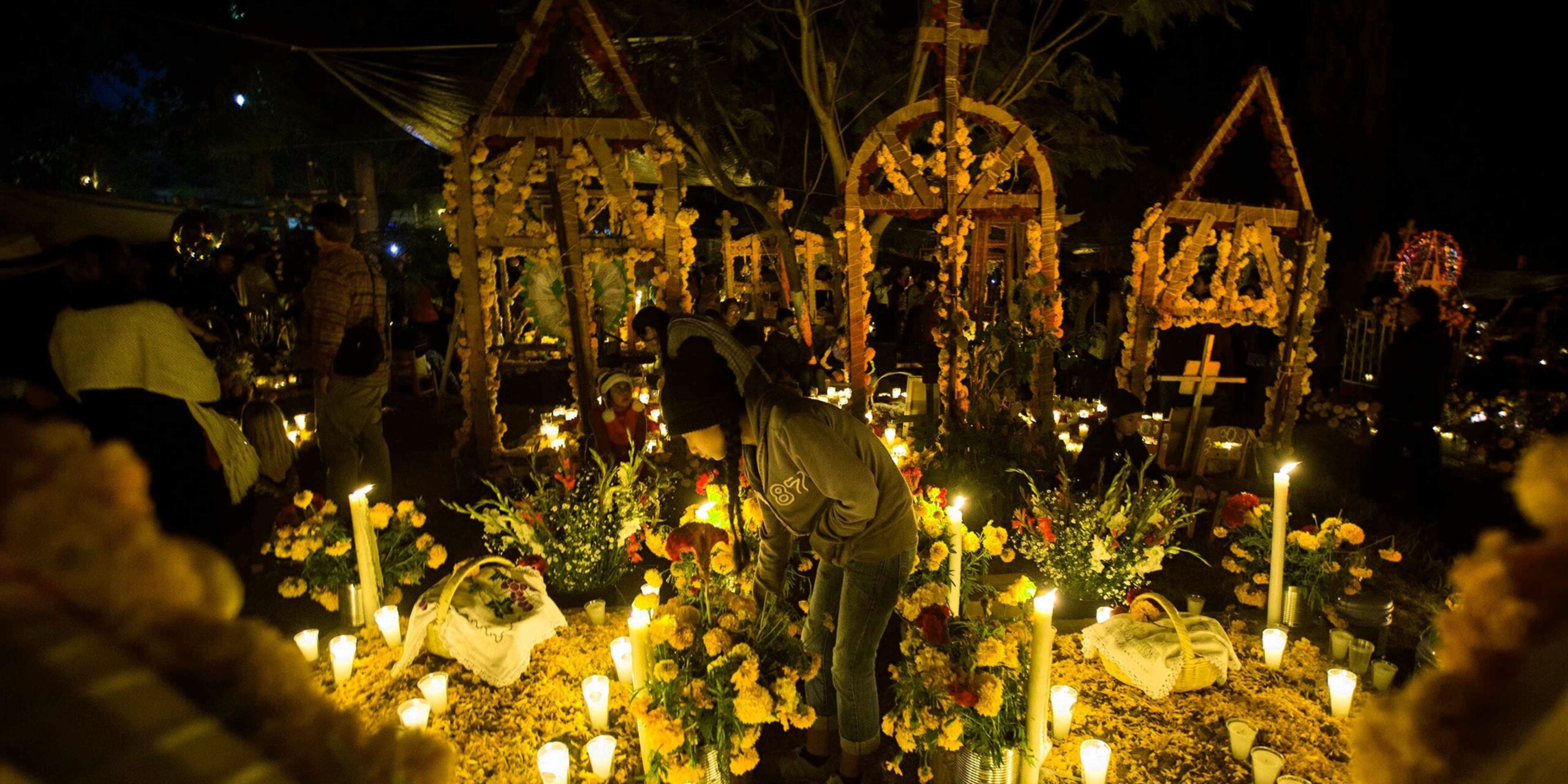
The ofrenda—an altar or offering—is widely described as the centerpiece of Day of the Dead observances. Families and communities build ofrendas in homes, cemeteries, and public spaces, creating a place to welcome the spirits of loved ones. The purpose is not worship; it is an act of love and remembrance, a way of saying: you are still part of us, and you are invited back.
While ofrendas vary by region and family, common elements appear again and again. Photographs personalize the altar, anchoring it to specific people. Candles symbolize light and hope for the spirits’ journey. Marigolds (cempazúchitl) are closely associated with the holiday and are often described as guiding spirits with their color and scent. Food and drink—often the favorites of the departed—express hospitality. Calaveras (skulls), including sugar skulls, represent the cycle of life and death and are frequently colorful rather than grim.
Many ofrendas also include religious items, reflecting the blend of Catholic and Indigenous influences: crosses or images associated with Catholic devotion may appear alongside personal mementos. The most meaningful altars tend to be the most specific—built around the tastes, habits, and stories of the person being honored.
If you are planning a Day of the Dead gathering outside Mexico, or hosting something for friends and family, an ofrenda can be a respectful focal point when it’s approached with context. Encourage participants to bring a photo or a small item connected to someone they want to remember, and provide clear explanations of what each element symbolizes. That educational layer matters, especially in communities where Day of the Dead is often confused with Halloween.
An ofrenda doesn’t need to be elaborate to be authentic. What matters is intention: a thoughtfully arranged space that invites memory, conversation, and care.
Essential Altar Elements
- Photo(s) of the person/people being honored: anchors the altar to real lives and names.
- Candles: commonly used to represent light and guidance.
- Marigolds (cempazúchitl) or petals: often associated with guiding the way through color and scent.
- Water: a simple, practical offering that’s common on many altars.
- Food offerings: pan de muerto and/or the person’s favorite dish.
- Drinks: hot chocolate or atole; sometimes a favorite spirit (context-dependent).
- Calaveras (e.g., sugar skulls): a symbolic reminder of the life–death cycle.
- Papel picado: adds color and movement; often used as festive decoration.
- Personal memento: a small object that reflects the person’s hobbies, work, or personality.
- Short label card: one sentence explaining who is being honored and what each item represents (especially helpful in group/public settings).
Traditional Foods and Drinks for Day of the Dead
Food is not a side detail in Day of the Dead; it is part of the offering and part of the gathering. Families prepare dishes that are meaningful, seasonal, or connected to the people being honored. On an ofrenda, food and drink are placed as a gesture of welcome—hospitality for returning spirits and a shared table for the living.
One of the most iconic foods is pan de muerto, a sweet bread often shaped in a round form and decorated with bone-like pieces. It appears both as an offering and as something families eat together. In many descriptions of the holiday, pan de muerto is paired with warm drinks, especially hot chocolate—another widely cited tradition.
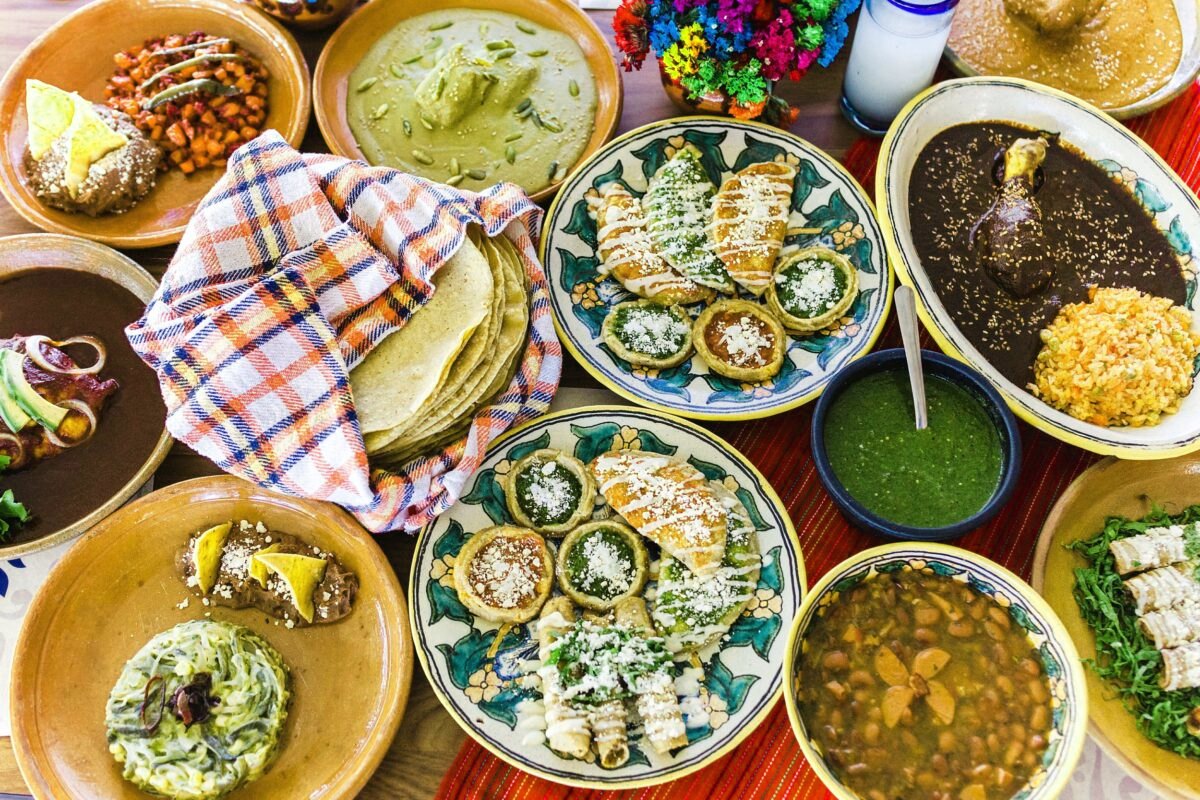
Beyond bread, Day of the Dead foods commonly include tamales, mole, rice, seasonal fruits, and dishes featuring pumpkin or squash. The exact menu varies by region and household, which is part of the holiday’s character: it is not a fixed “festival menu” so much as a set of familiar foods prepared with special attention.
Drinks can include atole, hot chocolate, and—depending on context—spirits such as tequila, mezcal, or pulque. When these appear on an altar, they are often chosen because they were favorites of the person being remembered, reinforcing the idea that the ofrenda is personal rather than generic.
For planners organizing a public or community event, authenticity is often discussed in practical terms: source ingredients from Mexican markets when possible, and avoid turning the menu into a caricature. The goal is not to police what people eat, but to keep the food aligned with the holiday’s meaning. Day of the Dead is not a theme party; it’s a remembrance tradition, and the food should feel like part of that welcome.
If you’re traveling to Pátzcuaro or Oaxaca City, expect these foods to be visible in markets and gatherings during the season. If you’re hosting at home, even a simple combination—pan de muerto and hot chocolate, for example—can connect your table to the broader tradition.
Two-Lane Food Planning
Plan food in two lanes
- For the ofrenda (offerings): small portions of meaningful items—pan de muerto, fruit, a favorite dish, water, hot chocolate/atole.
- For the shared table (for guests): a simple, crowd-friendly menu inspired by regional staples—tamales, mole, rice, seasonal fruit, pumpkin/squash—plus warm drinks.
A practical rule of thumb
- Make the altar items personal; make the guest food easy to serve.
Activities and Programming for Celebrations
Day of the Dead activities can be intimate—building an altar at home, sharing stories, visiting a cemetery—or they can be public and educational, especially in community settings. The most successful programming tends to do two things at once: it creates space for remembrance, and it explains what people are seeing so the holiday isn’t reduced to aesthetics.
Storytelling is one of the most direct and meaningful activities. Inviting people to share memories or anecdotes about someone who has died keeps the focus where it belongs: on lives lived and relationships sustained. In public events, this can be supported with signage or short talks that explain the two-day structure and the role of the ofrenda.
Crafts are another common component, especially for community gatherings. Workshops to create papel picado (decorative paper cutouts), paper marigolds, or sugar skulls can be engaging while still rooted in recognizable traditions. The key is to frame crafts as cultural expressions tied to remembrance.
Día de Muertos Gathering Flow
A simple run-of-show (60–120 minutes)
1) Welcome + context (5–10 min)
- One clear explanation: remembrance tradition, not Halloween; mention Nov 1/Nov 2 meaning.
2) Ofrenda moment (15–25 min)
- Invite people to place photos/mementos; read brief label cards if appropriate.
Checkpoint: Keep the altar area calm and uncluttered; designate one person to help arrange items.
3) Story circle (15–30 min)
- Prompt: “Share a favorite memory or something you learned from them.”
Checkpoint: Offer an opt-out; silence is okay.
4) Hands-on craft or music (20–40 min)
- Papel picado, paper marigolds, or a simple calavera art activity.
Checkpoint: Tie the activity back to meaning (decoration as welcome, not “spooky”).
5) Food + closing (10–20 min)
- Share pan de muerto/hot chocolate; invite a final moment of gratitude.
This article focuses on practical trip planning and cultural context for Day of the Dead in Mexico, especially around Pátzcuaro and Oaxaca City. Details like travel times, routes, and availability can change with seasonal schedules and holiday demand. Please verify current transport options and confirm lodging and transfer arrangements close to your travel dates.

Martin Weidemann is a digital transformation expert and entrepreneur with over 20 years of experience leading fintech and innovation projects. As a LinkedIn Top Voice in Digital Transformation and contributor to outlets like Forbes, he now brings that same expertise to travel and mobility in Mexico City through Mexico-City-Private-Driver.com. His focus: trustworthy service, local insights, and peace of mind for travelers.