Table of Contents
- 1. Frida Kahlo’s ties to Xochimilco
- 2. Frida Kahlo’s Connection to Xochimilco
- 3. The Historical Significance of Xochimilco
- 4. Chinampas: The Floating Gardens of Xochimilco
- 4.1 Agricultural Techniques of the Chinampas
- 4.2 Crops Grown in Xochimilco
- 5. Xochimilco as a UNESCO World Heritage Site
- 6. Indigenous Identity and Anti-Colonial Philosophy in Kahlo’s Work
- 7. Experiencing Xochimilco with Arca Tierra
- 7.1 The Role of Arca Tierra in Chinampa Preservation
- 7.2 Visitor Experience on a Trajinera
- 8. The Biodiversity of Xochimilco
- 9. Cultural and Culinary Heritage of Xochimilco
Editorial context: This piece is curated with a travel-and-mobility lens—connecting cultural heritage with practical, on-the-ground ways travelers can experience Mexico City with more confidence and peace of mind—drawing on Martin Weidemann’s long-standing work in digital transformation and service design, now applied to travel and mobility in Mexico City through Mexico-City-Private-Driver.com.
Frida Kahlo’s ties to Xochimilco
- Xochimilco’s canals and chinampas preserve an Indigenous agricultural landscape more than 1,000 years old.
- Frida Kahlo sought Xochimilco for a deeper connection to Mexico’s nature-led, community-made traditions.
- The chinampas once helped feed the Aztec empire and still grow staple crops today.
- Its living ecosystem and culture require active preservation.
Xochimilco’s Geographic and Thematic Link
– Documented, place-based link: Xochimilco is a short trip south of Coyoacán, where Kahlo lived at Casa Azul (now the Frida Kahlo Museum), so it’s geographically plausible—and common in modern itineraries—to pair the two.
– What’s often less documented: specific dates/frequency of Kahlo’s personal outings to Xochimilco are not as firmly recorded in mainstream museum-style summaries as her ties to Casa Azul.
– What is clear in the narrative: Xochimilco’s chinampa landscape (Indigenous engineering, canals, markets, foodways) closely matches the Mexicanidad themes Kahlo publicly embraced—so the connection can be read as both literal (a nearby place she could visit) and thematic (a living expression of the values and motifs in her life and work).
Frida Kahlo’s Connection to Xochimilco
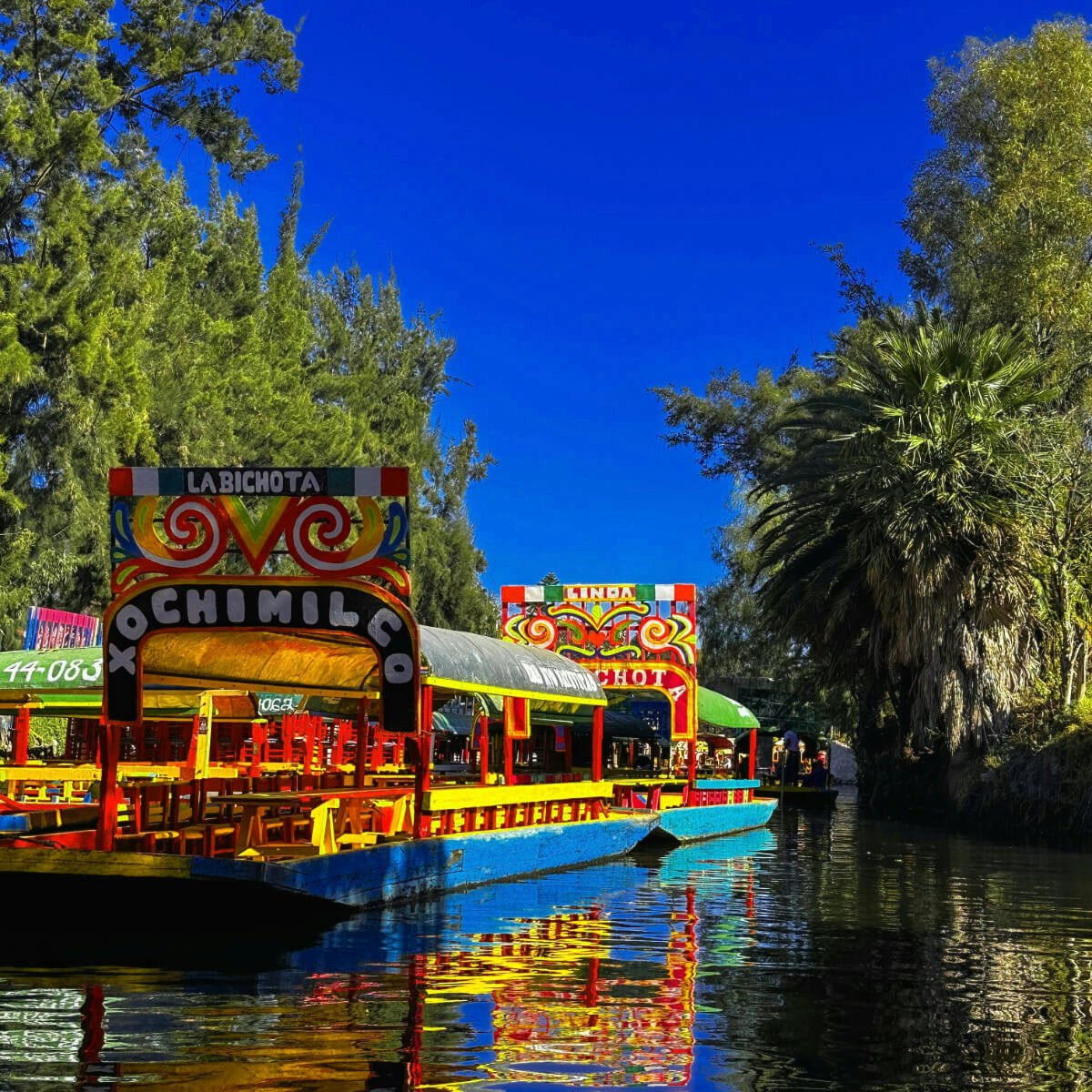
Gliding through Xochimilco’s canals can feel like slipping out of Mexico City without ever leaving it. Water birds skim the surface looking for fish. Farmers work plots that have been cultivated for generations. Rowers push long poles into the canal bed to steer the flat-bottomed, brightly painted trajineras that have become the emblem of these waters.
Frida Kahlo used to come here for peaceful trajinera rides, navigating waterways carved out by the Xochimilcas and the Aztecs more than 1,000 years ago. Xochimilco lies to the south of Coyoacán, close to the bright blue home Kahlo shared with Diego Rivera—Casa Azul, now the Frida Kahlo Museum and a pilgrimage point for visitors who want to trace her life through place.
In Journey Mexico, Xochimilco is framed not as a postcard detour but as a source: a landscape that helped Kahlo root herself in an Indigenous identity central to what she stood for. That identity was expressed through a philosophy of Mexican life as anti-colonial, nature-led, and community-made—an outlook that shaped her choices and aesthetics, from clothing to food to the objects she lived with.
Those choices were tangible. Kahlo’s Tehuana dress signaled a deliberate embrace of Mexicanidad. Mexican flowers and fruits from local markets appeared repeatedly in her paintings. Xoloitzcuintle dogs moved through the Casa Azul courtyard. Long dinners were planned around traditional food, mezcal, and handcrafted tableware. Xochimilco, with its ancient agriculture and living waterways, offered a real-world counterpart to the motifs and values that recur in her life and work.
The connection also runs in the other direction: Xochimilco’s enduring thread between ancient and modern life helps explain why it continues to draw travelers today. It nurtures Indigenous traditions, sustains farming families, and keeps native seeds in circulation. In that sense, visiting Xochimilco is not only about seeing a famous canal system; it is about encountering a living cultural landscape that helped shape the Mexico Kahlo insisted on seeing—and being seen.
The Historical Significance of Xochimilco
Xochimilco’s significance begins with geography and time. Modern Mexico City was once covered by lakes, and the capital of the Aztec empire—Tenochtitlan—was built over that watery world. The canal networks and agricultural systems that supported the city-state were not decorative; they were infrastructure, designed to feed a dense urban center and to manage water in a challenging environment.
Xochimilco is described as the last remaining piece of that broader cultural landscape: a surviving gateway to Aztec agricultural tradition and biodiversity. The waterways visitors travel today were carved out by Indigenous communities more than a millennium ago, and the working landscapes still carry the logic of that era—canals, cultivated plots, and the rhythms of planting and harvest.
The chinampas at the heart of Xochimilco were engineered agricultural islands that became a major food source for the Aztec empire. This is why the place matters beyond tourism: it represents a continuity of knowledge and labor, passed down through families who still farm the land. Farmers work “just as their grandparents did,” underscoring that Xochimilco is not merely a preserved site but an active one.
That continuity is also cultural. Xochimilco has “always held the thread between ancient and modern life,” nurturing Indigenous traditions and sustaining farming families while tending both land and culture. It is a landscape where the past is not sealed behind glass; it is maintained through daily work—rowing, planting, harvesting, and keeping canals navigable.
For Mexico City, a metropolis often defined by speed and scale, Xochimilco’s historical significance lies partly in contrast. It is a reminder that the city’s foundations include Indigenous engineering and agriculture, and that some of those systems still function. The result is a rare overlap: a place where ancient food production methods remain visible and, in some cases, still productive—an inheritance that continues to shape identity, memory, and the meaning of “Mexico” in the capital’s southern reaches.
Xochimilco’s Living Canal Legacy
– Before Mexico City: The Valley of Mexico included extensive lakes; communities developed canal-based ways of living and farming.
– Xochimilcas and later the Mexica/Aztecs: Chinampa agriculture scaled up to help provision Tenochtitlan.
– What “last remnant” means in practice: most of the historic lake system was drained/filled as the city expanded; Xochimilco is one of the most visible surviving canal-and-chinampa landscapes.
– Why it matters today: it’s not only a historic layout—families still farm, canals still function as access routes, and the landscape still carries ecological value.
Chinampas: The Floating Gardens of Xochimilco
At the heart of Xochimilco’s working landscapes are its chinampas—often called “floating gardens,” though they are better understood as agricultural islands engineered by Indigenous communities. These cultivated strips were built up from the lake bed, “strip by strip,” centuries ago. They became a major food source for the Aztec empire, helping sustain Tenochtitlan, the great city-state built over the lakes that once covered the Valley of Mexico.
The term “floating gardens” can mislead visitors into imagining rafts drifting on open water. In practice, chinampas are constructed farmland integrated into a canal network. Their power lies in how they combine water management with cultivation: canals provide access and moisture; the built-up plots provide stable ground for crops. The system is a form of ancient urban provisioning—agriculture designed to feed a city.
What makes Xochimilco exceptional is not only that chinampas exist, but that they remain part of a living landscape. Corn, beans, squash, flowers, and medicinal herbs—the same kinds of crops that fed the Aztec capital—still grow here today. That continuity is why Xochimilco is described as a “gatekeeper” of Aztec agricultural tradition and biodiversity.
For travelers, the chinampas offer a different way to read Mexico City. Instead of highways and high-rises, the map becomes canals and cultivated plots. Instead of imported aesthetics, the scene is shaped by Indigenous engineering and the labor of farming families who continue to work the land. In this narrative, this is the Xochimilco Frida Kahlo knew: not a theme park version of the canals, but a place where hands still go into soil farmed for centuries.
How Chinampas Stay Productive
How a chinampa works (and what keeps it working)
1) Mark the plot: Farmers define long, narrow rectangles separated by canals (the canals are the access routes).
2) Build up the bed: Mud and organic material are layered up from the shallow lakebed “strip by strip,” creating stable, plantable ground.
3) Anchor the edges: Vegetation and boundary plantings help hold the structure in place so it doesn’t erode back into the canal.
4) Keep water moving: Canals need to stay clear enough for boats and for water circulation; clogged canals can mean stagnant water and harder access.
5) Maintain fertility: Organic matter is continually added; without this, yields drop and the plot becomes harder to keep in active cultivation.
6) Watch the failure points: If water quality declines or canals silt up, chinampas can be abandoned—making “reactivation” (bringing them back into cultivation) a real, labor-intensive task rather than a symbolic one.
Agricultural Techniques of the Chinampas
Chinampas were engineered rather than naturally occurring. They were “built up from the lake bed, strip by strip, centuries ago,” creating agricultural islands within a shallow lake environment. This construction is central to their historical role: it turned a watery landscape into productive farmland capable of supporting a major urban center.
The canal network is not incidental—it is the system’s circulatory structure. Canals allow farmers to move between plots by boat and to manage water around cultivated land. The same waterways now used by trajineras were originally part of a working environment shaped by Indigenous communities, including the Xochimilcas and later the Aztecs, more than 1,000 years ago.
The chinampa method is also presented as a tradition maintained through families. Farmers in Xochimilco are depicted working the land as their grandparents did, suggesting that technique is transmitted through practice and community memory rather than through modern industrial systems. That intergenerational continuity is part of what makes the chinampas culturally significant: they are not simply an old technology, but a living one.
In contemporary visits described in the source material, travelers reach “active chinampas” by manually steered trajinera, then step onto cultivated land to see how it is maintained today. The emphasis is on direct observation—hands in soil, conversations with farming families, and a clearer understanding of what it takes to keep the system alive. The technique, in other words, is inseparable from the people who continue to practice it.
Crops Grown in Xochimilco
Xochimilco’s chinampas are still planted with crops that connect directly to the region’s pre-Hispanic food systems. Corn, beans, and squash—staples associated with the agricultural traditions that fed Tenochtitlan—continue to grow in these plots. The presence of these crops underscores the chinampas’ original purpose: feeding a city through local, intensive cultivation.
The landscape also supports flowers and medicinal herbs, expanding the chinampa story beyond calories and staples. Flowers link Xochimilco to Mexico’s market culture and to the visual language that appears in Frida Kahlo’s life and art—Mexican flowers and fruits from local markets recurring in her paintings, and a broader aesthetic rooted in local abundance.
What matters here is not a comprehensive crop list, but the continuity of cultivation. The same categories of plants that sustained the Aztec empire are still present, suggesting that Xochimilco is not merely a remnant of the past but a working agricultural environment. That continuity helps explain why the area is framed as both cultural heritage and biodiversity reserve: crops, native seeds, and farming families remain part of the same system.
For visitors who arrive expecting only a canal ride, the crops can be the surprise. They reveal that the canals are not just scenic routes; they are the access points to a productive landscape. In that sense, the chinampas are a living archive—one where corn, beans, squash, flowers, and medicinal herbs function as evidence of a food tradition that has endured despite the city’s transformation around it.
Xochimilco as a UNESCO World Heritage Site
Xochimilco’s designation as a UNESCO World Heritage Site is rooted in what it preserves: a cultural landscape where ancient Indigenous engineering, agriculture, and waterways remain visible and, in parts, active. Xochimilco is described as “all that remains” of the lake-based world that once covered modern Mexico City—a last gatekeeper of Aztec agricultural tradition and biodiversity.
UNESCO status, in this context, signals that Xochimilco is not simply a neighborhood attraction. It is recognized internationally for the combined value of its canals, chinampas, and the living practices tied to them. The site represents a rare continuity: a place where an agricultural system that once fed an empire still exists within one of the world’s largest urban areas.
The designation also reflects the site’s layered meaning. Xochimilco is ecological—home to a biodiverse reserve where birds search for fish and where native species persist. It is agricultural—chinampas still produce crops associated with the food systems that sustained Tenochtitlan. And it is cultural—sustaining farming families and Indigenous traditions that have not stopped tending land and culture together.
For travelers, UNESCO recognition can function as a shorthand for importance, but it can also flatten a place into a checklist item. Xochimilco resists that simplification because it is not a static monument. The canals are traveled daily; the chinampas are worked; the landscape is maintained through labor. The “heritage” is not only in the past tense.
That is why experiences that move beyond the surface—visiting active chinampas, speaking with farming families, seeing cultivation up close—matter. They align with what UNESCO status is meant to protect: not just scenery, but a living cultural landscape. In Xochimilco, the value lies in continuity—ancient infrastructure still shaping modern life, and a city still being fed, in part, by knowledge engineered long before the metropolis existed in its current form.
Understanding Xochimilco’s Living Heritage
How to read “UNESCO World Heritage” in Xochimilco (so it’s more than a label)
– What’s being recognized: a cultural landscape—canals + chinampas + the living practices that keep them functioning.
– What it’s not: a sealed, museum-like monument. You’re looking at working infrastructure and working land.
– What to look for on a visit: active cultivation, canal navigation as daily access, and signs of stewardship (maintenance, reactivation of plots, community involvement).
– Freshness note: Xochimilco’s World Heritage listing dates to 1987, but the on-the-ground conditions (water quality, active farming, conservation work) are present-tense and can vary by area and season.
Indigenous Identity and Anti-Colonial Philosophy in Kahlo’s Work
In the Journey Mexico narrative, Xochimilco is presented as a place where Frida Kahlo could “root herself” in an Indigenous identity central to everything she stood for. That identity is framed not as an abstract label but as a lived philosophy: Mexican life as anti-colonial, nature-led, and community-made. Xochimilco—an Indigenous-engineered agricultural landscape still sustained by local families—offered a setting where those values were tangible.
Kahlo’s self-presentation and daily life reinforced that stance. The Tehuana dress is cited as part of her expression of Indigenous identity. So are the Mexican flowers and fruits from local markets that appeared again and again in her paintings—motifs tied to everyday commerce and local abundance rather than imported ideals. Her home life at Casa Azul, shared with Diego Rivera, is described through details that echo this worldview: Xoloitzcuintle dogs in the courtyard, long dinners planned around traditional food, mezcal, and handcrafted tableware.
These are not incidental lifestyle notes; they are presented as extensions of a coherent outlook. “Nature-led” appears in the emphasis on plants, fruits, and the living landscape. “Community-made” appears in the attention to markets, traditional foodways, and handcrafted objects. “Anti-colonial” appears in the insistence on Indigenous and Mexican forms as sources of pride and meaning.
Xochimilco’s role in this story is that it embodies continuity. It holds the thread between ancient and modern life, nurturing Indigenous traditions, planting native seeds, and sustaining farming families. For Kahlo, visiting Xochimilco could be a way to step into a landscape where Indigenous knowledge was not only remembered but practiced—where the relationship between people and land remained visible.
The result is an intersection of art, identity, and place. Kahlo’s work is widely recognized as inspired by the nature and artifacts of Mexico, and the Journey Mexico account situates Xochimilco as one of the environments that made that inspiration feel grounded. In a city transformed by modern growth, Xochimilco offered a quieter, older Mexico—one that aligned with Kahlo’s insistence on cultural self-definition.
Reading Identity in Travel Stories
A practical lens for reading “identity” claims in travel storytelling
– Biography (what’s verifiable): where Kahlo lived (Casa Azul), what she wore/collected, and recurring motifs documented in her life and paintings.
– Symbolism (what the place represents): Xochimilco as a living Indigenous-engineered landscape—canals, chinampas, markets, foodways.
– Interpretation (how we connect them): it’s reasonable to see Xochimilco as a real-world counterpart to Kahlo’s Mexicanidad themes, while keeping in mind that thematic resonance can be stronger than hard documentation of specific visits.
Experiencing Xochimilco with Arca Tierra
For visitors trying to understand what drew Frida Kahlo to Xochimilco, the Journey Mexico account argues for an experience that goes beyond a canal cruise. The suggestion is simple: get onto the water and into the land. That is where Arca Tierra enters the story—described as a Mexican NGO working hand in hand with local farmers to reactivate and preserve the chinampa tradition, with support from Journey Mexico’s Positive Impact Fund.
The experience begins aboard a manually steered trajinera. Rather than focusing on spectacle, the emphasis is on drifting through surviving canals to reach one of Arca Tierra’s active chinampas. The point is proximity: stepping onto cultivated land, seeing soil that has been farmed for centuries, and speaking with families who still do the work today.
This approach reframes Xochimilco as a working landscape. It also reframes the visitor as more than a passerby. The Journey Mexico narrative describes a “quiet understanding” of what it takes to keep the place alive—an understanding that comes from direct contact with the system and the people maintaining it.
A quote from Renata Johnson, Journey’s Global Marketing Manager, captures the shift in perception: chinampas are not “just gardens floating on a lake,” but constructed farmland that once fed ancient Mexico City. The quote also points to a key element of Arca Tierra’s work: bringing abandoned chinampas back into cultivation, with results described as “genuinely encouraging.”
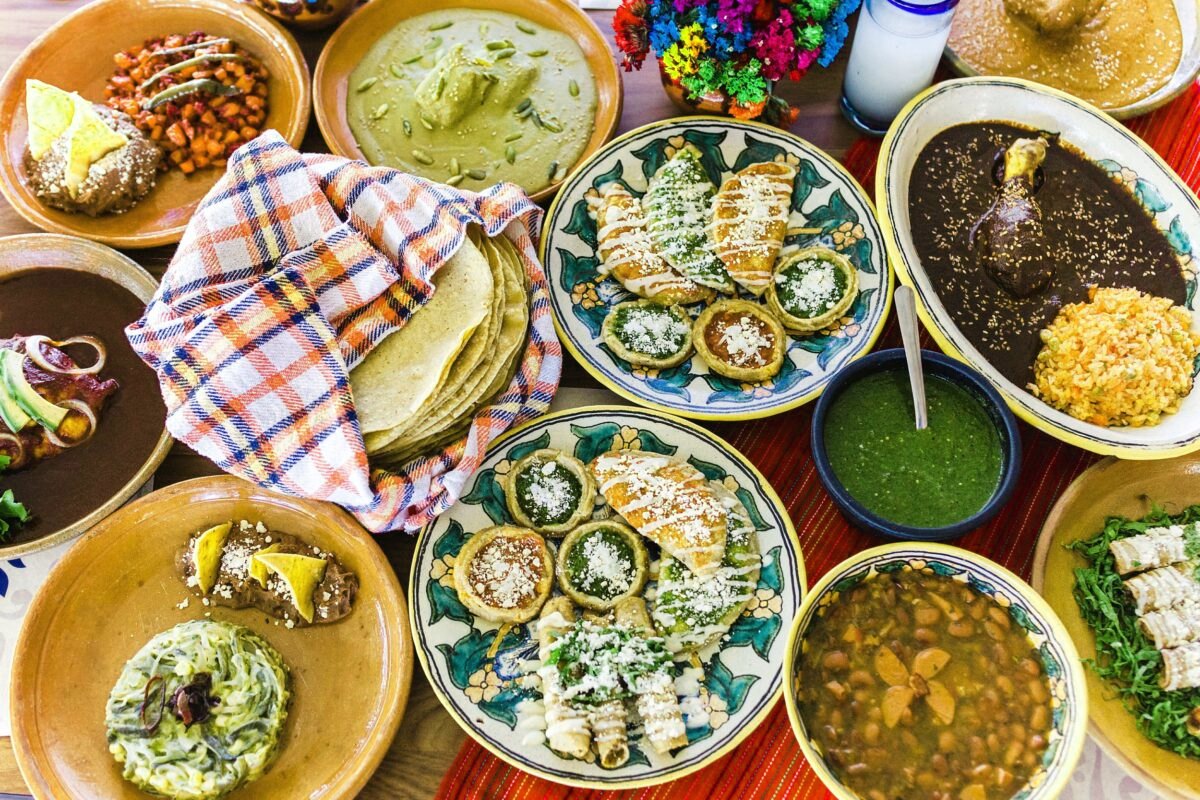
The visit ends around the table with a chinampa-to-plate lunch—ingredients harvested steps away and dishes rooted in culinary traditions that Kahlo herself celebrated. In this telling, food is not an add-on; it is the closing argument. It connects agriculture to culture, and the landscape to daily life, in a way that makes Xochimilco legible as both heritage and present-tense practice.
Chinampa Visit Essentials
What to expect (and what to bring) on a chinampa-focused visit
– Expect: a slow, manually steered trajinera ride; quieter canals; time on an active plot; conversation with farming families; a meal built around nearby harvest.
– Bring: sun protection (hat/sunscreen), water, and shoes you don’t mind getting dusty or muddy when stepping onto cultivated land.
– Do: ask before photographing people at work; treat plots as working farms (stay on indicated paths); keep noise low if the goal is learning rather than partying.
– Don’t: assume “floating gardens” means a raft—look for the built-up land edges and the canal network that makes the system function.
– Quick self-check: if your visit includes soil, crops, and farmers’ time—not only music and drinks—you’re closer to the chinampa story this article is describing.
The Role of Arca Tierra in Chinampa Preservation
Arca Tierra is described as a Mexican NGO working directly with local farmers to “reactivate and preserve the chinampa tradition.” The phrasing matters: preservation here is not only about protecting what remains, but about reactivating what has fallen out of use. In the Journey Mexico account, this includes bringing “abandoned” chinampas back into cultivation.
That work is framed as collaborative—“hand in hand” with farming families—rather than imposed from outside. It positions chinamperos not as background figures in a tourist landscape, but as the central actors in keeping the system alive. The chinampas are not museum pieces; they require ongoing labor, knowledge, and stewardship.
The impact is described through what visitors can see: active chinampas reached by trajinera, soil farmed for centuries, and crops growing again where plots had been left behind. The scale of what is growing “now” is characterized as encouraging, suggesting that restoration is visible on the ground, not only in reports or promises.
Arca Tierra’s role also intersects with how travelers learn. By facilitating visits that include conversations with farming families and time on the land, the NGO helps translate an abstract idea—“ancient agriculture”—into something concrete. Visitors come away understanding that chinampas were built from the lake bed and that they once fed ancient Mexico City.
In this model, preservation is experiential as well as practical. It depends on cultivation and community, but it is strengthened when visitors grasp the significance of what they are seeing. The Journey Mexico narrative links this to its Positive Impact Fund support, framing the partnership as part of a broader effort to sustain Xochimilco’s living heritage.
“I didn’t fully understand the significance of the chinampas before I spent the day out there with the farmers. You get out on the water and realize these aren’t just gardens floating on a lake. They were built up from the lake bed, strip by strip, centuries ago. That’s how ancient Mexico City was fed. Arca Tierra has been bringing the abandoned ones back into cultivation, and the scale of what’s growing out there now is genuinely encouraging.”
Renata Johnson, Global Marketing Manager, Journey
Visitor Experience on a Trajinera
The trajinera is the vehicle—literally and symbolically—through which most visitors meet Xochimilco. In the Journey Mexico description, the boats are manually steered, propelled by rowers who sink poles below the surface and push forward through the canals. The motion is slow and deliberate, matching the atmosphere the article emphasizes: a sense of calm that can feel surprising inside one of the world’s most populous cities.
The ride itself is part of the education. Drifting through “surviving canals” underscores that the waterways are remnants of a much larger lake-and-canal system. It also frames the canal network as functional: these routes connect visitors to active chinampas, not just to scenic views.
Along the way, the landscape offers its own cues. Birds skim the water searching for fish. The presence of farmers working nearby reinforces that this is not a staged environment. It is a place where agriculture and ecology share space, and where the canal is both corridor and boundary.
Arriving at an active chinampa shifts the experience from observation to participation. Visitors step onto land, put “hands in soil,” and talk with families who still farm the plots. The emphasis is on understanding what it takes to keep Xochimilco alive—an understanding that comes from proximity to labor and land.
The visit culminates in a chinampa-to-plate lunch. Ingredients are harvested steps away, and the meal is rooted in culinary traditions associated with the Mexico Kahlo celebrated—traditional food, mezcal, and a table culture shaped by handcrafted objects. In narrative terms, the trajinera ride is the opening; the meal is the closing. Together they connect canals to cultivation, and cultivation to culture, making Xochimilco feel less like an attraction and more like a living system.
The Biodiversity of Xochimilco
Xochimilco is described as a biodiverse reserve, and the Journey Mexico account opens with a scene that makes that claim visible: birds “ski” onto the water searching for fish. In a city known for density and traffic, the presence of active wildlife on open canals is part of what makes Xochimilco feel improbable—and part of what makes it valuable.
The biodiversity is tied to the canal-and-chinampa system itself. Waterways create habitat, and the agricultural islands create a mosaic of cultivated and semi-wild spaces. This blend supports ecological life alongside human work, making Xochimilco a landscape where farming and biodiversity are not necessarily in opposition.
External reporting referenced in the research notes highlights that Xochimilco’s canals and chinampas support remarkable biodiversity, including the critically endangered axolotl (Ambystoma mexicanum), a salamander native to the region. The same sources also point to the area’s importance for migratory birds and other wildlife. While visitors may not see an axolotl on a casual ride, its presence in the ecosystem has become a symbol of what is at stake in preserving water quality and habitat.
Biodiversity here is not only about species lists; it is about the conditions that allow life to persist. The canals must remain navigable and sufficiently healthy to support aquatic life. The chinampas must remain cultivated in ways that do not undermine the surrounding water. In that sense, the ecological story is inseparable from the agricultural one.
Xochimilco’s role as the “last gatekeeper” of Aztec agricultural tradition and biodiversity suggests a dual responsibility: protecting a cultural practice and the living environment that makes it possible. For travelers, the biodiversity can be the quiet counterpoint to the more visible cultural elements—boats, farms, meals. But it is also the foundation. Without water, habitat, and the continued tending of land, the floating gardens would become a metaphor rather than a functioning place.
| What you might hear about | Where it fits in Xochimilco | Why it matters to the “floating gardens” story |
|---|---|---|
| Axolotl (Ambystoma mexicanum) | Canal ecosystem (aquatic habitat) | A flagship native species often cited as threatened; its survival is closely tied to water quality and habitat conditions. |
| Water birds (including migratory birds) | Open canals and wetland edges | Visible indicator of a functioning food web (fish/invertebrates) and wetland habitat value. |
| Fish and aquatic life | Canals | Supports birds and broader biodiversity; depends on water circulation and reduced pollution. |
| Chinampa plots (cultivated beds) | Agricultural islands | Create a patchwork of habitats and food sources while keeping the cultural landscape economically alive. |
| Canal vegetation and edges | Borders between plots and waterways | Helps stabilize chinampa structures and provides cover/feeding areas for wildlife. |
Cultural and Culinary Heritage of Xochimilco
Xochimilco’s cultural heritage is often introduced through its most recognizable image: colorful trajineras moving through canals. But the Journey Mexico narrative insists that the deeper heritage is not the paintwork—it is the continuity of Indigenous traditions, farming families, and foodways that link ancient Mexico City to the present.
The chinampas are central to that continuity. They are not only an agricultural technique but a cultural practice: engineered by Indigenous communities,
Choosing Your Xochimilco Experience
Two common ways to “do Xochimilco” (and what you gain/lose)
– Festive canal ride (music, vendors, party energy):
– Gain: iconic atmosphere, easy logistics, social fun.
– Tradeoff: it can be harder to see the chinampas as working agriculture; the visit may stay on the surface of the canal experience.
– Chinampa-focused visit + meal (active plots, farmers, chinampa-to-plate lunch):
– Gain: clearer understanding of how the system works, why it matters, and what preservation looks like on the ground.
– Tradeoff: typically quieter and more structured; less of the “floating fiesta” vibe.
This article reflects publicly available information at the time of writing, and some details may be incomplete or uncertain. Access routes, conservation conditions, and what you can see in Xochimilco can vary by season and canal area. If you’re planning a visit, confirm current logistics and what a tour or NGO visit includes, as details may change.

Martin Weidemann is a digital transformation expert and entrepreneur with over 20 years of experience leading fintech and innovation projects. As a LinkedIn Top Voice in Digital Transformation and contributor to outlets like Forbes, he now brings that same expertise to travel and mobility in Mexico City through Mexico-City-Private-Driver.com. His focus: trustworthy service, local insights, and peace of mind for travelers.