Table of Contents
- 1. Frida Kahlo collection reopens after six-year closure
- 2. Overview of the Dolores Olmedo Museum
- 3. Significance of Frida Kahlo’s Collection
- 4. Details of the Reopening
- 5. Historical Context of the Museum’s Closure
- 6. Public Response and Controversies
- 7. Admission Prices and Visitor Information
- 8. Legacy of Dolores Olmedo
- 9. Future Plans for the Museum
- 10. Cultural Impact of the Reopening
- 11. The Significance of Frida Kahlo’s Art in Contemporary Culture
- 11.1 Frida Kahlo: A Symbol of Resilience and Identity
- 11.2 The Role of Museums in Preserving Cultural Heritage
This piece is written from the perspective of Martin Weidemann, a digital transformation specialist focused on how institutions build public trust through clear information, documentation, and visitor experience—an angle that’s especially relevant when major cultural collections return after long closures.
Frida Kahlo collection reopens after six-year closure
Dolores Olmedo Museum Reopens May 30
– What’s happening: The Dolores Olmedo Museum is reopening to the public after a nearly six-year closure.
– Where: La Noria hacienda, Xochimilco (southern Mexico City), the museum’s home since 1994.
– When: Scheduled for May 30.
– Why it matters: It restores access to a major Kahlo corpus (reported as 25 original paintings) and closes a chapter of uncertainty that included a proposed relocation later canceled after public pushback.
- The Dolores Olmedo Museum in Xochimilco is set to reopen May 30 after nearly six years closed.
- It returns in its longtime home: the La Noria hacienda, where it has operated since opening in 1994.
- The museum holds Mexico’s largest collection of Frida Kahlo paintings, alongside major Diego Rivera works and pre-Hispanic art.
- Reporting on the reopening also describes it as the largest collection of Kahlo paintings in the world, with 25 original works by Kahlo in the museum’s holdings.
- A proposed relocation to Aztlán Park was canceled after public pushback and a cultural-rights complaint.
- Ticket prices are higher than many Mexico City museums: 162 pesos for Mexican residents, 432 pesos for foreign visitors.
Overview of the Dolores Olmedo Museum
Dolores Olmedo Museum Highlights
What it is: A museum founded in 1994 in the former residence of collector María de los Dolores Olmedo, known for major holdings of Frida Kahlo and Diego Rivera plus a large pre-Hispanic collection.
Where it is: La Noria hacienda in Xochimilco—outside the Chapultepec museum corridor, in southern Mexico City.
What you’ll see (and feel): Galleries in a historic hacienda setting, plus gardens and the museum’s well-known animal life (including peacocks and xoloitzcuintle dogs), which make the visit distinct from a conventional “white-wall” museum.
The Dolores Olmedo Museum occupies a distinctive place in Mexico City’s cultural geography: not in the dense museum corridor of Chapultepec, but in the southern borough of Xochimilco, at the La Noria hacienda. The site—described as a 16th-century hacienda—has been the museum’s home since it opened to the public in 1994, and it is scheduled to reopen there again on May 30 after a long closure.
The institution is named for María de los Dolores Olmedo (1908–2002), a businesswoman, real estate investor, and patron of the arts whose collecting helped shape public access to key works of 20th-century Mexican art. Olmedo opened her residence as a museum and, in her will, bequeathed the property and collection to the people of Mexico—an act that cemented her legacy as a major benefactor of the country’s cultural life.
What visitors encounter at the museum has historically been more than a set of galleries. The grounds are known for gardens and for animals that have become part of the museum’s identity, including peacocks and xoloitzcuintle dogs. That atmosphere—art in a lived-in, historic setting—has long differentiated the museum from more conventional white-wall spaces.
The museum’s reopening has been framed by the institution as a return, emphasizing artistic expression and community values while honoring the property as Olmedo’s former residence. That language matters in Xochimilco, where the museum is not just a tourist stop but a cultural anchor. After years of uncertainty and rumors about permanent closure or relocation, the decision to reopen in La Noria signals continuity: the collection remains tied to the place where it has been publicly experienced for decades.
Significance of Frida Kahlo’s Collection
| Venue (Mexico City) | What it’s best for | Kahlo works (as commonly reported) | Why it changes the experience |
|---|---|---|---|
| Dolores Olmedo Museum (Xochimilco) | Breadth of Kahlo’s practice in one visit; also Rivera + pre-Hispanic context | 25 original paintings | Lets you track themes and formal choices across multiple canvases, not just one “signature” image. |
| Casa Azul (Frida Kahlo Museum) | Biography and domestic world (home/studio atmosphere) | Fewer than Olmedo | Prioritizes life context and personal artifacts; the “Kahlo story” is the organizing principle. |
| Museo de Arte Moderno (MAM) | A single, canonical masterpiece in a modern-art setting | 1 major work | Anchors Kahlo within Mexico’s modern art narrative via The Two Fridas. |
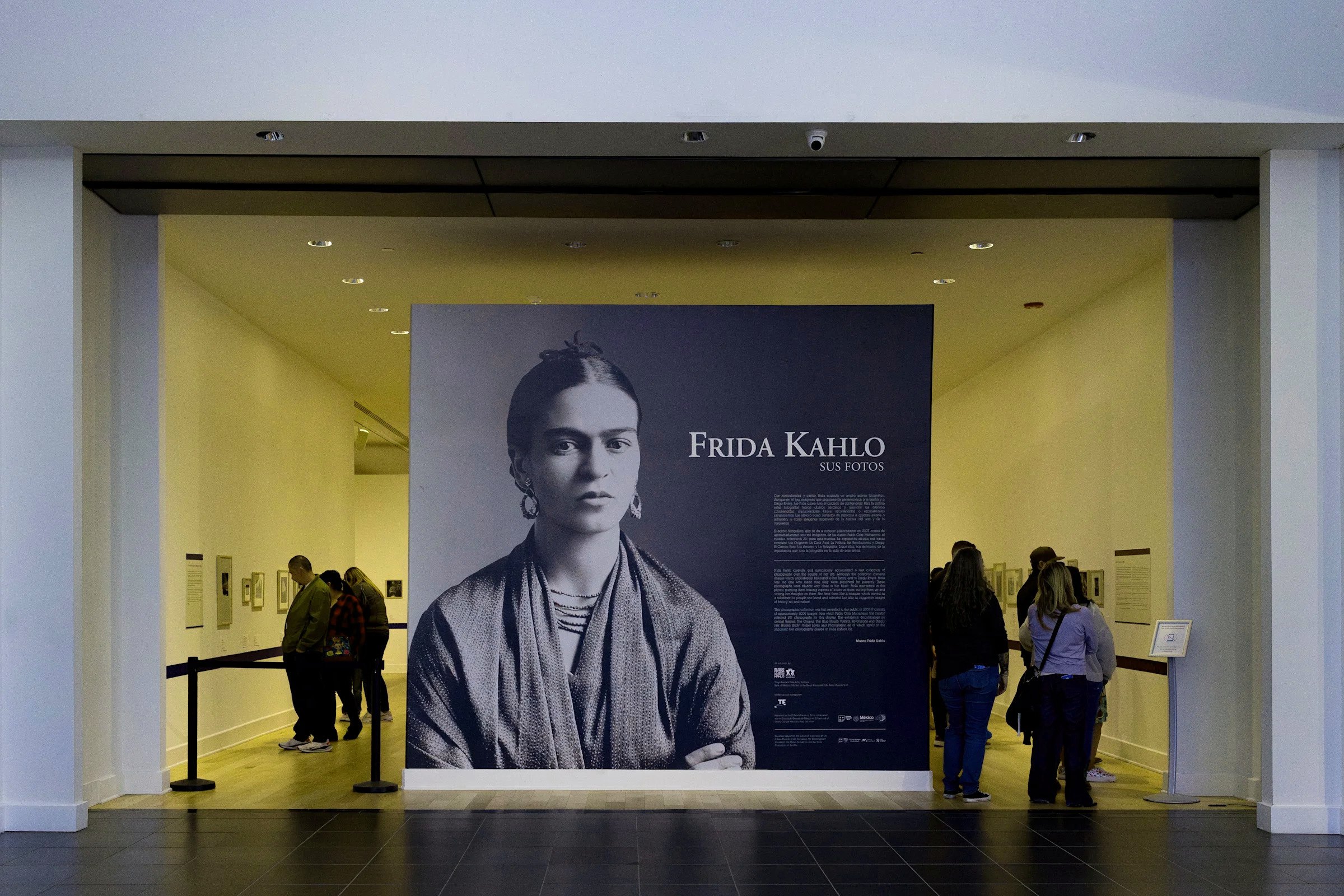
The Dolores Olmedo Museum is widely recognized for one central fact: it houses the largest collection of Frida Kahlo paintings in Mexico—described as Mexico’s largest collection of her works and, in reporting about the museum, as the world’s largest collection of her paintings. The collection includes 25 original Kahlo paintings, a concentration that makes the museum a crucial site for understanding her artistic development beyond the handful of “greatest hits” that circulate most often in popular culture.
Several works cited as part of the holdings underscore the collection’s range and emotional intensity. Among the paintings associated with the museum are The Broken Column, Henry Ford Hospital, Self-Portrait with Monkey, and A Few Small Nips. Even as individual titles have become iconic, their impact changes when seen in the context of a larger body of work—where themes of pain, identity, and self-fashioning recur and evolve.
The significance is also comparative. Mexico City offers multiple ways to encounter Kahlo: Casa Azul (the Frida Kahlo Museum) is closely tied to her biography and domestic world; the Museo de Arte Moderno holds The Two Fridas, often treated as her most famous painting. But the Dolores Olmedo Museum stands out for breadth. It is the place where visitors can see Kahlo not as a single emblematic image, but as an artist with a sustained practice—one that can be traced across multiple canvases in one visit.
That matters for scholarship and for public understanding. A larger collection allows for more nuanced curatorial narratives: not only the familiar story of suffering and resilience, but also Kahlo’s formal decisions, her recurring symbols, and her shifting self-representation. It also matters for cultural heritage. In a moment when debates about stewardship and transparency have intensified around Mexican collections, the continued public display of a major Kahlo corpus—kept intact and accessible—carries weight beyond aesthetics.
Finally, the Kahlo works at Dolores Olmedo sit within a broader collection that includes Diego Rivera and pre-Hispanic objects. Reporting on the reopening highlights the museum’s wider holdings as including 148 works by Rivera and nearly 6,000 pre-Hispanic figurines and sculptures. That context can shape interpretation: Kahlo’s modernity is seen alongside Rivera’s monumental presence in Mexican art and alongside older artistic traditions that have long informed national identity. The result is a museum experience that positions Kahlo not as an isolated celebrity, but as part of a wider cultural continuum.
Details of the Reopening
Museum Reopening Key Updates
1) Reopening date: May 30.
2) Location confirmed: La Noria hacienda in Xochimilco (the museum’s longtime home).
3) What was upgraded during closure (as reported): structural reinforcement; preservation work for archives and the library; improved/new exhibition spaces; technological upgrades.
4) Collection management change highlighted: digital cataloging of collections (useful for preservation, research access, and internal tracking).
5) What stays part of the experience: gardens and the museum’s animal life (including peacocks and xoloitzcuintle dogs).
6) Tickets & demand checkpoint: grand-opening tickets sold online; some reports say early batches sold out—so planning ahead matters.
The museum is scheduled to reopen on May 30, returning to its traditional location at the La Noria hacienda in Xochimilco. For many in Mexico City, the date is more than a calendar note: it marks the end of a prolonged period of uncertainty in which the museum’s future was repeatedly questioned, and it restores public access to a collection that is central to Mexico’s modern artistic canon.
The institution has described the reopening as emphasizing artistic expression and community values. That framing suggests a reopening that is not merely operational—doors unlocked, lights on—but programmatic, with an intention to reconnect the museum to its surrounding community and to the broader cultural life of the city.
The closure period was used for restoration and modernization. Reported upgrades include structural reinforcement of the building, preservation work for archives and the library, and the creation or improvement of exhibition spaces. The museum also undertook digital cataloging of its collections, a step that can strengthen both preservation and accountability while improving access for research and internal management. Technological upgrades were also part of the modernization effort, aimed at enhancing educational and interactive experiences for visitors.
Importantly, the museum’s gardens and animal life—peacocks and xoloitzcuintle dogs—were maintained as part of the institution’s identity. For returning visitors, that continuity may be as meaningful as any new display technology: the Dolores Olmedo experience has long been tied to the sense of place, where art, architecture, and landscape are intertwined.
Tickets for the grand opening have been sold online, and some reports indicate that early batches sold out quickly. That surge reflects both the draw of Kahlo’s work and the pent-up interest created by years of closure and rumor.
The reopening also lands in a broader cultural moment. Reporting has linked the museum’s return to increased cultural activity around the 2026 FIFA World Cup, suggesting that Mexico City’s cultural institutions are preparing for heightened international attention. In that context, reopening the country’s most concentrated Kahlo collection is not just a local event—it is a statement about Mexico’s cultural offerings on a global stage.
Historical Context of the Museum’s Closure
Dolores Olmedo Museum Timeline
– 1994: Museum opens to the public at La Noria hacienda in Xochimilco.
– 2021: Museum closes (initially in the pandemic period), and the shutdown extends.
– 2021–2026 (reported): Restoration/modernization work becomes the main public rationale—structural reinforcement, preservation of archives/library, improved exhibition spaces, and digital cataloging.
– After closure (reported): Plans surface to relocate a significant part of the collection (including Kahlo and Rivera works) to a new space in Aztlán Park (former Chapultepec Fair).
– 2025: Xochimilco residents and the collective “Let’s Defend the Dolores Olmedo Museum” file a complaint with the National Human Rights Commission (CNDH) alleging cultural-rights impacts.
– CNDH outcome (reported): CNDH investigates, requests reports, and the relocation plan is announced as canceled, clearing the way for reopening in La Noria.
The museum’s nearly six-year closure unfolded in stages and under shifting explanations, beginning during the COVID-19 pandemic. The museum closed in 2021, and the shutdown extended as restoration and modernization plans took shape. The doors closed in 2021, and what might have been a temporary shutdown became an extended absence from public life. Over time, restoration and modernization became central justifications for the prolonged closure, with reported work ranging from structural reinforcement to preservation of archives and the library, as well as new exhibition spaces.
But the closure was not only a technical story about renovations. It became a political and cultural flashpoint because of what happened next: plans emerged to move a significant part of the collection—works by Frida Kahlo and Diego Rivera among them—to a new space within Aztlán Park, located at the former Chapultepec Fair. The mere prospect of relocation transformed the closure from an inconvenience into a debate about cultural rights, access, and the meaning of place.
For Xochimilco, the museum’s location is not incidental. The Dolores Olmedo Museum has been part of the borough’s cultural infrastructure since 1994. Removing it would have shifted a major cultural asset away from the south of the city and toward a more central, commercially active zone. That geographic shift was at the heart of the backlash: the issue was not simply where tourists might find the paintings, but whether residents would lose a nearby institution that connected them to national and international art.
The controversy also fed rumors—about permanent shuttering, about the museum’s future governance, and about whether the collection would remain intact. In cultural life, uncertainty can be corrosive: it erodes trust among audiences, donors, scholars, and local communities. The museum’s long silence, combined with the relocation plan, created a vacuum that was filled by speculation.
By the time the museum announced a reopening in its original location, the closure had become a case study in how museum decisions can trigger broader civic debates. Renovations and modernization may have been necessary, but the episode showed that for institutions holding nationally significant collections, the public often expects more than technical explanations. They expect clarity about mission, stewardship, and—especially in a city as unequal in access as Mexico City—commitment to place.
Public Response and Controversies
Location, Access, and Trust Balance
– Keeping the museum in Xochimilco: Protects local access and the “hacienda + gardens” experience that’s part of the institution’s identity.
– Relocating to a central entertainment zone (Aztlán Park): Could increase tourist footfall and visibility, but risks weakening the museum’s place-based meaning and shifting benefits away from the borough that hosted it since 1994.
– Trust and governance pressure: After years of rumors, audiences want clearer stewardship signals (documentation, transparency, continuity of holdings).
– Visitor demand vs. accessibility: High interest can help sustain the museum, but it can also amplify concerns about pricing, ticket availability, and who gets in.
The museum’s reopening is described as one of Mexico’s most anticipated cultural events, in large part because it follows years of rumors and a very public dispute over the museum’s future. The controversy centered on the proposed relocation of a significant portion of the collection to Aztlán Park, at the former Chapultepec Fair. For critics, the plan raised alarms about access, community impact, and the integrity of a museum experience rooted in the La Noria hacienda.
Opposition coalesced quickly once the relocation plan became known. Artists, intellectuals, and cultural personalities mobilized, and the debate moved beyond the art world into civic life. In 2025, residents of Xochimilco and the collective “Let’s Defend the Dolores Olmedo Museum” filed a complaint with Mexico’s National Human Rights Commission (CNDH), arguing that removing the museum from the borough would violate cultural rights and significantly affect residents’ access to art.
The CNDH investigated, requested reports from the trust and cultural authorities, and ultimately announced that the move to Aztlán Park had been canceled. That decision is the key reason the reopening is taking place in the museum’s longtime La Noria location rather than in a new venue. That outcome did not just settle a logistical question; it validated the idea that cultural institutions can be understood through a rights-based lens—particularly when collections are held in trust for the public.
The episode also unfolded against a wider backdrop of scrutiny around museum stewardship in Mexico. Allegations made public in 2025 by a former director associated with other Kahlo-related institutions claimed that more than a dozen Kahlo works and pages from her diary had gone missing from the Casa Azul collection, with claims that some items appeared in U.S. auctions and galleries. Those allegations fueled a broader debate about transparency and safeguarding cultural heritage when collections are managed by trusts.
The Dolores Olmedo Museum has not been implicated in those missing-works allegations. Reporting has contrasted its position with other institutions, noting that the Dolores Olmedo Trust has emphasized the integrity and preservation of its holdings and has opposed accusations of mismanagement. In that climate, the museum’s reopening after modernization—including digital cataloging—will be watched not only as a cultural event but also as a test of public confidence.
The public response, then, is layered: excitement to see Kahlo’s paintings again, relief that the museum remains in Xochimilco, and heightened sensitivity to questions of governance, accountability, and access.
Admission Prices and Visitor Information
| Item | What’s known from reporting | Practical planning note |
|---|---|---|
| Reopening date | May 30 | Expect peak demand around opening week. |
| Location | La Noria hacienda, Xochimilco | It’s outside the central museum corridor; build in extra transit time. |
| General admission (Mexican residents) | 162 pesos | Differential pricing is common; bring appropriate ID if required at entry. |
| General admission (foreign visitors) | 432 pesos | Higher than many city museums; budget accordingly. |
| Tickets | Grand-opening tickets sold online | Some reports say early batches sold out—buy ahead if you can. |
| On-site experience | Gardens + animals (peacocks, xoloitzcuintle dogs) | Plan for a slower visit than a quick gallery stop. |
The museum’s reopening comes with ticket prices that immediately place it in a different bracket from many other Mexico City museums. General admission is set at 162 pesos for Mexican residents and 432 pesos for foreign visitors. That differential pricing is common in Mexico’s cultural sector, but the absolute level—particularly for foreign visitors—has been noted as higher than other museums in the city.
Tickets for the grand opening are available online. Demand has been intense enough that some reports say the first batches sold out, signaling both the museum’s popularity and the pent-up interest created by the long closure. For visitors planning around the reopening date, the online system is therefore not just a convenience but a practical necessity.
The museum’s location remains part of the visitor equation. It is reopening in its traditional home at the La Noria hacienda in Xochimilco, in the southern part of Mexico City. That setting is a major part of the museum’s appeal: a historic residence with gardens that have long been associated with the institution’s identity. The grounds are known for peacocks and xoloitzcuintle dogs, details that shape the visit as an experience rather than a quick gallery stop.
Because the reopening has emphasized artistic expression and community values, visitors can reasonably expect not only the return of the collection but also updated exhibition spaces and technological upgrades introduced during modernization. Reported improvements include digital cataloging and preservation work for archives and the library—changes that may affect how works are displayed and interpreted.
For travelers, the reopening also lands in a period of heightened cultural attention in Mexico City, with reporting noting cultural activities tied to the 2026 FIFA World Cup. That broader context may increase demand and crowding, especially for internationally recognized artists like Kahlo.
In short: plan ahead, expect high interest, and be prepared for pricing that reflects the museum’s status as the home of Mexico’s largest Kahlo collection—now returning after years off the public circuit.
Legacy of Dolores Olmedo
Dolores Olmedo’s Public Legacy
María de los Dolores Olmedo (1908–2002) was a Mexican businesswoman and real estate investor who became a major art collector and patron—especially associated with promoting Diego Rivera’s work. In 1994 she opened her residence to the public as a museum, and in her will she bequeathed the property and collection to the people of Mexico, shaping today’s expectations around public access and stewardship.
María de los Dolores Olmedo (1908–2002) is central to the museum’s story not only because it bears her name, but because her life shaped the conditions under which the public can see these works today. She was a successful businesswoman and real estate investor—an unusual position for a woman in the first half of the 20th century—and she became an important art collector and patron. Her collecting was not passive accumulation; she was also a dedicated promoter of Diego Rivera’s work and a figure who recognized the lasting value of contemporary Mexican art.
In 1994, Olmedo opened her residence as a museum, transforming a private space into a public institution. That decision matters in a country where access to major art collections has often depended on the choices of private collectors, families, and trusts. By opening her home, she created a setting in which art could be experienced in a context that retained traces of lived history—an approach that differs from purpose-built museum architecture.
Her will further defined her legacy. Olmedo bequeathed the property and the collection to the people of Mexico, a gesture that consolidated her image as a major patron and ensured that the works would remain part of the public cultural sphere. In practical terms, that bequest is what makes today’s debates—about relocation, access, and stewardship—so charged: the collection is widely understood as belonging to the public, not simply to an institution.
The museum’s reopening language—honoring the property as Olmedo’s former residence while emphasizing community values—implicitly returns to her original model: a museum rooted in place, shaped by a collector’s vision, but oriented toward public benefit. In the years of closure and rumor, Olmedo’s intentions became a reference point for critics who argued that removing the museum from Xochimilco would undermine access and betray the spirit of the bequest.
Olmedo’s legacy also sits in the scale of what she assembled: major holdings of Kahlo and Rivera, alongside thousands of pre-Hispanic objects. That breadth reflects a particular view of Mexican cultural identity—modern art in dialogue with deeper historical traditions—and it is a view that continues to shape how visitors encounter Kahlo’s work today.
Future Plans for the Museum
Sustaining Access and Stewardship
– Continue digital cataloging so holdings are consistently documented and easier to manage over time.
– Use upgraded spaces for clearer interpretation (labels, thematic groupings, educational elements) that help visitors see Kahlo beyond the “icon” narrative.
– Keep investing in archives/library preservation, which supports research and long-term stewardship.
– Manage international loans (e.g., “Frida: The Making of an Icon” in Houston, then Tate Modern) without weakening the on-site experience in Xochimilco.
– Maintain the gardens and grounds as part of the museum’s identity, not an afterthought.
– Treat community access as a standing priority, given the recent cultural-rights debate around relocation.
The reopening is being presented not as a simple return to business as usual, but as a relaunch. While the museum has not publicly laid out an exhaustive program in the reporting available, several concrete elements point to where it is heading: modernization, improved preservation, and a stronger infrastructure for access and interpretation.
One of the most consequential steps is digital cataloging of the collections. For a museum holding works of global interest—especially a concentrated Kahlo collection—cataloging is more than administrative housekeeping. It can support conservation planning, facilitate research, and strengthen institutional accountability by clarifying what is held, how it is documented, and how it is tracked over time.
The renovation work also signals future direction. Structural reinforcement and the preservation of archives and the library suggest a museum investing in long-term stability rather than short-term spectacle. New or improved exhibition spaces and technological upgrades point toward a visitor experience that may be more interpretive and educational, potentially expanding how audiences engage with the works beyond traditional wall labels.
The museum’s future is also shaped by its relationship to international exhibition circuits. Part of its collection has been slated for inclusion in “Frida: The Making of an Icon” at the Museum of Fine Arts, Houston, with the exhibition traveling to Tate Modern in London. Such loans underscore the collection’s global stature and suggest that the museum will continue to operate not only as a local destination but as a participant in international cultural exchange.
At the same time, the museum’s future plans are inseparable from the recent controversy over relocation. The cancellation of the move to Aztlán Park, following the CNDH process, effectively reaffirmed the museum’s place in Xochimilco. That outcome may shape future governance decisions: any major change to location or access is now likely to be met with heightened scrutiny and organized civic response.
Finally, the reopening’s timing—amid cultural activity linked to the 2026 FIFA World Cup—hints at a museum preparing for increased international tourism. The challenge ahead will be balancing that influx with the community-oriented values the museum says it wants to emphasize, ensuring that the institution remains accessible and meaningful to local audiences as well as visitors from abroad.
Cultural Impact of the Reopening
The return of the Dolores Olmedo Museum is not just the reopening of a building; it is the restoration of public access to a cornerstone of Mexico’s modern artistic heritage. For nearly six years, Mexico City lacked regular access to the country’s largest collection of Frida Kahlo paintings in the setting where it has been experienced since 1994. Bringing that collection back into public view reshapes the city’s cultural map, especially for Xochimilco, where the museum functions as a major cultural asset outside the city’s central museum zones.
The reopening also carries symbolic weight because it follows a civic struggle over cultural rights. The complaint filed with the CNDH by Xochimilco residents and the “Let’s Defend the Dolores Olmedo Museum” collective framed the museum not as a luxury but as part of the community’s right to access art. The cancellation of the relocation plan validated that framing and may influence how future cultural policy debates are argued in Mexico: not only in terms of tourism revenue or branding, but in terms of rights and equitable access.
In the broader art world, the reopening lands at a moment when Kahlo’s global status remains immense—and contested. Her image circulates widely, sometimes detached from the complexity of her work. A museum that can present 25 original paintings in one place offers a corrective: it allows audiences to encounter Kahlo through sustained looking rather than through reproduction and myth. That has cultural impact because it can deepen public understanding of her as an artist, not only as an icon.
The museum’s modernization—digital cataloging, improved exhibition spaces, preservation of archives—also speaks to a cultural impact that is institutional. In an era of heightened concern about stewardship, documentation, and transparency, investments in cataloging and preservation can strengthen trust and set expectations for how major collections should be managed.
Finally, the reopening intersects with Mexico City’s international moment. With cultural activities tied to the 2026 FIFA World Cup, the city is likely to see increased global attention. Reopening a museum that holds a globally recognized collection of Kahlo’s work positions Mexico City to present its cultural heritage on its own terms—rooted in place, history, and public access—rather than as a traveling brand.
The Significance of Frida Kahlo’s Art in Contemporary Culture
Frida Kahlo: A Symbol of Resilience and Identity
Four Lenses on Kahlo Today
Four lenses that help connect Kahlo’s contemporary relevance to what a large, place-based collection makes possible:
1) Body & pain as form (not just biography): Works like The Broken Column and Henry Ford Hospital show how physical experience becomes visual structure.
2) Identity as construction: Self-portraiture reads differently when you can compare multiple canvases in one visit—repetition, variation, and deliberate self-fashioning become visible.
3) Icon vs. artist: A concentrated set of originals pushes back against “Kahlo as image” by rewarding sustained looking and formal analysis.
4) Museum as civic space: The reopening—after rumors, a relocation proposal, and a cultural-rights complaint—makes the question of who gets access, and where part of the artwork’s public meaning.
Frida Kahlo’s contemporary relevance is often described in the language of symbolism—resilience, identity, self-definition—and the Dolores Olmedo Museum’s reopening reinforces why. The museum’s holdings include works such as The Broken Column and Henry Ford Hospital, paintings frequently associated with Kahlo’s unflinching depiction of pain and bodily experience. When such works are encountered not as isolated images online but as part of a larger collection, the symbolism becomes more grounded: resilience is seen not as a slogan but as a recurring artistic problem Kahlo returned to with different visual strategies.
Kahlo’s identity—Mexican, modern, deeply personal—also gains texture in this setting. The Dolores Olmedo Museum does not present Kahlo alone; it situates her within a collection that includes Diego Rivera and thousands of pre-Hispanic objects. That context can sharpen contemporary conversations about identity by showing how modern Mexican art has long negotiated between the personal and the national, the contemporary and the ancient.
The museum’s reopening after years of rumor and dispute adds another layer to Kahlo’s contemporary meaning: her work becomes a focal point for debates about who gets to see art, where it belongs, and how cultural heritage should be protected. In that sense, Kahlo’s paintings are not only objects of admiration; they are catalysts in ongoing civic arguments about access and belonging.
The Role of Museums in Preserving Cultural Heritage
The Dolores Olmedo Museum’s closure and reopening illustrate how museums function as both cultural stewards and public institutions with obligations. Renovation and modernization—structural reinforcement, preservation of archives and the library, improved exhibition spaces, and digital cataloging—are not merely technical upgrades. They are part of how a museum protects works for future generations while maintaining public trust in the present.
That trust has become a sharper issue in Mexico amid allegations elsewhere about missing Kahlo works and diary pages, and debates about transparency in institutions managed by trusts.
Ticketing, pricing, and opening-day logistics can change quickly, especially for high-demand reopenings. This reflects publicly available information at the time of writing, and operational details (such as resident ID requirements or ticket release timing) may be updated. Check the museum’s official channels shortly before your visit for the latest information.

Martin Weidemann is a digital transformation expert and entrepreneur with over 20 years of experience leading fintech and innovation projects. As a LinkedIn Top Voice in Digital Transformation and contributor to outlets like Forbes, he now brings that same expertise to travel and mobility in Mexico City through Mexico-City-Private-Driver.com. His focus: trustworthy service, local insights, and peace of mind for travelers.