Table of Contents
- 1. Mexico City to host free World Cup fan festivals
- 2. Overview of Mexico City’s World Cup Fan Festivals
- 3. Locations of Fan Festivals Across the Boroughs
- 3.1 Designated Fan Fests in Each Borough
- 3.2 FIFA-Sponsored Venue in Zócalo
- 4. Features of the Fan Festivals
- 4.1 Free Match Broadcasts and Cultural Programming
- 4.2 Entertainment and Activities for Families
- 5. Safety Measures at Fan Zones
- 6. Food and Beverage Offerings
- 6.1 Local and Indigenous Food Products
- 6.2 Prohibition of Alcohol Sales
- 7. Cultural Significance of the Festivals
- 8. Announcement by Mayor Clara Brugada
This guide is written from the perspective of Martin Weidemann, a digital transformation expert focused on trustworthy travel and mobility in Mexico City—prioritizing clear, practical information and peace of mind for visitors.
Mexico City to host free World Cup fan festivals
Mexico City Fan Festival Plan
– Confirmed plan (city announcement): 18 fan festivals total
– Coverage footprint: 16 boroughs (at least one each) + Zócalo (FIFA-sponsored venue)
– Match screenings: 7 venues plan to show all 104 matches; 11 venues plan to show Mexico matches + selected games
– On-site programming (described by the city): big screens + concerts, public art, workshops, traditional games, sporting activities, family entertainment
– Key rule highlighted by officials: no alcohol sales at fan zones
Reporting referenced in this article is based on coverage by Mexico News Daily.
Overview of Mexico City’s World Cup Fan Festivals
Mexico City is preparing to turn the 2026 FIFA World Cup into a citywide street-level celebration, not just a stadium event. The plan, as presented by Mayor Clara Brugada, is to establish 18 free fan festivals—a network of public viewing and cultural sites designed to spread the tournament atmosphere across the capital.
The concept is straightforward: make the World Cup accessible to residents and visitors who won’t have match tickets, while also ensuring that the energy of the tournament reaches neighborhoods far from the stadium. Brugada described the ambition in vivid terms, saying “the capital will be like one big grandstand.” The festivals are meant to function as shared public spaces where football, culture, and community life overlap.
At the core of the plan are free match broadcasts on large screens, paired with cultural programming and activities that reflect local identity. The city’s approach also aligns with the broader FIFA Fan Festival™ model: free entry, giant screens, entertainment, and food offerings that create a “stadium-like” atmosphere in public squares.
Mexico City’s festival network includes two layers: borough-based fan fests distributed across the city, and a FIFA-sponsored venue in the Zócalo, the main public square in the Historic Center.
Official vs Borough Fan Festivals
Two “fan festival” layers are being discussed:
– FIFA Fan Festival™ (official concept): FIFA describes Fan Festivals as free public viewing + entertainment experiences in host cities (Mexico City’s FIFA-sponsored venue is planned for the Zócalo). More: https://www.fifa.com/en/tournaments/mens/worldcup/canadamexicousa2026/fifa-fan-festival
– City-run borough fan fests (Mexico City plan): a wider network across all 16 boroughs intended to spread screenings and programming beyond the Historic Center.
Practical takeaway: if you’re trying to confirm “official” programming, look for updates tied specifically to the Zócalo Fan Festival; for neighborhood options, watch for borough-by-borough announcements.
Locations of Fan Festivals Across the Boroughs
Mexico City’s plan is explicitly decentralized: the World Cup experience is intended to be reachable from every part of the capital. Rather than concentrating all public viewing in the center, the city says it will place fan festivals across the entire urban map—an approach that could reduce pressure on any single site while giving more communities a local gathering point.
The headline commitment is at least one designated fan fest in each of the city’s 16 boroughs, plus the FIFA-sponsored venue in the Zócalo. The borough-based sites are expected to carry a consistent baseline of features—big screens and programming—while differing in how many matches they show.
The distribution also reflects the mayor’s argument that football culture is lived in everyday places: neighborhood pitches, markets, and public squares. In that framing, the fan festivals are not merely overflow viewing areas; they are a deliberate attempt to embed the tournament into the city’s daily rhythms.
A key operational detail is the split in match coverage. The city says seven venues will screen all 104 World Cup games, while the remaining 11 will focus on Mexico’s matches and selected games. That implies a tiered network: some sites function as full-tournament hubs, while others operate as targeted community viewing points.
Venue Site Verification Essentials
As borough locations and rules are published, here’s what to verify before you pick a site:
– Exact address + entry points: some plazas/parks have multiple access streets and controlled entrances
– Screening tier: is it one of the 7 full-coverage venues or one of the 11 Mexico/selected-match venues?
– Hours on non-match days: some sites may run workshops/food programming even when no match is on
– Capacity approach: first-come/first-served vs timed entry (if any) and whether re-entry is allowed
– What you can bring: bag size limits, umbrellas, chairs, outside food/water rules (these often vary by venue)
– Family areas: if you’re going with kids, check whether there’s a dedicated family zone and where it sits relative to the main screen
– Getting home plan: nearest Metro/Metrobús options and whether streets will close around kickoff/end times
Designated Fan Fests in Each Borough
The city’s plan calls for at least one fan festival in each of Mexico City’s 16 boroughs, ensuring that the World Cup atmosphere is not limited to central tourist zones or areas near Estadio Azteca. This borough-by-borough approach is central to the mayor’s message that the tournament should be experienced in public spaces where communities already gather.
While specific borough locations were not detailed in the announcement summary, the intent is clear: each borough will have a designated place where residents can watch matches on big screens and participate in related programming. The borough sites are also part of the match-broadcast strategy: not all venues will show every game.
Under the plan, 11 of the 18 venues will broadcast Mexico’s games and selected matches, suggesting these borough sites may prioritize moments of highest local interest—especially games involving the national team—while still offering a broader festival atmosphere through concerts, workshops, and activities.
This structure could shape crowd patterns. Fans seeking a guarantee of every match would gravitate to the seven full-coverage venues, while borough sites could become neighborhood anchors for Mexico games and marquee fixtures. In either case, the borough fan fests are designed to make participation possible without traveling across the city.
FIFA-Sponsored Venue in Zócalo
Alongside the borough network, Mexico City will host a FIFA-sponsored fan festival venue in the Zócalo, the main public square in the heart of the Historic Center. The Zócalo—also known as Plaza de la Constitución—is one of the city’s most symbolically charged public spaces, surrounded by major landmarks and long used for civic gatherings and mass celebrations.
Within the broader FIFA Fan Festival™ concept, the Zócalo site stands out as the flagship setting: a central, highly accessible location intended to deliver a large-scale public viewing experience. The Zócalo is positioned to embody that “open-air stadium” feel.
The Zócalo’s prominence also makes it a natural focal point for visitors who want a single, iconic place to experience the tournament atmosphere. At the same time, the city’s decision to pair the Zócalo with borough-based festivals signals an effort to avoid making the Historic Center the only stage for public celebration.
In practical terms, the Zócalo venue is expected to be one of the most visible expressions of Mexico City’s World Cup identity—where global football spectacle meets the city’s historic and political center.
Features of the Fan Festivals
Mexico City’s fan festivals are being pitched as more than public screens and match-day crowds. The city’s plan combines free broadcasts with a broad slate of cultural and community programming—an attempt to make the festivals feel like all-day destinations rather than single-purpose viewing areas.
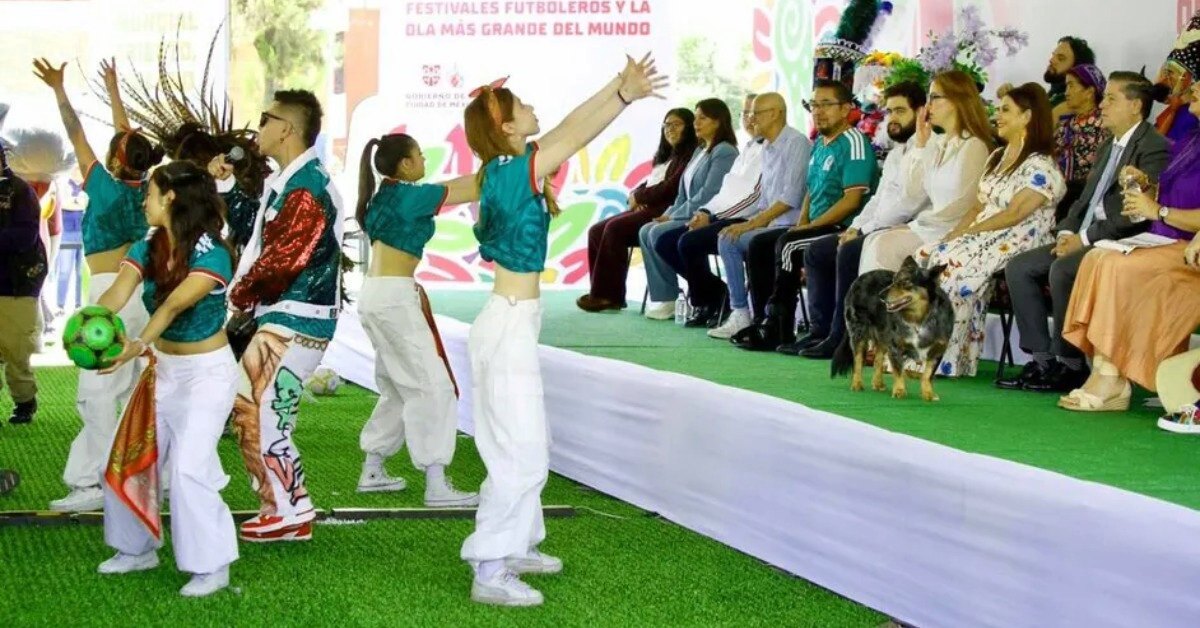
Mayor Clara Brugada said each site will include big screens, but also a mix of experiences: concerts, public art, family entertainment, traditional games, and workshops. The programming is designed to keep the atmosphere active even between matches, and to attract people who may not be focused solely on football.
The city also described sporting activities as part of the festival offer, reinforcing the idea that these are participatory spaces, not just spectator zones. In the mayor’s framing, the World Cup is “lived in the streets,” in neighborhood spaces where people already play and gather.
That affects how fans might use the network—some sites as comprehensive viewing hubs, others as community-centered venues for the biggest fixtures.
Taken together, the features point to a festival model that blends football with local culture: a public square becomes a stage for music, art, food, and communal watching—an experience meant to be accessible, free, and citywide.
What to Expect Onsite
A simple way to think about what you’ll find at most sites (and what to look for in announcements):
– Watch: big screens + free match broadcasts (coverage varies by venue)
– Do: sporting activities and participatory games (more “community fair” than stadium seating)
– Eat: food carts and local offerings (with a non-alcohol focus)
– Learn/Make: workshops, traditional games, and public art programming that runs beyond kickoff times
If you’re choosing between venues, start with Watch (full-coverage vs Mexico/selected matches), then pick based on whether you care more about Do (activities) or Eat/Learn (food + workshops).
Free Match Broadcasts and Cultural Programming
The backbone of the fan festivals is the promise of free match broadcasts. That split suggests a deliberate balance between comprehensive coverage and localized programming.
The broadcasts are paired with cultural programming, positioning the festivals as civic events rather than simple watch parties. Brugada’s description of the World Cup as something experienced in markets and public squares is reflected in the planned mix of activities: the festivals are meant to feel rooted in everyday urban life.
Cultural programming, as outlined by the city, includes concerts and public art, alongside workshops and traditional games. This matters because it broadens the audience: people can attend for music or community activities even if they are not following every match.
In the FIFA Fan Festival™ model, this blend—football plus culture—is central to creating a “stadium-like” atmosphere in an open public setting. Mexico City’s plan echoes that approach, with the added emphasis that the World Cup should be shared across neighborhoods, not concentrated only near the stadium or in the Historic Center.
Entertainment and Activities for Families
A recurring theme in the city’s presentation is that the fan festivals are intended to be family-friendly. Brugada said festival sites will include family entertainment, and the programming list—traditional games, workshops, concerts, and public art—suggests a format designed to welcome a wide range of ages.
The inclusion of sporting activities also points to a more interactive environment, where children and families can participate rather than simply watch. In practice, that could mean festival spaces that feel closer to community fairs than to crowded nightlife districts—an important distinction given the scale of the World Cup and the likelihood of large gatherings.
The family focus is also tied to policy: the city has stated that alcohol sales will be prohibited at the fan zones, explicitly justified as a way to promote “safe and family-friendly spaces.” That decision shapes the tone of the events, signaling that the festivals are meant to be accessible daytime and evening gatherings rather than alcohol-centered celebrations.
In a citywide network of 18 sites, the family-oriented approach also supports the broader goal of inclusivity: making it easier for residents across boroughs to attend with children, and to treat the World Cup as a shared public experience.
Safety Measures at Fan Zones
Mexico City’s fan festival plan is built around mass public gatherings—exactly the kind of events that require clear rules and careful management. While the city’s announcement focused heavily on programming and access, it also included one unambiguous safety-related policy: alcohol sales will be prohibited at the fan zones, a measure Mayor Clara Brugada said is intended to promote safe and family-friendly spaces.
That prohibition is not a minor operational detail. It signals the city’s intent to shape the environment of the festivals—reducing the likelihood of alcohol-fueled incidents and reinforcing the idea that these are community spaces suitable for families. It also aligns with the broader framing of the festivals as public-square events, not nightlife venues.
Safety planning is also unfolding in a wider political and logistical context. Brugada’s push for popular public events has drawn criticism from some observers who argue it comes at the expense of needed infrastructure and security work. The issue became more pointed after President Claudia Sheinbaum reprimanded the mayor and announced that the federal government would take a bigger role in managing risks and ensuring Mexico City’s preparations meet FIFA standards.
Those concerns have been amplified by reports of unfinished infrastructure projects near Estadio Azteca, which will host five matches, and by the public attention on the city’s efforts to complete an ambitious subway renovation before the tournament begins on June 11, 2026.
In that environment, fan zones are not just cultural stages; they are also high-visibility tests of crowd management. The city’s stated goal—safe, family-friendly festivals—will depend not only on programming choices like the alcohol ban, but also on coordination and readiness across agencies involved in World Cup preparations.
Fan-Zone Safety Essentials
Practical safety checkpoints for big fan-zone days (especially at full-coverage venues and the Zócalo):
– Arrive earlier than you think you need to: popular matches can turn into long entry lines and controlled access
– Pick a meet-up point: choose a landmark outside the densest area in case your group gets separated
– Keep essentials simple: bring only what you can comfortably carry for hours (ID, phone, power bank, water if allowed)
– Plan your exit before kickoff: decide which Metro/Metrobús stop you’ll use and what you’ll do if it’s temporarily closed or crowded
– Mind the rain season: June–July often brings afternoon showers—pack a light rain layer and protect your phone
– Know the “no alcohol” rule: expect enforcement at entrances and inside the venue; plan beverages accordingly
– If you’re with kids: identify the nearest staff/first-aid point when you arrive, not after you need it
Food and Beverage Offerings
Food is being positioned as a central part of Mexico City’s fan festival experience—both as a practical service for large crowds and as a way to showcase local identity. The city’s plan includes food carts and gastronomic offerings at festival sites, with a specific emphasis on products from local and Indigenous communities.
That focus fits the broader narrative presented by Mayor Clara Brugada: the World Cup is not confined to the stadium, but lived in neighborhoods, markets, and public squares. Food—especially street food and market culture—is one of the most immediate ways Mexico City expresses that everyday civic life. By integrating local vendors and Indigenous products into the fan zones, the city is signaling that the festivals are meant to reflect Mexico City’s social fabric, not just replicate a generic international event template.
The announcement also mentioned special themed events tied to food culture, including expos devoted to corn and ice cream. Corn, in particular, carries deep cultural resonance in Mexico’s culinary traditions, and its inclusion suggests the festivals will highlight ingredients and practices that are widely recognized as part of national identity.
Local and Indigenous Offerings Overview
What “local and Indigenous products” may look like on-site (based on what the city has described so far):
– Food carts + small vendors integrated into the festival footprint (more like a market feel than a single concession stand)
– Non-alcohol focus because alcohol sales are prohibited at fan zones—expect aguas frescas, soft drinks, coffee/chocolate, and other family-friendly options to be emphasized
– Themed food programming (the city specifically mentioned corn and ice cream expos), which suggests some days may have “festival within the festival” areas rather than only grab-and-go food
If you have dietary needs, it’s worth checking each venue’s vendor list once published—borough sites may differ a lot in what’s available.
Local and Indigenous Food Products
Mexico City says its fan festival sites will include food carts and products from local and Indigenous communities, making gastronomy part of the cultural programming rather than an afterthought. In a tournament that draws global attention, that choice is also a statement: the city wants visitors and residents to experience the World Cup through distinctly local flavors and producers.
The plan’s mention of Indigenous products suggests an effort to broaden who benefits economically and culturally from the World Cup moment—at least within the festival footprint—by creating space for community-based vendors. While the city has not detailed which products or communities will be represented, the explicit inclusion signals that the festivals are intended to be more than commercial concessions.
The announcement also highlighted special events such as expos devoted to corn and ice cream. Corn is not just a food item in Mexico; it is a cultural symbol tied to everyday cooking and culinary heritage. Featuring a corn expo within the festival context implies programming that treats food as education and celebration, not only consumption.
By combining match broadcasts with food offerings rooted in local and Indigenous traditions, the fan festivals aim to create an atmosphere where watching football is intertwined with the tastes and textures of Mexico City’s street and market culture.
Prohibition of Alcohol Sales
Mayor Clara Brugada made a point of stating that alcohol sales will be prohibited at the fan zones. The justification was explicit: “the aim is to promote safe and family-friendly spaces.” In the context of large public gatherings, that policy is both a safety measure and a signal about the kind of atmosphere the city wants.
The ban will shape how food and beverage offerings are curated. Vendors and organizers will need to focus on non-alcoholic options, and the overall tone of the festivals is likely to skew toward daytime and family attendance rather than late-night party culture.
It also reflects the broader positioning of the festivals as community events distributed across boroughs—spaces meant to be welcoming to residents of all ages. In that sense, the alcohol prohibition is consistent with the city’s emphasis on traditional games, workshops, and family entertainment.
While the policy may disappoint some fans who associate football viewing with beer gardens and nightlife, the city’s framing is clear: these are public, inclusive spaces where safety and accessibility take priority over alcohol-centered celebration.
Cultural Significance of the Festivals
Mexico City’s fan festivals are being framed as a cultural project as much as a sports initiative. Mayor Clara Brugada’s language emphasized that the World Cup is not only experienced inside a stadium, but in the everyday spaces where city life happens: streets, neighborhood pitches, markets, and public squares. The festivals are designed to formalize that idea—turning common gathering places into stages for collective celebration.
The administration’s promotional slogan, “Pelota Vuelve a Casa” (“The ball is coming home”), captures the intended symbolism. It suggests a return of football passion to the places where it is played and shared informally, and it positions the World Cup as something that belongs to the public, not only to ticket holders.
Cultural programming is central to this significance. The city says festival sites will include concerts, public art, traditional games, and workshops, alongside sporting activities and match broadcasts. That mix is meant to create a festival identity that reflects Mexico City’s cultural life—music, art, and community participation—rather than a purely commercial sports viewing environment.
The plan also highlights gastronomy as culture, with food carts and products from local and Indigenous communities, plus themed events like corn and ice cream expos. Food becomes another way the city can tell a story about itself during a global event.
Finally, the choice to distribute festivals across all boroughs carries cultural weight: it treats the World Cup as a shared civic moment across neighborhoods, not a spectacle reserved for the center. In a city as large and diverse as Mexico City, that is a statement about who the celebration is for—and where it should be felt.
Announcement by Mayor Clara Brugada
Mexico City Mayor Clara Brugada announced plans to establish 18 free fan festivals during the 2026 FIFA World Cup, presenting the initiative as a way to extend the tournament beyond the stadium and into the city’s daily public life. Her headline message was expansive: “the capital will be like one big grandstand.”
The structure of the plan is citywide. There will be at least one designated fan fest in each of the 16 boroughs, plus a FIFA-sponsored venue in the Zócalo, the main public square in the Historic Center. The festivals will feature big screens for match broadcasts and a wider slate of programming intended to keep the sites active as cultural destinations.
Brugada emphasized that the World Cup should not be viewed as limited to matches inside the stadium. In her words, it is lived in the streets—“on the neighborhood pitch, in the market, in the public square”—because when the ball comes home, passion overflows into public space. She linked that idea to the administration’s slogan, “Pelota Vuelve a Casa.”
Operationally, the city outlined a tiered broadcast plan: seven venues will screen all 104 games, while the remaining 11 will show Mexico’s games and selected matches. Beyond football, Brugada said festival sites will include concerts, public art, family entertainment, traditional games, and workshops, along with sporting activities and food offerings.
Citywide Fan Festival Highlights
Key statements from the announcement (and what they mean for visitors):
– “The capital will be like one big grandstand.” → the intent is a citywide atmosphere, not a single central watch party
– 18 free fan festivals → scale is large, but venue details (exact addresses, capacities, entry rules) still matter
– 16 boroughs + Zócalo → expect both neighborhood options and one flagship, high-demand central venue
– 7 full-coverage vs 11 partial-coverage sites → if you want any match any day, you’ll need to identify the full-coverage venues once they’re named
– No alcohol sales → the city is explicitly prioritizing a family-friendly tone for these public spaces
Community Engagement and Inclusivity
The most striking feature of Mexico City’s fan festival plan is its emphasis on reach. By committing to at least one fan fest in each of the 16 boroughs, the city is signaling that the World Cup experience should not be concentrated only in the Historic Center or near Estadio Azteca. Instead, the festivals are designed to be neighborhood-accessible—an approach that implicitly prioritizes inclusion for residents who may not have the time, money, or mobility to travel across the city for a single central event.
Free entry is another pillar of that inclusivity. The festivals are described as free, and the match broadcasts are free as well—an important point in a World Cup where stadium tickets are limited and often expensive. In practice, fan festivals become the most accessible way for many people to participate in the tournament atmosphere.
The programming choices also reinforce a broad audience. The city’s plan includes family entertainment, traditional games, and workshops, alongside concerts and public art. Those elements suggest an effort to create spaces that welcome children, older residents, and people who may not identify as hard-core football fans but still want to be part of a shared civic moment.
Inclusivity also appears in the food strategy. The city says festival sites will include products from local and Indigenous communities, which—at least in intent—broadens representation within the event economy and highlights cultural diversity as part of the celebration.
| Inclusivity lever in the plan | What the city has said | What it means in practice (how to use it) |
|---|---|---|
| Free entry | Festivals are described as free | Good option if you don’t have match tickets; arrive early for high-demand games |
| Borough coverage | At least one fan fest in each of 16 boroughs | You may be able to watch close to where you’re staying instead of crossing the city |
| Family-oriented programming | Family entertainment, traditional games, workshops | Look for daytime programming if you’re traveling with kids or older relatives |
| Cultural programming beyond football | Concerts, public art, workshops | Useful if you want a festival vibe even on days you’re not match-focused |
| Local + Indigenous products | Vendors/products from local and Indigenous communities | Expect food/market elements that reflect neighborhood identity; offerings may vary by borough |
| Alcohol prohibition | No alcohol sales at fan zones | Sets a more family-friendly tone; plan for non-alcoholic drinks and earlier evenings |
Logistics and Accessibility for Visitors
Mexico City’s fan festival network is designed to be navigable precisely because it is distributed. With 18 sites planned—including at least one in each borough and a flagship venue in the Zócalo—visitors will have multiple options for where to watch matches and experience festival programming, rather than relying on a single central location.
The Zócalo’s centrality makes it a natural anchor for visitors staying in or near the Historic Center, and it is positioned as the city’s FIFA-sponsored venue. At the same time, the borough-based festivals could be especially useful for travelers staying outside the center or for residents who want to avoid long cross-city trips during peak match times.
Timing will matter. The World Cup runs from June 11 to July 19, 2026, and Mexico City is expected to be busy throughout. The city’s plan to have seven venues screen all 104 matches suggests that fans determined to watch any game, any day, will need to identify those full-coverage sites. Others may choose borough venues that focus on Mexico’s matches and selected fixtures, which could be less demanding in terms of daily scheduling.
The broader preparation context also affects logistics. FIFA president Gianni Infantino has expressed concern about unfinished infrastructure projects near Estadio Azteca, and public attention has focused on efforts to complete an ambitious subway renovation before the tournament begins. President Claudia Sheinbaum has said the federal government will take a bigger role to manage risks and ensure preparations meet FIFA standards—a reminder that transport and readiness are part of the World Cup story, not separate from it.
For visitors, the practical takeaway is flexibility: Mexico City is building multiple entry points into the World Cup atmosphere, and the best
Plan Your Festival Day
A practical way to plan your fan-festival day in Mexico City:
1) Decide what you’re optimizing for
– “Any match, any day” → target one of the 7 full-coverage venues (once named)
– “Mexico matches + atmosphere” → a borough venue may be easier and closer
2) Pick your venue type
– Zócalo for the iconic flagship feel (also likely the biggest crowds)
– Borough site for a more local, neighborhood-accessible experience
3) Time your arrival
– For high-profile matches, plan to arrive well before kickoff to handle lines and capacity limits
4) Choose your transport with an exit in mind
– Identify your nearest Metro/Metrobús stop(s) and a backup route in case of closures or crowding
5) Build a weather + comfort plan
– June–July can be rainy; bring a light rain layer and keep valuables protected
6) Set one meet-up point
– Pick a clear landmark outside the densest area so your group can reconnect if separated
Exact locations, entry rules, and prohibited items may change as organizers release venue-specific updates. The figures and policies here reflect publicly available information and official statements at the time of writing. For the latest specifics, consult current city announcements and FIFA’s Mexico City Fan Festival updates.

Martin Weidemann is a digital transformation expert and entrepreneur with over 20 years of experience leading fintech and innovation projects. As a LinkedIn Top Voice in Digital Transformation and contributor to outlets like Forbes, he now brings that same expertise to travel and mobility in Mexico City through Mexico-City-Private-Driver.com. His focus: trustworthy service, local insights, and peace of mind for travelers.